You showed up, you learned the poses, you built a real practice - and then something shifted. Maybe your back started talking back. Maybe pregnancy, surgery, or simply another birthday changed what your body asks for. Here's the truth: yoga is not a static practice you either do perfectly or abandon. It's a living one. With the right modifications, you can keep practicing through almost any change life throws at you.
Why Modifying Poses Is Part of Yoga, Not a Departure From It
There's a quiet myth that modifying a pose means you're doing yoga wrong. The opposite is true. Adjusting a pose to fit your body right now is how you stay safe, build strength honestly, and keep coming back - which is the whole point.
Props, stance width, bent knees, a chair for balance - these are tools, not concessions. Experienced practitioners use them. Teachers are trained to offer them. They're built into the practice.
It also helps to know that motivations for practicing yoga shift over time: a large UK survey found that 47% of practitioners changed their reasons for showing up, moving from initial fitness goals toward stress management and overall wellness. Your practice is allowed to evolve with you.
The Life Changes That Most Often Require New Adjustments
No single life event makes yoga inaccessible, but several very common ones do require you to rethink how you enter poses and so it is worth knowing which changes matter most for your practice.
Getting older
Joints stiffen. Balance shifts. Morning practice feels different than it did at 35. That is biology, not failure. Keep in mind that your body is simply changing and that this change does not mean yoga is no longer for you. The encouraging news: a 2023 Harvard review of 33 studies involving 2,384 adults over 65 found that yoga improves walking speed and the ability to rise from a chair, and both of those things are markers of longevity and reduced frailty. The mean age of participants in those studies was 72. It is genuinely never too late to adapt your practice and keep going.
Pregnancy
Poses that compress the belly, require deep twists, or involve lying flat on your back for extended periods need to be adjusted and this need becomes especially important in the second and third trimesters because your body is changing so significantly. Always check with your doctor or midwife before continuing or starting a yoga practice during pregnancy.
Injury or post-surgery recovery
Coming back too quickly and too ambitiously is one of the most common mistakes people make. Your body needs time, so you should start with gentle, well-supported versions of poses, build gradually, and get clearance from your healthcare provider before returning to anything that loads the injured area directly.
Chronic health conditions
Arthritis, lower back pain, osteoporosis, and similar conditions all change what safe alignment looks like for you, and on top of that these conditions can sometimes make standard poses feel discouraging. Keep in mind that all of these conditions can coexist with a meaningful yoga practice when poses are thoughtfully adjusted for your specific needs.
Injury Risk Is Real - and Modifications Reduce It
Yoga is broadly safe, but that safety depends on working within your actual range of motion, not the range the person on the mat next to you has. A survey of over 2,500 people attending yoga classes found that muscular pain was the most common adverse event at 5.3%, followed by joint pain at 4.9% - and only 1.9% of participants reported outcomes serious enough to stop practicing altogether. Those are reassuring numbers, and they reflect practitioners who are paying attention to their bodies.
Sharp, sudden joint pain is always a signal to stop and reassess, not push through. A mild stretch or muscular effort is normal. The line matters.
Specific Modifications for Common Poses
Seated Forward Fold (Paschimottanasana)
The target of this pose is the hamstrings and lower back. The most common mistake is rounding aggressively through the upper spine from the very start instead of hinging at the hips, and this mistake can place significant strain on your back, so it is important to fix it early.
- Sit on a folded blanket or block to tilt your pelvis forward - this makes the hip hinge significantly easier and helps your spine stay long.
- Inhale to lengthen your spine first, then fold only as far as you can keep the back long. Keep in mind that a shorter fold with a long back is always better than a deeper fold with a rounded spine.
- Loop a strap around the soles of your feet if your hands don't reach - never yank yourself forward, because yanking yourself forward defeats the purpose of the pose.
- Contraindications: disc herniation, spinal stenosis, or acute lower back pain. Consult a doctor or physical therapist before practicing unsupported forward folds if any of these apply to you.
Tree Pose (Vrksasana)
The inner thigh and hip abductors are working in this pose, and your foot does not need to go above the knee to make Tree Pose a real and effective pose.
- Place your foot at the ankle or inner calf instead of the inner thigh. Both positions are valid and both positions build balance, so choose the position that feels steady for you.
- Rest one hand on a wall or chair back if your balance is unsteady. Gradually reduce that support over time as your balance improves.
- Contraindications: any history of knee ligament injury - keep the foot below the knee to avoid lateral pressure on the knee joint.
Downward-Facing Dog (Adho Mukha Svanasana)
- Bend your knees generously. A long, flat spine with bent knees is far more beneficial than straight legs with a rounded back, and most beginners find bent knees much more comfortable.
- Place your hands on blocks to reduce the angle at the wrists if you experience wrist pain, because reducing that angle takes pressure off your wrist joints.
- Try Puppy Pose (Uttana Shishosana) - forearms on the floor, hips over knees - as a lower-intensity alternative that offers a similar spinal lengthening effect and is easier on the wrists and hamstrings.
Warrior II (Virabhadrasana II)
- Shorten your stance if the deep lunge feels too intense on your hip or knee, because a shorter stance still gives you most of the benefits of the pose.
- Place a chair seat under your front thigh for support if holding the position is difficult due to hip weakness or fatigue, and over time you can reduce how much you rely on the chair.
- Keep your front knee tracking over the second toe - never letting your knee collapse inward, because inward collapse puts harmful pressure on the knee joint.
Child's Pose (Balasana)
- Place a folded blanket between your thighs and calves if your hips don't reach your heels - this removes the compressive strain on your knees immediately and makes the pose much more comfortable.
- Rest your forehead on stacked fists or a block rather than the floor if your neck is uncomfortable, and this small change can make a big difference in how relaxed your neck and shoulders feel.
- Widen your knees to mat-width (Extended Child's Pose) to accommodate a pregnant belly or tight hips. On top of that, the wider position often feels more restful for many practitioners in general.
How to Use Props Effectively at Home
You don't need to spend anything to practice with props. Here's what works:
- Yoga blocks: A standard foam block has three usable heights - tall, medium, and flat - so you can fine-tune the height a pose needs. If the tall side feels like too much, turn the block. The pose adjusts with it.
- A strap or belt: Any non-stretch belt or tie works for seated stretches and standing poses where your hands can't quite reach.
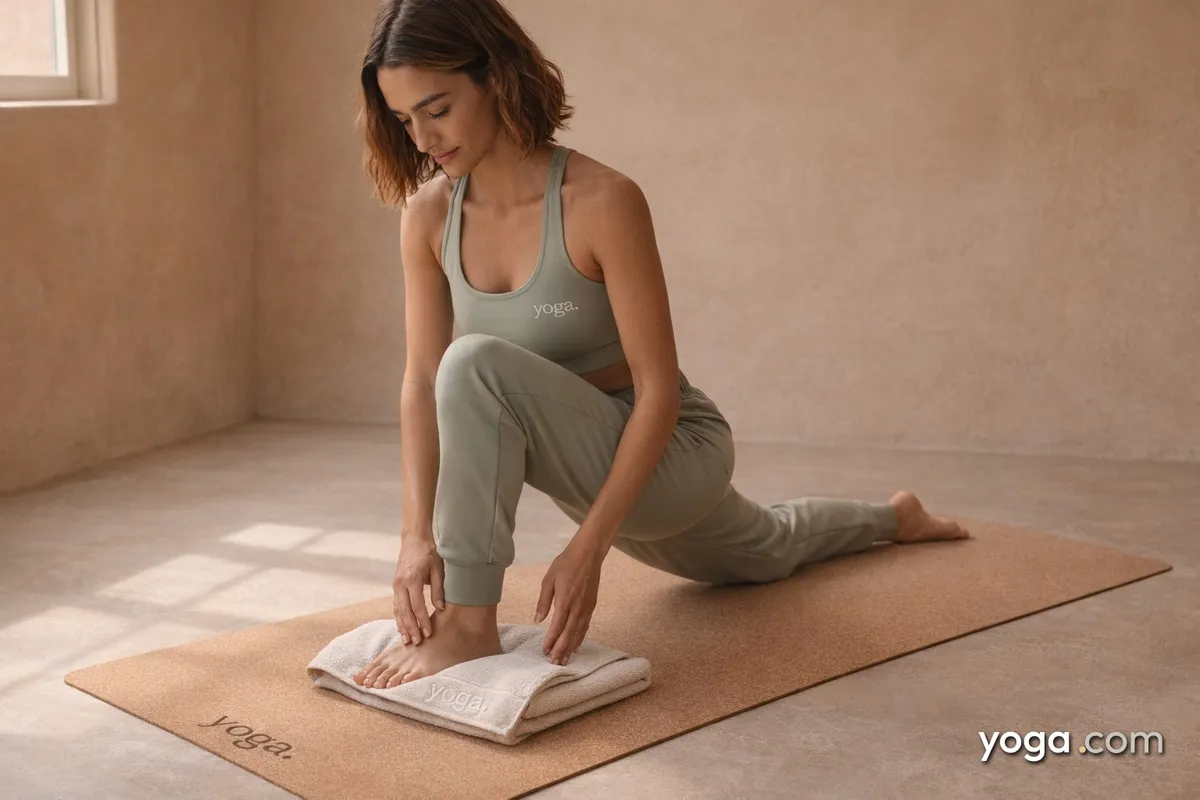
- A folded blanket: Under sit bones in forward folds, under knees in supine poses, or between thighs and calves in Child's Pose - endlessly versatile.
- A sturdy chair: For seated versions of standing poses, or as a balance aid beside your mat.
Tell Your Teacher Before Class Starts
A good teacher can only guide you toward the safer version of a pose if they know what's going on with your body. A quiet word before class - "I have a knee injury" or "my lower back has been flaring up" - gives them what they need to cue you specifically as the session moves. You don't need to explain your full medical history. One clear sentence is enough.
When you're looking for classes, seek out offerings labeled gentle yoga, therapeutic yoga, chair yoga, or yoga for beginners. These formats are built around modification from the start.
Evolve With Your Practice
Your body will change - it already has. The practice gets to change with it. Modifying a pose isn't a step backward; it's how you keep showing up safely, season after season. Use the props, take the gentler variation, talk to your teacher, and if a health condition is guiding your choices, loop in a qualified healthcare provider too. The mat will be there whenever you're ready - in exactly the form that fits you today.