Staying steady on your feet after 65 starts with something surprisingly ordinary: paying attention to your balance and your feet. For older adults, foot awareness is a skill worth practicing, and gentle movement is one pleasant way to practice it.
A quick note before anything else. This article is general information, not medical advice. Balance is personal, and anything specific to your health - a past fall, dizziness, a condition you manage, a medication question - belongs in a conversation with your doctor or a physical therapist. Our health and safety disclaimer explains more.
Why Balance Changes as the Years Add Up
Balance is teamwork. Muscles, joints, eyes, and the inner ear all pitch in to keep you upright, and each of them changes gradually over time. That is normal. It is also why steadiness can fade so quietly that nobody notices until a wobble on the stairs makes it obvious.
Feet play a bigger part than most people give them credit for. They are the only part of the body that touches the ground, constantly reporting on what is underfoot - a slick patch, an uneven tile, the edge of a rug. As the years pass, that reporting can feel a little less sharp for many people, and small corrections arrive a beat later than they once did. Nothing dramatic. Just a slower conversation between the feet and everything above them.
Strength changes too. Legs and ankles tend to lose some of their spring with age, which narrows the margin for catching yourself after a stumble. None of this is a verdict on anyone's future. It is simply the background against which good habits earn their keep.
Why People Bring Balance to Yoga
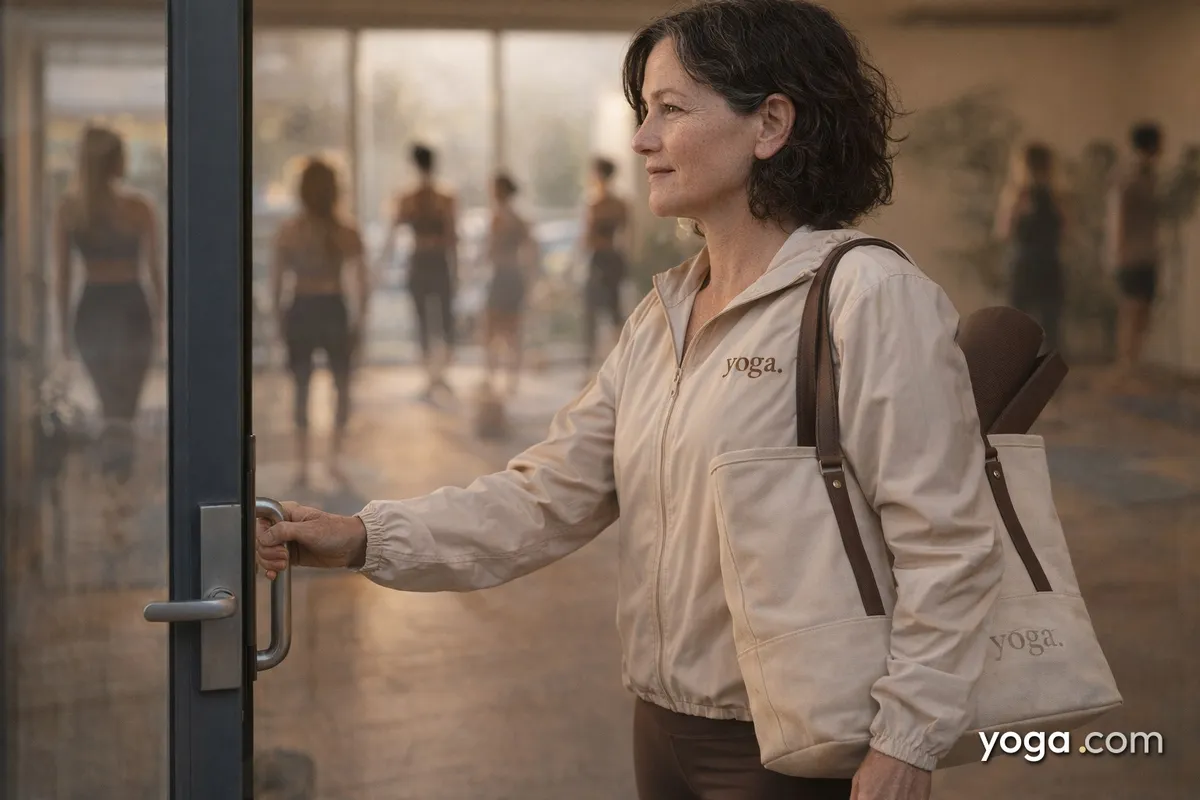
Yoga has always spent time on the ground floor of movement: standing tall, feeling the floor, shifting weight slowly from one foot to the other. That focus is why so many older adults find their way to a gentle class after noticing they feel less sure-footed. A good class gives you unhurried time to study your own feet - how weight spreads between heel and toes, how the arches respond when you sway - and that kind of noticing is where steadier movement begins.
There is a quieter benefit as well. Feeling unsure on your feet tends to make people move less, and moving less lets steadiness fade faster. A calm, supported practice can rebuild confidence at a comfortable pace, and for many people the confidence matters as much as the movement itself.
It helps to be clear about what yoga is here: a pleasant way to spend time in your body, sitting alongside proper professional care, with your doctor or physical therapist still leading anything specific to your health. If someone is already helping you with your balance, a gentle class can be a lovely companion to that work once they agree it suits you.
A Sensible Way to Begin
If you are curious, a gentle, beginner, or chair-based class is a friendly starting point, and a good teacher will expect questions. Whatever the setting, a sensible early practice tends to look the same:
- Go slow. Speed adds nothing. Slow movement gives your feet time to feel the floor and your body time to answer.
- Stay in a comfortable range. Reach only as far as feels easy today. Comfortable and repeatable beats impressive and occasional.
- Keep support close. A wall or a sturdy chair back within reach takes the worry out of standing work.
- Stop on pain. Discomfort that sharpens means it is time to ease off and rest.
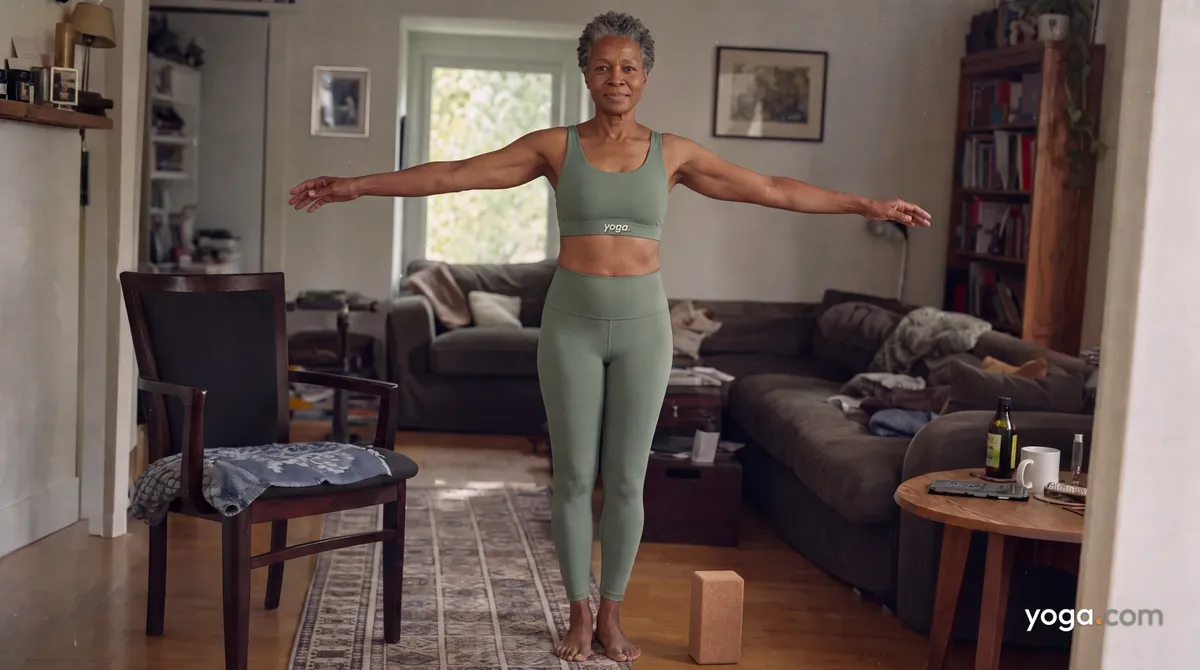
Simple standing shapes - planting both feet, standing tall, breathing - offer plenty to work with for a long while. Many teachers add gentle weight shifts and supported moments on one foot, always with a hand hovering near a chair. There is no rush to progress past any of it.
Small Habits Around the House
Steadiness is also shaped by ordinary surroundings, and a little attention there goes a long way:
- Shoes with grippy soles are kinder to your balance than smooth-bottomed slippers or socks on hard floors, indoors as much as outdoors.
- Rugs that slide or curl at the edges are worth securing or retiring.
- Good lighting on stairs and in hallways, especially at night, makes every step easier to read.
- Clear walkways help more than anyone expects - cords, clutter, and low furniture have a talent for finding feet.
It is ordinary housekeeping, and it quietly works in your favor every single day.
When to Bring In a Professional
Some things belong with a professional, full stop. If you have had a fall, even one that seemed like a fluke, mention it to your doctor. The same goes for dizziness, numbness in the feet, or any condition that affects how you move - those conversations come before any new exercise routine, yoga included. A doctor or physical therapist can look at the whole picture, including your medications, and point you toward whatever fits your situation, whether that is physical therapy, a local fall-prevention program, or simply the green light to join a gentle class.
Steadier, One Ordinary Day at a Time
Balance responds to attention at any age, and it is never too late to start giving it some. A gentle practice, sensible shoes, a well-lit hallway, and an honest conversation with your doctor add up to something real: more confidence on your own two feet. Start small, keep it comfortable, and let steadiness build the way it prefers to - slowly, and on its own schedule.