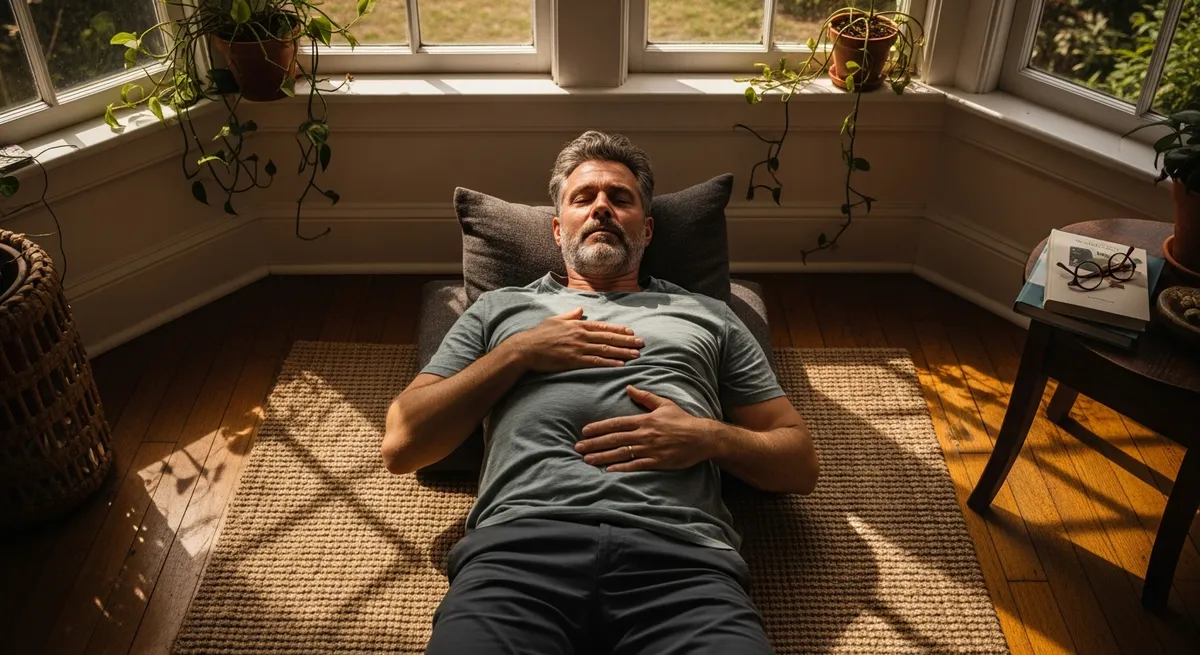
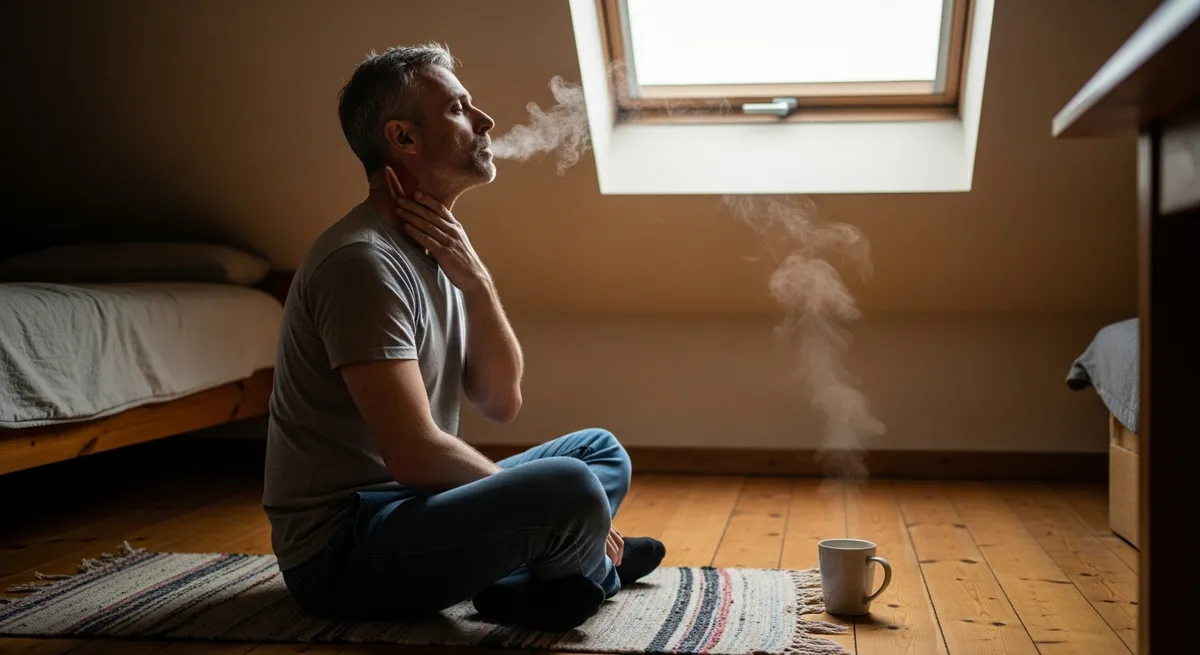
You're moving through a yoga class, the teacher says "use your ujjayi breath," and you quietly wonder what that actually means. You're not alone — and the good news is that once you feel it, you'll never forget it. This guide breaks down exactly what ujjayi breath is, how to find it, and why it genuinely changes the quality of your practice.
What Is Ujjayi Breath?
Ujjayi (oo-JAH-yee) is often translated from Sanskrit as "victorious breath," though many teachers call it "ocean breath" — named for the soft, wave-like sound created when air moves through a gently constricted glottis (your vocal cords). Think of the quiet whoosh of the sea pulling back over pebbles. That's your target.
The glottis is the opening at the back of your throat. When you partially close it, the breath slows and that characteristic sound appears. The sound isn't a side effect — it's your signal that the technique is working.
According to the Hatha Yoga Pradipika, a fifteenth-century text, ujjayi is achieved through contraction of the epiglottis. Ancient teachers were onto something that modern research is only now catching up with.
How to Actually Do It: Step by Step
If your throat feels tight or strained at any point, back off. The constriction should always feel gentle and the constriction should never feel forced. The simple fact is that forcing the breath will not help you progress faster, so keep your ujjayi breath easy and comfortable at all times.
What Happens in Your Body When You Breathe This Way
The throat constriction is not just about sound. Keep in mind that when you constrict the throat in ujjayi, you activate the vagal nerve endings in the neck region, which turns on the parasympathetic nervous system and this parasympathetic nervous system is your body's rest-and-digest mode, the direct opposite of fight-or-flight. The simple fact is that the throat constriction alone can begin to shift your whole nervous system state.
Slowing the breath deepens this effect even further. By practicing ujjayi, you shift your respiratory rate from the typical 12 to 16 breaths per minute down to six to eight breaths. That shift matters more than it might sound, and you should not underestimate it just because the numbers seem small.
Research shows that a reduced breathing rate hovering around 5 to 6 breaths per minute can increase vagal activation, and that slow breathing increases cardiac-vagal baroreflex sensitivity, improves oxygen saturation, lowers blood pressure, and reduces anxiety. On top of that, baroreflex sensitivity is your body's ability to regulate blood pressure efficiently and it is a meaningful marker of cardiovascular health, so this is not a small or unimportant benefit for your body.
One study found that the maximal increase in baroreflex sensitivity and the greatest decrease in blood pressure occurred with slow breathing using equal inspiration and expiration and this equal inspiration and expiration maps closely to the balanced inhale-exhale rhythm of ujjayi because ujjayi is built around that same balanced pattern. The research studied 17 yoga-naive participants across different breathing patterns, so the research is an early look, not a definitive verdict. Still, the direction is clear and encouraging for your practice.
Why the Breath-Anxiety Connection Is Real
If you've ever felt genuinely calmer after a practice that emphasized the breath, that's not placebo. A large systematic review found that 54 of 72 breathing interventions across 58 studies were effective for stress and anxiety reduction. That's a meaningful signal.
Controlled breathing practices are increasingly recognized as accessible, low-risk tools for managing anxiety — and ujjayi is, as Yoga Journal notes, the beginner-friendly springboard for all other formal pranayama. It's a natural first step.
Where Ujjayi Fits in Your Practice
Ujjayi is the backbone breath of vinyasa and Ashtanga yoga, but it works in slower, quieter styles too. The steady sound gives your mind something to return to when attention drifts — which it will, and that's fine.
The breath also serves as a natural metronome, pacing your movement so you're not rushing from pose to pose. In something like Sun Salutation (Surya Namaskar), each movement can anchor to one ujjayi breath, creating a meditative rhythm even in a physically demanding sequence.
You can also use it off the mat — sitting in traffic, before a difficult conversation, or any moment you need to downshift quickly.
Common Mistakes to Avoid
Who Should Be Cautious
Ujjayi adds mild resistance to the airway, which is part of why it works — but that same resistance means certain people should check with a doctor first before practicing:
When in doubt, please talk to your healthcare provider before beginning any pranayama practice. General yoga breathing is not a substitute for medical treatment.
One More Benefit Worth Knowing
A small but intriguing study found that 80% of participants — all female teachers — rated ujjayi pranayama as useful in preparing their voice for vocal loading tasks. If you're a teacher, a singer, or anyone who uses their voice professionally, that's a bonus worth noting.
The Bottom Line
Ujjayi breath is simple, accessible, and genuinely powerful — not because of mysticism, but because of what a slowed, conscious, throat-constricted breath does to your nervous system. Start with the exhale. Find the sound. Keep it soft. Give yourself a few weeks of consistent 5-to-10-minute sessions and notice what shifts — in your practice, and in how you feel when you step off the mat.