You sit down, close your eyes, and realize you have no idea what to do with your breath. Do you count? Do you hold? Do you breathe through your nose or your mouth? Starting a breathing practice feels deceptively simple — and then suddenly complicated. This 7-day plan removes all of that guesswork. One technique at a time, one short session a day, and by the end of the week you'll have the foundation of a habit that can genuinely change how you feel.
Why Breathing Exercises Are Worth Your Time
Slow, intentional breathwork isn't a wellness trend — it has real research behind it. 54 out of 72 breathing interventions reviewed in one large analysis were effective at reducing stress and anxiety. That's a strong signal across a wide range of people and practice styles.
The benefits extend beyond mood. Diaphragmatic breathing can help reduce both blood pressure and heart rate, and allows you to use your lungs at full capacity, increasing lung efficiency. Even five minutes a day counts. Daily 5-minute breathwork has been shown to improve mood and reduce anxiety — no hour-long sessions required.
What Makes a Breathing Practice Actually Work
Not all approaches are equally effective and so it is important to understand what the research actually says works. Effective breath practices avoided fast-only breath paces and sessions shorter than 5 minutes, and included multiple sessions with long-term practice. The simple fact is that your practice needs enough time and enough repetition to produce real results. On top of that, human guidance — a teacher, a class, a guided recording — also made a meaningful difference in outcomes, so you should not underestimate the value of having some kind of instruction to follow.
Consistency beats intensity every time. Keep in mind that one solid 10-minute session daily will serve you far better than a 45-minute session once a week. The simple fact is that doing your breathing practice regularly, even if each session is short, is more important than doing a long breathing practice only occasionally.
How Long Until It Feels Automatic?
Seven days will not lock in a lifelong habit — and it's worth being honest about that. Research on health-related habit formation shows median times ranging from 59–66 days, with wide individual variability from as few as 4 days to as many as 335. What seven days will do is give you a real taste of the practice, lower the learning curve, and — crucially — show you it's doable. That's the whole point of starting here.
Three Techniques You'll Use This Week
You don't need to master everything at once. These three techniques build on each other naturally.
1. Belly Breathing (Diaphragmatic Breathing)
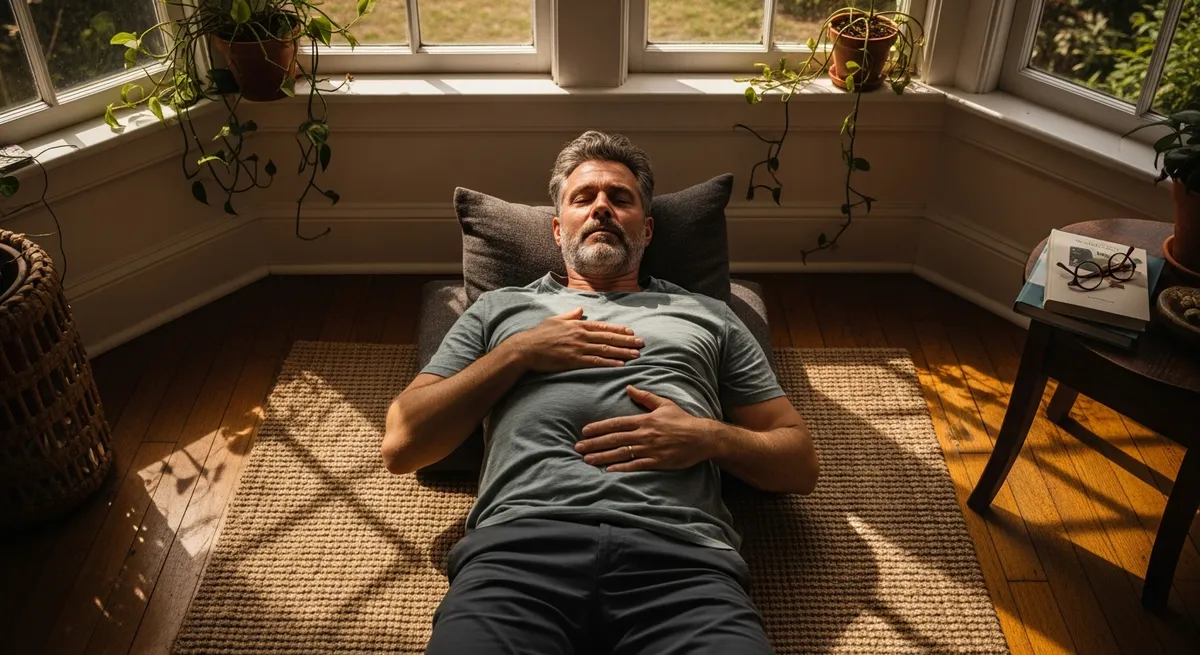
Place one hand on your chest and one on your belly. Inhale through your nose — your belly rises, your chest stays relatively still. Exhale slowly through your mouth. This is the foundation of everything else. Cleveland Clinic recommends starting with 5–10 minutes, three to four times per day as you get comfortable.
2. Extended-Exhale Breathing
Inhale for a count of 4. Exhale for a count of 6–8. The longer exhale is what activates your parasympathetic nervous system — the body's natural calming response. No equipment needed. No holds. Just a slightly longer out-breath.
3. Cyclic Sighing
Take a full inhale through your nose, then sneak in a short second inhale at the top to fully inflate the lungs. Then release one long, slow exhale through your mouth. Cyclic sighing has been found to be the most effective breathwork technique for improving mood and reducing respiratory rate. It sounds simple — because it is.
Your 7-Day Plan, Day by Day
Days 1–2: Just Notice
Set a timer for 5 minutes. Sit comfortably, close your eyes, and observe your natural breath without changing anything. Notice where you feel your breath — your nostrils, your chest, your belly. The simple fact is that your only job here is to notice: is your exhale longer or shorter than your inhale? That is all you need to do for these first two days, and that is enough.
Days 3–4: Lengthen the Exhale
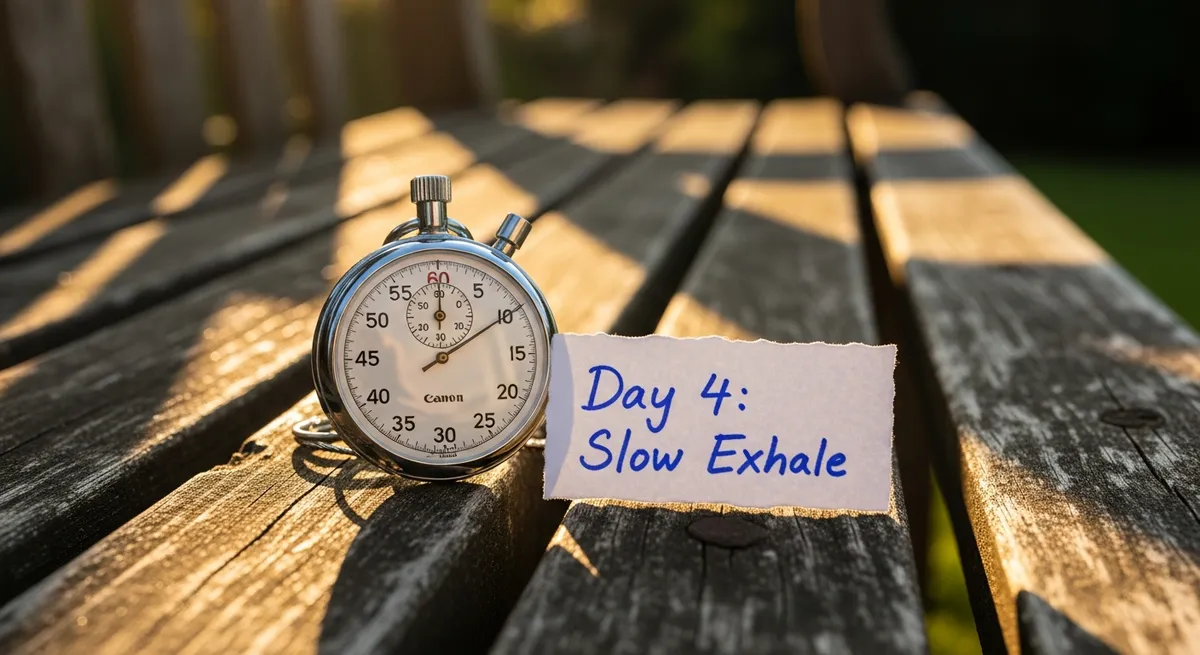
Move to 8–10 minutes for your session. Begin extended-exhale breathing: inhale for 4 counts, exhale for 6–8 counts. Let your jaw go soft, because if you clench your jaw the tension travels straight into your chest and shortens your exhale and so your breathing pattern suffers more than you might expect. Keep in mind that lips slightly parted can help you keep your jaw relaxed during this practice.
Days 5–6: Add Cyclic Sighing
Spend the first half of your session (about 5 minutes) with extended-exhale breathing. Then try 5 minutes of cyclic sighing on top of that. Notice how your body feels afterward — most people find a distinct shift in their nervous system within just a few rounds, and that shift is the whole point of adding this practice.
Day 7: Free Practice + Reflection
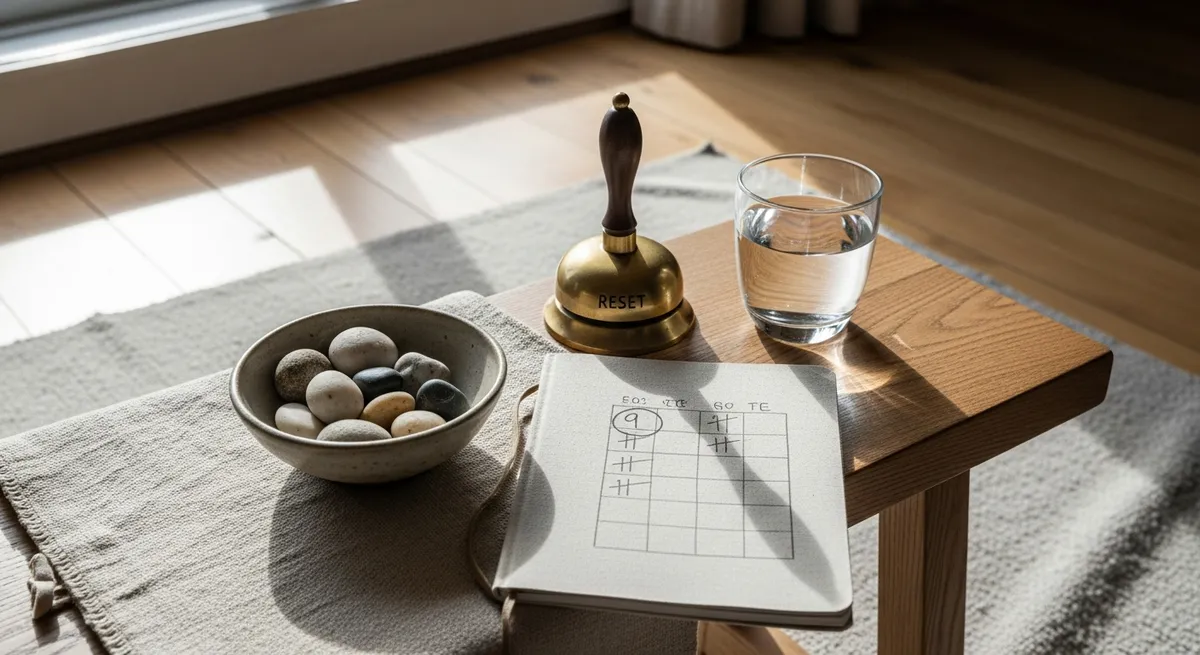
Breathe at whatever pace feels natural to you today. Then spend 2–3 minutes noticing: is your resting breath slower than it was on Day 1? Do you feel steadier when you consciously slow down your breathing? Jot a note or two. The simple fact is that this reflection is what turns a week of practice into intentional habit-building, so do not skip the reflection part.
Common Beginner Mistakes to Skip
A Note on Safety
Breathwork is gentle and safe for most people, but dizziness, tingling, or shortness of breath that doesn't pass are signs to stop and rest. If you have a respiratory condition, cardiovascular concerns, or are pregnant, check with your healthcare provider before starting a new breath practice.
Where to Go After Day 7
Think of this week as your runway, not your destination. From here, you can explore pranayama — the formal breath practices from the yoga tradition — including Nadi Shodhana (alternate nostril breathing) or Bhramari (humming bee breath). A local yoga class or a teacher-led online session will accelerate your progress; guided instruction makes a measurable difference in outcomes, according to the research above.
The goal isn't perfection. It's showing up every day, even imperfectly, until the practice starts to feel like something you miss when you skip it.
The Bottom Line
Seven days won't rewire your nervous system permanently — but they will show you that a daily breath practice is doable, calming, and worth continuing. Start with five minutes. Lengthen the exhale. Be consistent. The rest builds from there.