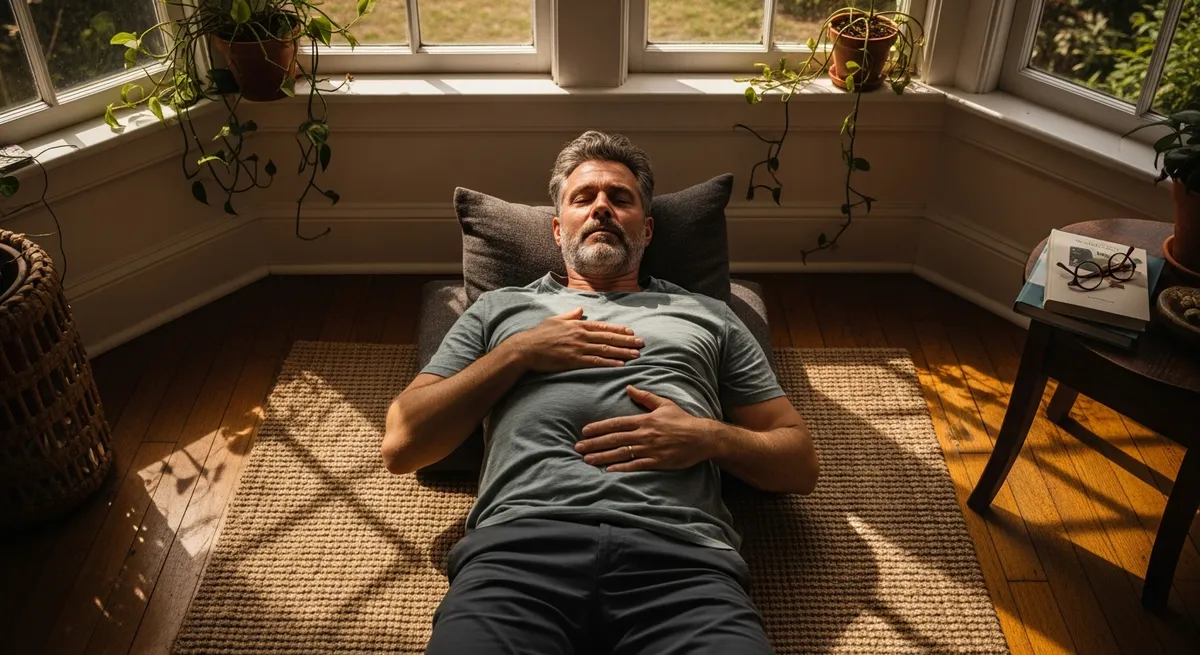
You sit down, close your eyes, and immediately your mind sprints toward your to-do list. Sound familiar? Breath counting meditation was designed for exactly this moment. It gives your wandering mind one small, honest job to do — count each breath — and that single job turns out to be one of the most effective entry points into meditation there is.
What Breath Counting Meditation Actually Is
The practice is exactly what the name says. You breathe naturally, and you count each breath silently. Most traditions count from one to nine, then start over again at one. So the practice is really as simple as breathing and counting.
That small number is not arbitrary. Keep in mind that a short cycle is easy enough to hold in your mind completely, and this means you will actually notice the moment you lose your count and so you can bring your attention back right away. Noticing that you have drifted is the whole point of the practice.
Research published in the Journal of Neurophysiology found that several brain regions linked to emotion, attention, and body awareness activate when you pay attention to your breath. The simple fact is that the act of focusing is not passive at all because focusing is doing real work in your brain. So when you practice breath counting, your brain is genuinely active.
Where This Practice Comes From
Breath counting is old. The simple fact is that this practice traces back roughly 1,500 years through Zen and Tibetan Buddhist traditions, where practitioners built up gradually — starting with five counted cycles, then working toward seven, and eventually reaching twenty-one or more and so the practice grew in difficulty over time.
Keep in mind that these practitioners were not just adding time for its own sake. These practitioners were training sustained attention, and they understood that you raise the difficulty slowly or the mind gets frustrated and quits because the mind does not respond well to being pushed too hard too fast. That wisdom still applies today, and it still applies to your practice just as much as it did to theirs.
Why Counting the Breath Works
Deep, slow, rhythmic breathing can reduce anxiety, fear, pain, and depression — and it does so partly by activating your parasympathetic nervous system, your body's built-in rest-and-restore response. The counting layer adds a second benefit: it trains focused attention by giving your mind a simple anchor it can keep returning to.
Paced breathing exercises can both focus attention and regulate the nervous system — which is why this deceptively simple technique has outlasted centuries of wellness trends.
How to Do It: A Step-by-Step Start
The Most Common Beginner Mistake
New practitioners almost always start controlling the breath the moment they start counting it — holding it longer, pushing it deeper, making it "even" so the numbers line up neatly.
Let that go. Your only job is to follow the breath with the count, not the other way around. The breath leads; the numbers follow.
When Your Mind Wanders (It Will)
Losing count is not failure. It is the practice. The repetition that actually builds skill isn't a clean run from one to nine — it's the moment you catch yourself thinking about dinner or replaying a conversation, and you quietly walk your attention back to one.
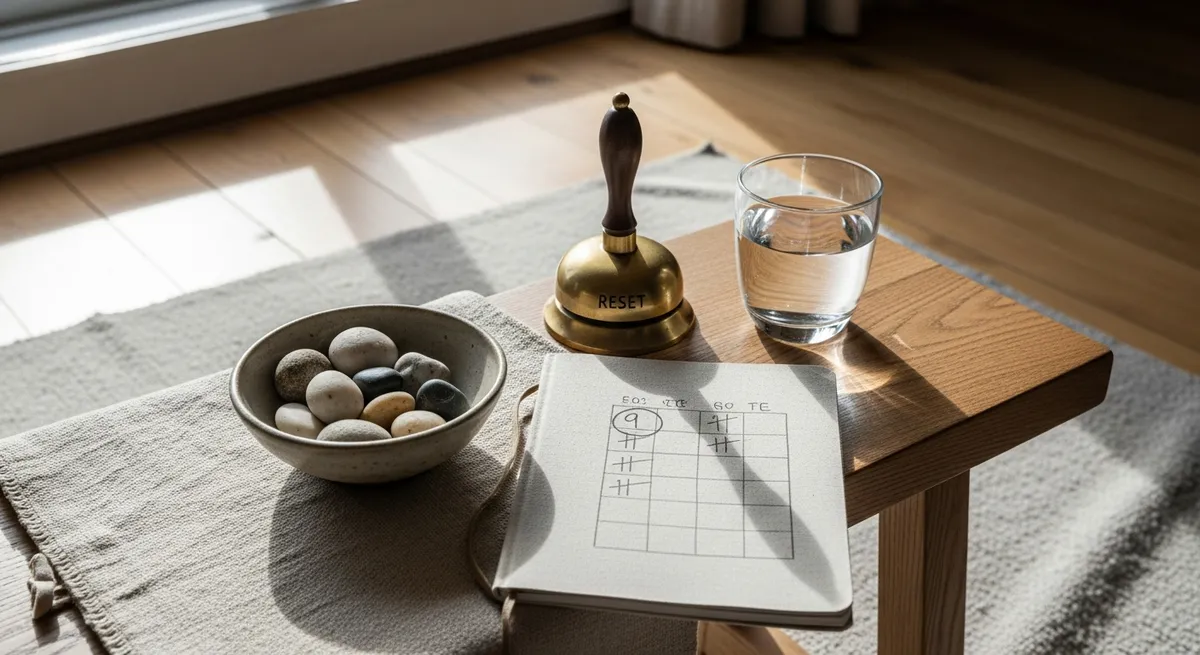
Every return is one mental rep. A session full of wandering and returning is a session full of exactly the work you came to do.
A small trick experienced meditators use
When you notice you've drifted, pause for one second and note — in a single word — where your mind went. Planning. Replaying. Worrying. Then return to one. Over a few weeks, this tiny habit reveals the shape of your own distraction, and that self-knowledge is genuinely useful far beyond the cushion.
A Note on Safety and Expectations
Breath counting meditation is gentle and accessible for most people. Keep in mind that most people who try breath counting find it a calm and low-risk practice. That said, a 2020 review of 83 studies found that about 8 percent of participants experienced a negative effect from meditation practices — a reminder that any mind-body practice deserves a thoughtful approach. The simple fact is that meditation is not completely without risk for every person, and so it is worth approaching your practice with care and awareness. If you have a history of trauma, anxiety disorders, or other mental health concerns, you should check in with a qualified healthcare provider before beginning a new meditation practice, because a qualified healthcare provider can help you decide if this practice is right for your situation.
How to Build From Here
Think like those ancient practitioners and start small and add gradually because building slowly is the way the practice becomes a real habit for you.
The simple fact is that consistency matters far more than duration. Keep in mind that ten minutes every day will outpace forty minutes twice a week, every time. Your consistency is what builds the practice, not the length of any single session.
The bottom line
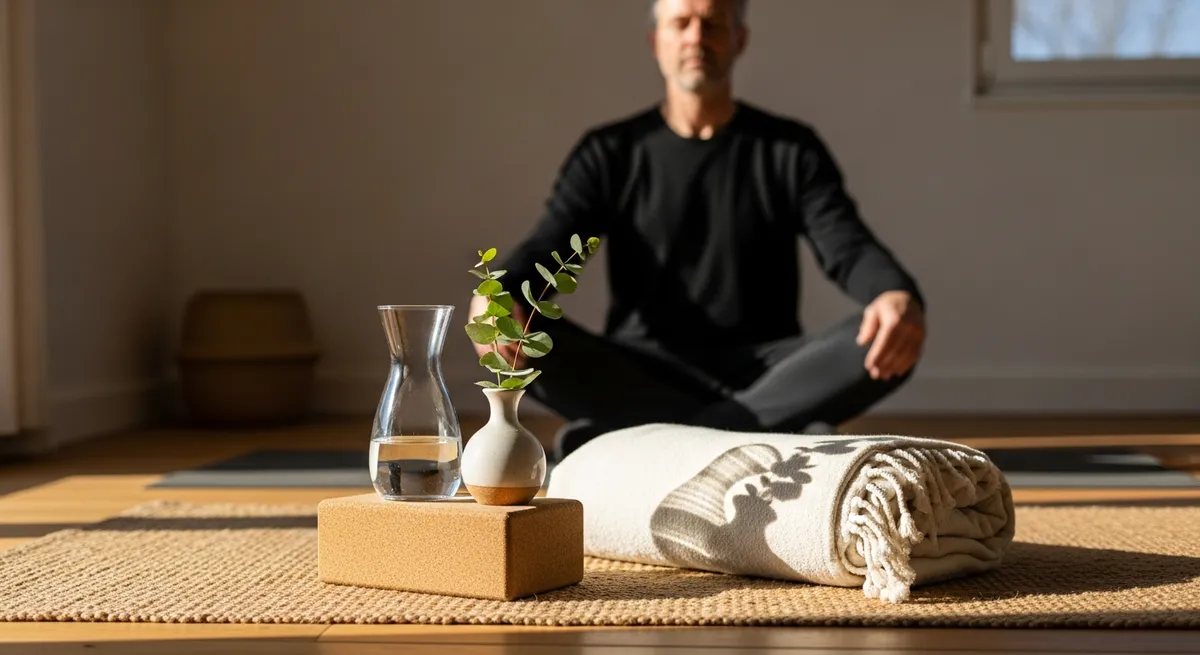
Breath counting meditation asks almost nothing of you and so it is one of the most accessible practices you can start today, because all you really need is your breath and a small number. The simple fact is that this simplicity is the whole point. You do not need a special cushion, and you do not need a perfectly quiet room, and you do not need years of experience to do this well. Keep in mind that what you do need is just a few minutes, a willingness to keep beginning again, and the understanding that every time you return to one, you are doing it exactly right. That point is worth repeating: every single return to one is not a failure, it is the practice itself working exactly as it should for you.