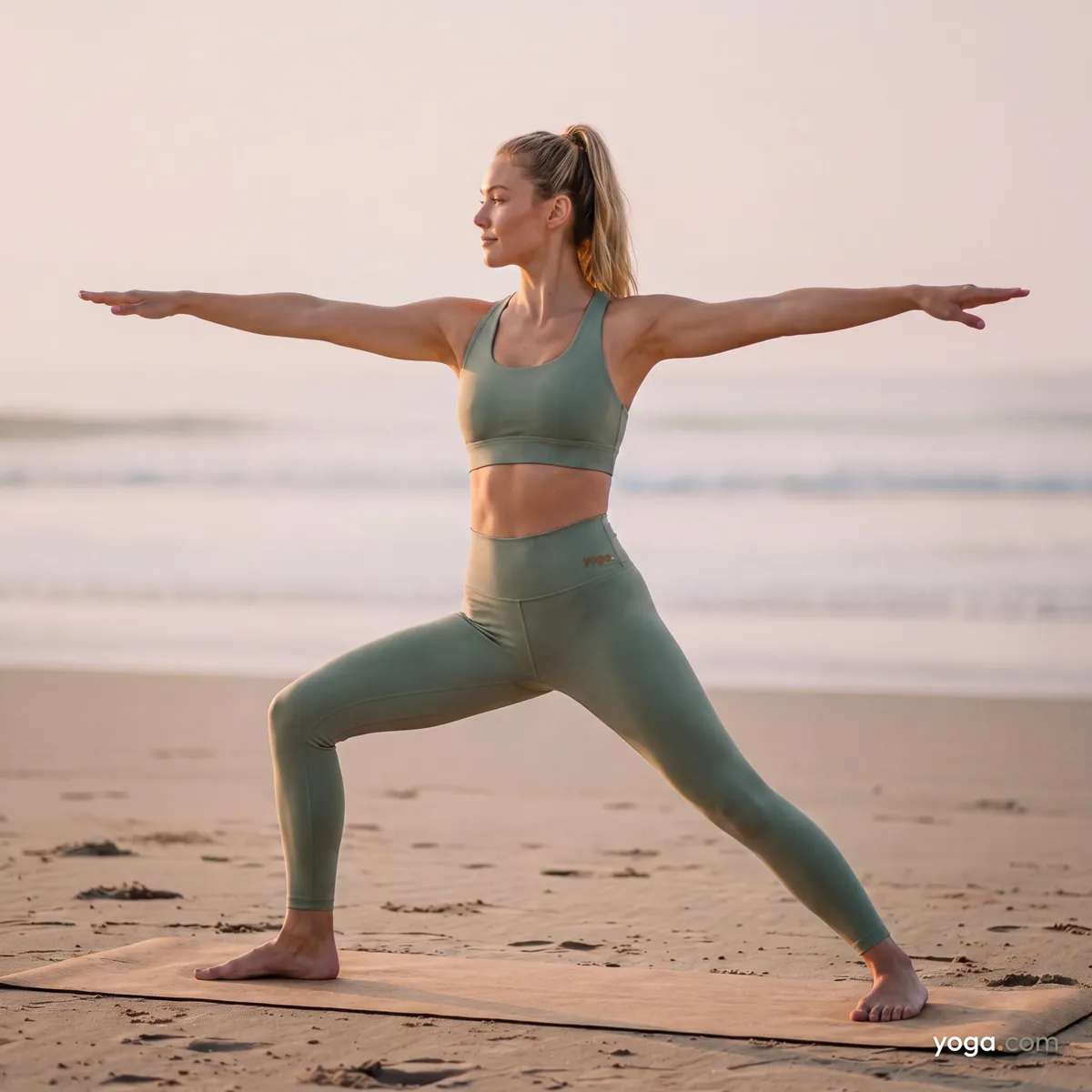
A cleared patch of living-room floor and a mat - that's the entire setup a full-body beginner sequence requires. Maybe your back aches, maybe you want to move more, maybe you just need an hour that's yours - whatever finally brought you to yoga, this is one of the smartest places to start. The sequence covers every major area of the body and asks for no prior flexibility.
You Don't Need to Be Flexible to Begin
This is the one thing worth saying upfront: flexibility is the result of yoga, not the entry requirement. A beginner sequence uses simpler poses, shorter holds, and a slower pace - by design. Your job on day one is simply to show up and breathe.
And the research backing yoga's benefits is genuinely encouraging. A 2018 report by the Agency for Healthcare Research and Quality evaluated 8 trials of yoga for low-back pain (1,466 total participants) and found that yoga improved both pain and function in the short term and the intermediate term. Separately, a 2017 review of 3 studies involving 188 participants found short-term benefits for neck pain intensity and related disability. These findings apply to yoga broadly - if you have a specific back or neck condition, check with your doctor before starting.
Beyond pain, a national survey of over 1,000 yoga practitioners found that 86.5% reported improved happiness and 68.5% reported improved sleep. Results vary from person to person, but the direction of the evidence is encouraging.
What a Full-Body Sequence Actually Covers
A well-built beginner sequence moves through all the major regions: legs, hips, spine, shoulders, and core. You won't hammer any single area - you'll touch everything gently and leave feeling more awake than when you started.
Each pose is linked to your breath. Give every shape 3-5 slow, full breaths before moving on. The breathing isn't a bonus feature; it's half the practice.
The Sequence: 6 Poses, Step by Step
1. Mountain Pose (Tadasana) - 3-5 breaths
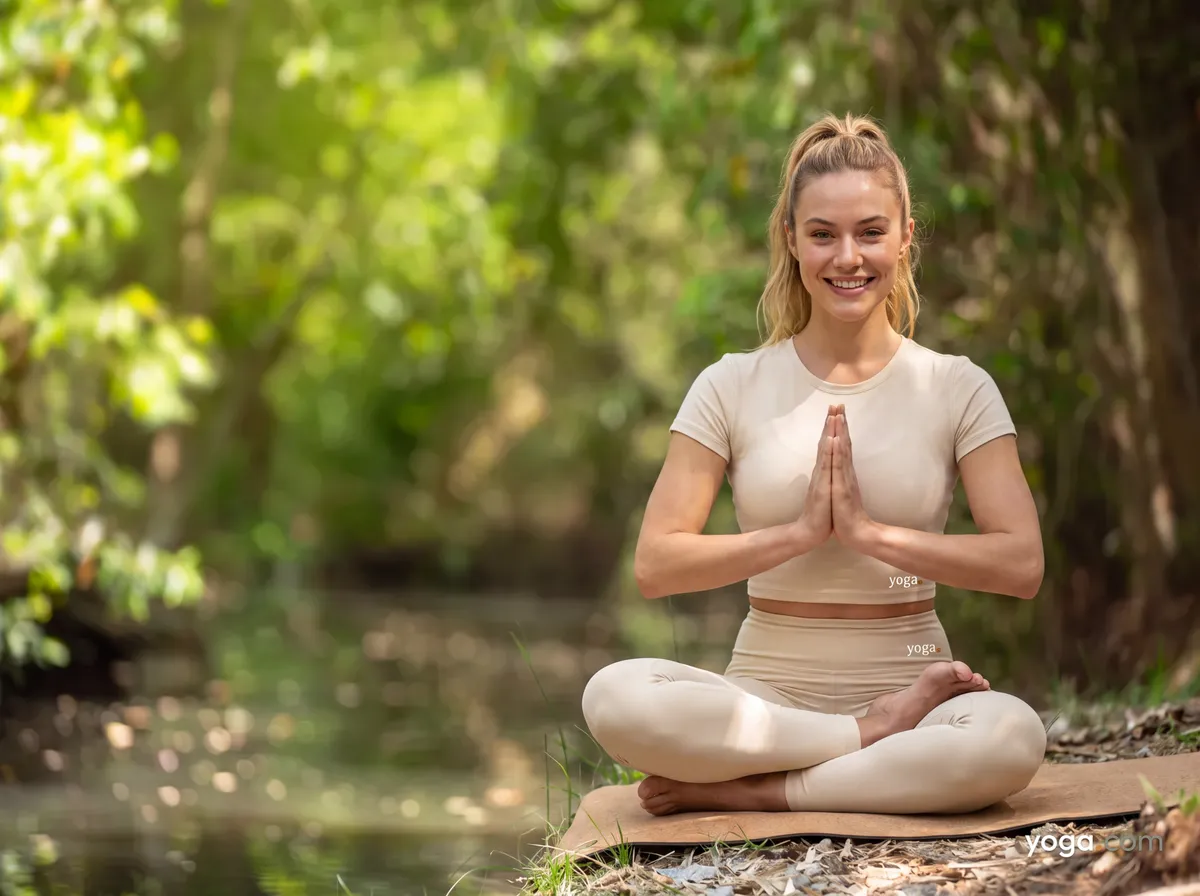
Stand with feet hip-width apart, weight even across both feet, arms relaxed at your sides. It looks like plain standing - but it trains the posture muscles of your legs, core, and upper back all at once.
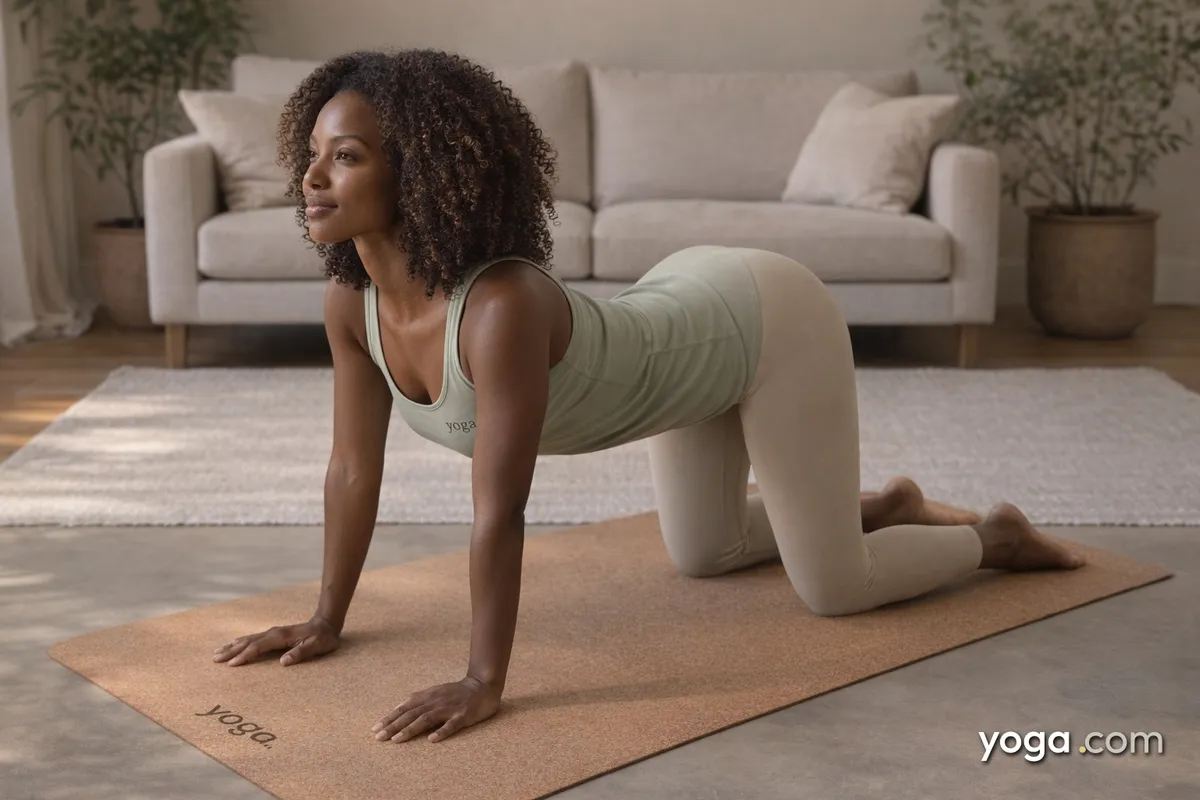
2. Cat-Cow (Marjaryasana-Bitilasana) - 1-2 minutes
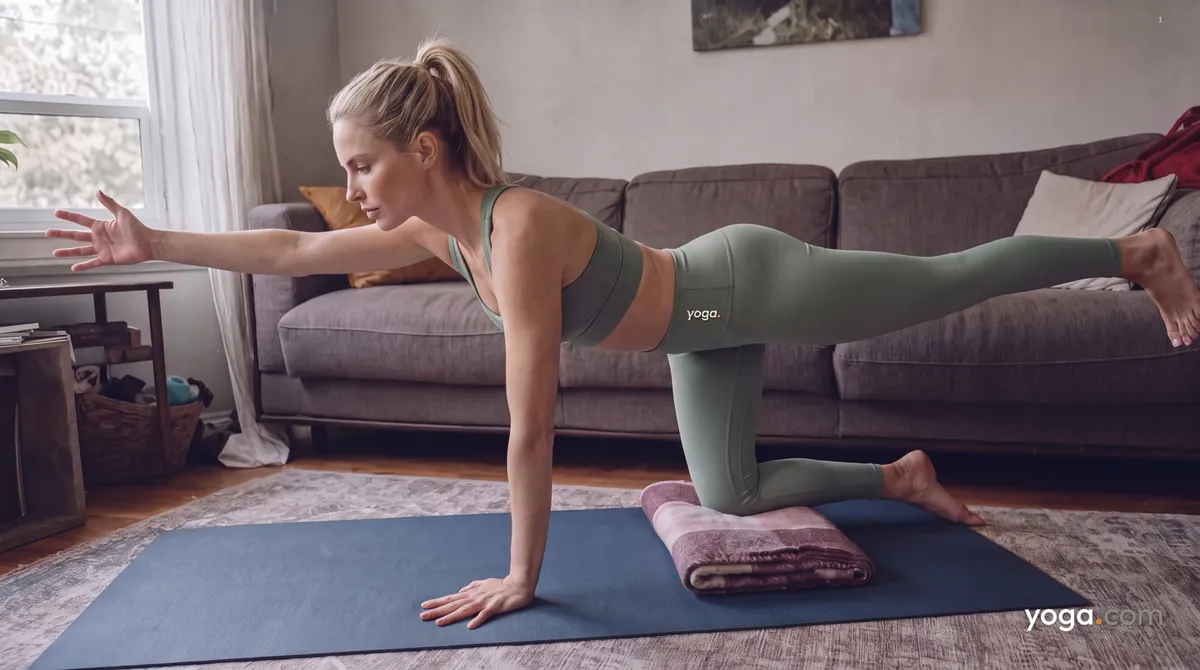
Come onto hands and knees, wrists under shoulders, knees under hips. Inhale: drop the belly, lift the chest (Cow). Exhale: round the spine toward the ceiling, tuck the chin (Cat). Repeat 8-10 times slowly. This is one of the gentlest, most effective ways to wake up the entire spine.
3. Child's Pose (Balasana) - about 1 minute
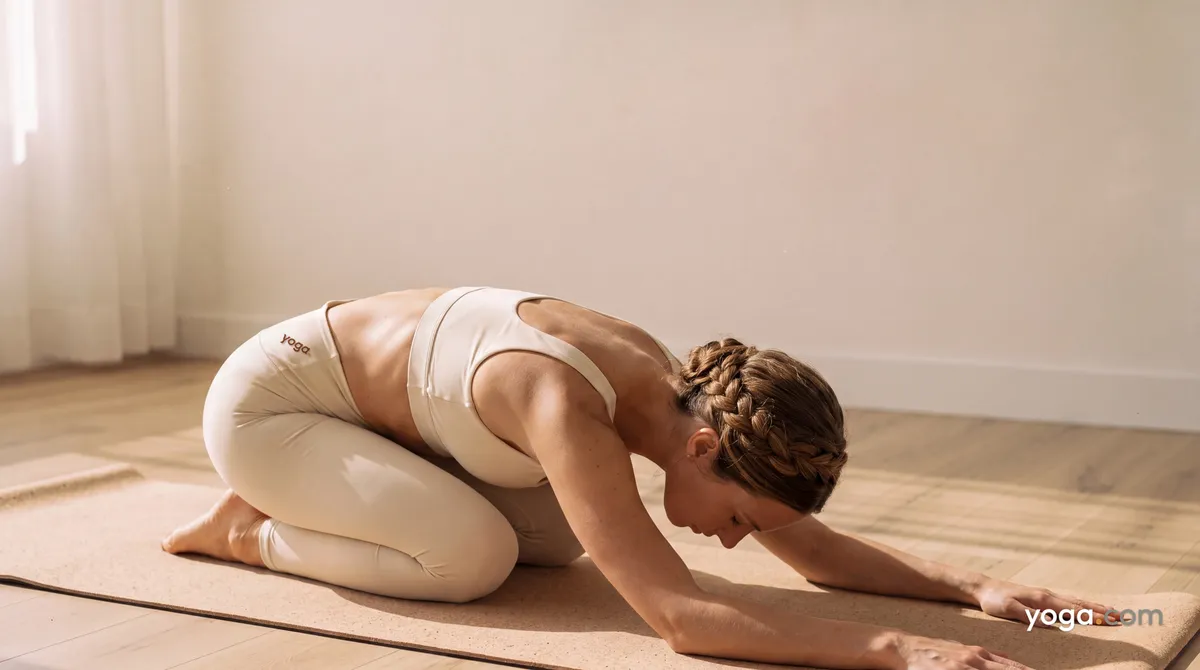
Kneel, bring big toes together, let knees fall wide, and walk your hands forward until your forehead rests on the mat. This is a true rest pose - it lengthens the lower back and the sides of the torso.
4. Downward-Facing Dog (Adho Mukha Svanasana) - 3-4 breaths
From hands and knees, tuck your toes and lift your hips up and back into an inverted V-shape. Bent knees are completely fine - a long, flat back matters far more than straight legs here. You'll feel a stretch through the hamstrings, calves, and shoulders simultaneously.
5. Warrior I (Virabhadrasana I) - 3-5 breaths each side
From standing, step one foot back, angle it out slightly, bend your front knee over your front ankle, and reach both arms overhead. This pose builds real leg strength and opens the front of the hips and chest at the same time.
6. Seated Forward Fold (Paschimottanasana) - 5 breaths
Sit with legs extended, and fold forward from the hips, reaching toward your shins, ankles, or feet - wherever you comfortably land. This stretches the entire back line of the body, from the soles of your feet to your lower back.
A Few Things to Keep in Mind Before You Begin
How Often Should You Practice?
For many beginners, two or three sessions a week is enough to start noticing a difference in how their body feels - though how quickly benefits appear varies from person to person. Consistency matters more than duration - a 20-minute practice you actually do beats a 60-minute one you skip.
As the sequence starts to feel familiar, you can add holds, introduce new poses, or follow along with a beginner class online or in your community. The sequence above is a foundation, not a ceiling.
If You Take One Thing From This
Starting yoga doesn't require flexibility, experience, or a studio membership. This six-pose full-body sequence gives you a safe, complete place to begin - one pose, one breath at a time. Show up consistently, listen to your body, and trust that the rest will follow.