
Building a Sleep Routine That Sticks — and Knowing When It's Medical
Yoga Bedtime Routine for Better Sleep
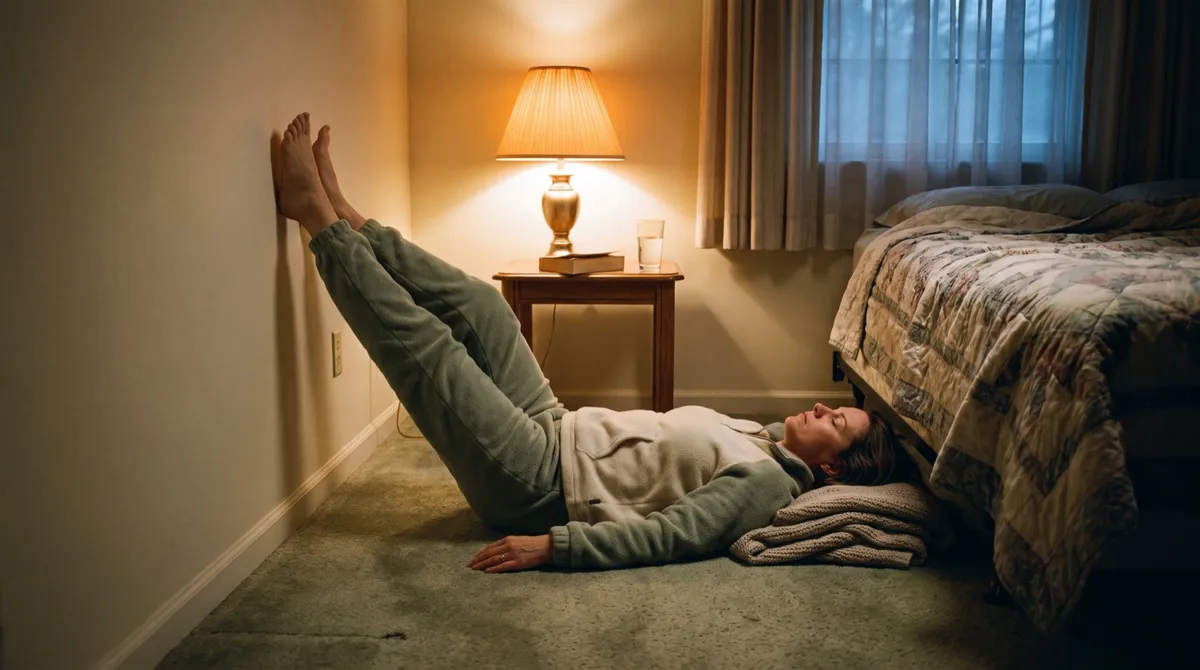
Many folks turn to yoga as a natural way to improve their sleep, but as with any healthy habit, the trick is sticking with it.
A short nightly yoga routine can support better sleep — modestly, and gradually. But it's important to know the limits of yoga's window of benefit as well as the red flags that signal when it's time to seek professional help for your sleep woes.
Building a Yoga Bedtime Routine for Better Sleep
A yoga routine for better sleep is a supplement to — not a substitute for — your core sleep habits. You'll start with the building blocks of good sleep: a consistent sleep/wake schedule, a cool, dark, quiet, screen-free bedroom, limited caffeine and alcohol, and a regular wind-down.1 On top of those habits, you can layer a short yoga practice to deepen your relaxation and prepare your body to sleep.
Start With Your Wind-Down
Establishing a wind-down routine helps you transition from alert activity to a state of rest. Choose calming activities that you enjoy. Read a book, take a warm shower, and listen to soothing music. Aim to do these activities at the same time, every night, for about 30 minutes. Try to keep this wind-down time low-stimulation: no phones or e-readers, no checking email or social media, and no stressful conversations.1
Next Up: Relaxing Poses and Breathing
When your wind-down is complete, you're ready to move into the yoga portion of your routine.
- Supta Baddha Konasana (2 minutes): lie on your back, soles of feet together, knees falling wide, one hand on your belly to feel the breath drop downward.
- Legs-Up-the-Wall (3 minutes): scoot your hips close to the baseboard and let both legs rest vertically against the wall, arms loose at your sides — letting your legs rest after the day.
- Seated Forward Fold (2 minutes): sit with legs extended, hinge from the hips and let your hands rest wherever they land on your shins or feet, noticing the gentle pull along the backs of your legs.
- Supine Spinal Twist (1 minute per side): lie on your back, draw one knee across your body toward the floor while your opposite arm extends wide, feeling the release along the side of your spine, letting a long, slow exhale go.
- Close with 4-7-8 breath: inhale for 4 counts, hold for 7, exhale for 8, for four cycles.
Want the longer, fully guided version? Our bedtime yoga sequence walks you through it pose by pose.
Finish With Yoga Nidra
Finally, close out your routine with yoga nidra, a guided relaxation meditation done lying down in Savasana while a recorded guide leads you through a body scan, breath awareness, and visualization — you can find free recordings through apps or YouTube to follow along.
Don't worry if the routine feels rocky in the first few weeks; skipping a night is fine as long as you return the next. The American Academy of Sleep Medicine and the Sleep Research Society recommend adults regularly get 7 or more hours of sleep2, so keep your routine simple and repeatable rather than elaborate.3
It's also okay to feel like you're spending more time in the wind-down phase than you are on yoga poses and breathing — the poses and 4-7-8 breathing add only about ten to fifteen minutes on top of your wind-down, and the closing yoga nidra is optional. If you find yourself still lying awake after about twenty minutes, get out of bed and do something calm in low light — read a few pages, for instance — then come back when you feel sleepy, rather than staying in bed watching the clock.1
Your yoga routine is a long-term habit, not an all-nighter. The benefit builds over weeks, not hours. The trial behind this program ran four weeks4, and across the wider research the gains accrue gradually with consistent practice, so expect steady rather than overnight change — tracking your sleep-onset time each morning for two weeks gives you concrete evidence of progress and a data point your provider can act on if improvement stalls.
When It's Medical: Insomnia and Sleep Apnea
We all experience sleepless nights from time to time, but if you frequently find it difficult to fall or stay asleep, you could have insomnia. Chronic insomnia disorder means trouble falling or staying asleep 3 or more nights a week, for 3 or more months, with daytime consequences.5 A consistent yoga routine can support your sleep, but it won't cure insomnia. For a plain-language overview of its causes, diagnosis, and treatments, the NHLBI is a good place to start.6
The American College of Physicians guideline on treating insomnia recommends cognitive behavioral therapy for insomnia (CBT-I) as the first-line treatment for insomnia in adults.5 The American Academy of Sleep Medicine's guideline strongly recommends the multicomponent version.7 It follows the principles of behavior therapy and cognitive therapy, and it's tailored to each person — melatonin and other supplements, by contrast, are not a cure-all and should be discussed with a clinician rather than self-prescribed.8
If you try a regular yoga routine and make other positive sleep changes but still have difficulty falling or staying asleep, consider working with a CBT-I therapist. Ask your primary care provider for a referral.
Sleep apnea causes you to repeatedly stop and start breathing while you sleep, and it's marked by loud snoring, breathing pauses someone else notices, gasping or choking awakenings, and heavy daytime sleepiness.9 Sleep apnea is a medical condition. It needs a diagnosis — often a sleep study — and a prescribed treatment plan, and yoga cannot treat it.9
The good news is that sleep apnea is treatable. If you think you may have a sleep disorder, talk to your healthcare provider. They may recommend a sleep study to determine if you have OSA or another condition; the AASM's patient guide walks through what evaluation and treatment involve.10
If your sleep problems persist or get worse, it could be a sign that it's time to see a professional. Yoga can sit alongside proper treatment as a calming adjunct, but it is never a replacement for care; MedlinePlus offers a plain-language guide to insomnia self-care and when to seek help.11
References
- American Academy of Sleep Medicine, SleepEducation.org — Healthy sleep habits
- Watson NF et al. Recommended amount of sleep for a healthy adult: AASM and Sleep Research Society consensus statement. (PubMed)
- Harvard Health Publishing — 8 secrets to a good night's sleep
- Mustian KM et al. Multicenter randomized controlled trial of yoga for sleep quality among cancer survivors. J Clin Oncol. (PubMed)
- Qaseem A et al. Management of chronic insomnia disorder in adults: ACP clinical practice guideline. (PubMed)
- NHLBI (NIH) — Insomnia: causes, diagnosis, and treatment
- Edinger JD et al. Behavioral and psychological treatments for chronic insomnia disorder: AASM clinical practice guideline. (PubMed)
- NCCIH (NIH) — Melatonin: what you need to know
- NHLBI (NIH) — Sleep apnea: symptoms, diagnosis, and treatment
- American Academy of Sleep Medicine, SleepEducation.org — Sleep apnea
- MedlinePlus (NIH) — Insomnia
Disclaimer
This guide is educational and is not medical advice. If insomnia persists — 3 or more nights a week for 3 or more months — or you suspect sleep apnea (loud snoring, gasping, breathing pauses someone else notices), see a clinician: those conditions deserve proper evaluation and treatment, not just a bedtime routine.