
Yoga for Sleep: A Calmer Path to Better Nights
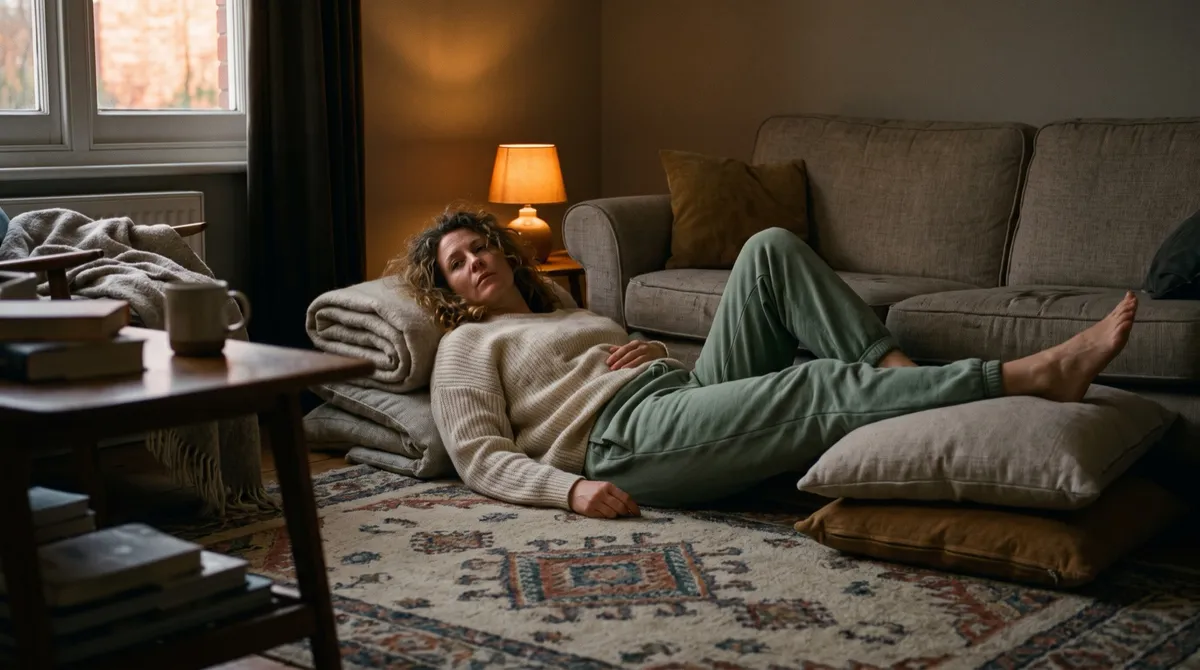
Yoga will not cure a sleep disorder. What it can do is help you wind down — settle a racing mind, slow your breath, and give your body a clear signal that the day is over. This series is six short chapters on doing exactly that: a gentle bedtime sequence, the breathing that steadies your nervous system, the guided rest called yoga nidra, a plan for the nights you wake at 3 a.m., and an honest look at what the research does and doesn't support.
Read it in order or jump straight to the chapter you need tonight. Each one is a four-to-five-minute read, and each ends the same way: with the line between a wind-down aid and a medical problem that deserves a clinician. We draw that line clearly up front, because it matters more than any single pose. None of it asks for special equipment — a strip of floor beside your bed, a stretch of wall, a few minutes, and a dim lamp are enough.
What the evidence really says, in brief
About a third of American adults regularly fail to get enough sleep, according to the CDC, so it's no surprise people try yoga for better sleep.1 The honest answer from the research is encouraging but narrow. A 2020 systematic review and meta-analysis of yoga for sleep in women, which reviewed 19 studies and 1,832 participants, found a significant overall improvement in self-reported sleep quality — a small-to-moderate effect (SMD −0.327).2 In a multicenter randomized trial of 410 cancer survivors, a four-week standardized yoga program — two 75-minute sessions a week of gentle Hatha, restorative poses, breathing, and meditation — produced greater improvements in global sleep quality, wake after sleep onset, and sleep efficiency, and reduced sleep-medication use, compared with standard care.3 A waiting-list controlled trial of yoga for older adults reported similar gains in self-reported sleep quality and quality of life.4 Across the trials the pattern is consistent: people who practice regularly report sleeping better.
The same body of research also marks the limits. In that 2020 review, the three studies that used the Insomnia Severity Index showed no significant reduction in insomnia symptoms2 — yoga improved how people slept more clearly than it treated clinical insomnia. Most of these trials measured subjective outcomes such as questionnaires rather than objective polysomnography, so any benefit builds over weeks of regular practice, not in a single night. A related NIH meta-analysis of mindfulness meditation, across 18 trials and 1,654 participants, found the same shape of result: it improved sleep quality compared with nonspecific controls, but was no better than established, evidence-based sleep treatments.5
So here is the frame for the whole series. Yoga is generally safe and may offer a modest benefit for your sleep quality, but it is not a replacement for CBT-I or other evidence-based treatments.67 If chronic insomnia is the issue, CBT-I remains the first-line treatment for chronic insomnia per clinical guidelines.7 If you're new to yoga, gentle styles like Hatha, Yin, or Restorative are the place to start — they lean on relaxation and stress relief rather than physical challenge. Treat the practice as one part of a bigger approach — a low-risk way to relax and manage stress — rather than a stand-alone fix.
The chapters
Here's the whole series, in order — though each chapter stands on its own:
- Does Yoga Actually Help You Sleep? — what the research shows, and what it doesn't. (~5 min)
- A Gentle Bedtime Sequence — calming poses you can do beside the bed. (~5 min)
- Breathing Yourself to Sleep — the techniques that steady the nervous system. (~4 min)
- Yoga Nidra for Sleep — the guided body-scan rest that isn't quite sleep. (~5 min)
- Awake at 3 A.M.? — what to actually do when you wake in the night. (~5 min)
- Building a Routine That Sticks — making it a habit, and knowing when it's medical. (~5 min)
How to use this series
You can read these six chapters cover to cover, but you don't have to. If you're new to all of it, start with Does Yoga Actually Help You Sleep? for the honest picture, then build the habit with the bedtime sequence and breathing. When you want to go deeper into guided rest, Yoga Nidra for Sleep covers the body-scan practice that sits between waking and sleep. If you're wide awake right now, go straight to Awake at 3 A.M.? and come back to the rest tomorrow. When you're ready to make it stick, Building a Routine That Sticks ties the pieces into a short nightly wind-down and lays out the red flags that mean it's time to see a professional.
Whichever way you use it, keep the routine simple and repeatable — the benefit comes from returning to it, not from getting any one night perfect. And if your sleep stays broken after a few weeks of a consistent wind-down, or the medical signs above show up, treat that as your cue to talk to a clinician, not to add more yoga.
Sources
- CDC — Adults' sleep facts and statistics
- Systematic review & meta-analysis: yoga for sleep quality in women (19 studies, 1,832 participants) — PubMed
- Multicenter randomized trial: standardized yoga program in 410 cancer survivors — PubMed
- Waiting-list controlled trial: yoga and self-reported sleep quality in older adults — PubMed
- NIH meta-analysis: mindfulness meditation and sleep quality (18 trials, 1,654 participants) — PubMed
- NCCIH — Yoga: What You Need to Know
- American College of Physicians guideline: CBT-I is first-line treatment for chronic insomnia — PubMed
- NHLBI (NIH) — Sleep apnea: symptoms, diagnosis, and treatment
Disclaimer
This guide is educational and is not medical advice. Yoga can support better sleep, but persistent insomnia — trouble sleeping three or more nights a week for three months or more — or suspected sleep apnea (loud snoring, gasping, or witnessed breathing pauses) deserves a clinician's evaluation. Talk to a qualified healthcare professional about ongoing sleep problems.