
Breathing Yourself to Sleep: Which Techniques, and Why They Work
How Breathing Exercises for Sleep Can Help You Get More Rest
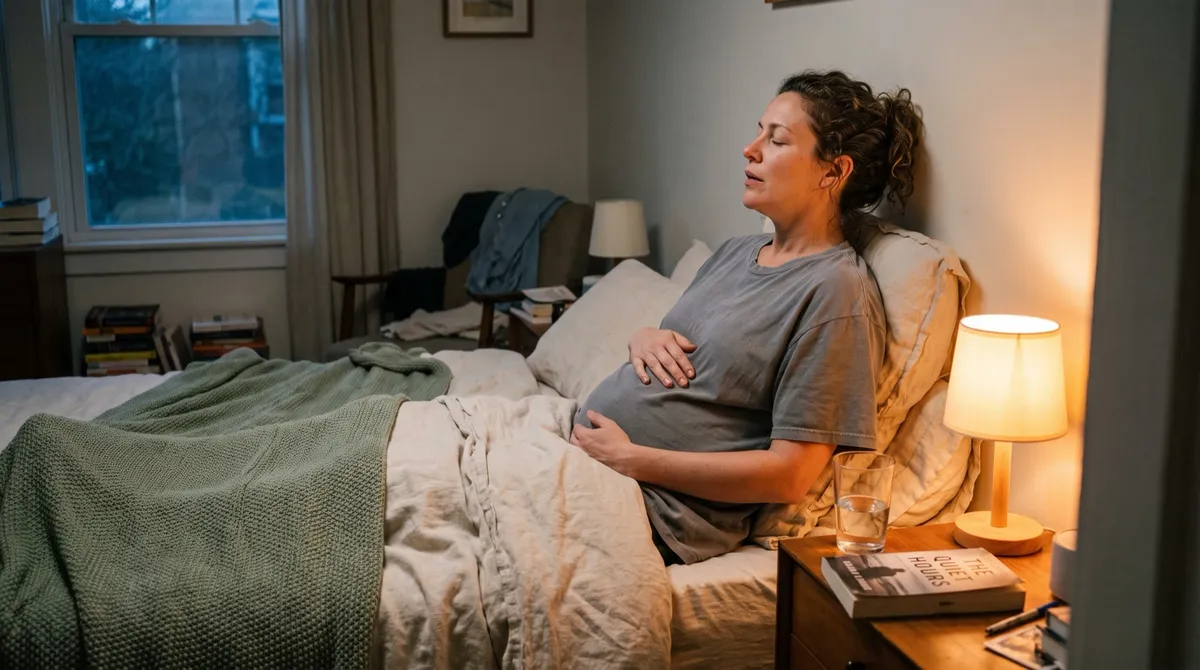
Why breathing exercises for sleep work (and where they don't)
Slow your breathing down to about six breaths a minute, and make the exhale longer than the inhale. This helps shift your nervous system into the state that lets sleep come. That is the main reason breathing exercises for sleep work, and the way they work is well understood.1
Breathing is only one tool among several. What works for one person may do little for another. So if breathing exercises don't help you, other things may do more, like meditation, less screen time before bed, or cutting caffeine later in the day.2
When the anxious thoughts of the day pile up, it is easy to tip into overdrive with the sympathetic nervous system. That is the fight-or-flight side that keeps you alert and gets your body ready for whatever might be coming. But sleep needs the opposite. To fall asleep, you want the parasympathetic nervous system, the rest-and-digest side that calms the heart rate and lets digestion start again. Slow breathing is one of the few ways you can switch that side on yourself.
The mechanism is fairly well mapped: slowing your breathing to around six breaths per minute increases heart-rate variability — a marker of vagal, parasympathetic activity — and can tip the autonomic balance toward that rest-and-digest side.3 The longer exhale is the lever, which is why evening breathwork emphasizes lengthening the out-breath rather than breathing deep and fast.
Three techniques to try tonight
If you're new to it, start with belly breathing (diaphragmatic breathing): let your belly rise on the inhale and fall on the exhale, keeping your chest still. This engages the diaphragm, the large muscle at the base of the lungs, and steadies the breath.
Another easy technique is 4-7-8 breathing, also called 4-7-8 pranayama. Breathe in for a count of 4, hold your breath for a count of 7, and exhale for a count of 8.
Cleveland Clinic describes 4-7-8 as a simple relaxation tool that may help you wind down and fall asleep, not a treatment for a sleep disorder;4 the evidence for that exact count is still young — so far one small physiological study has looked at how it affects heart-rate variability.5
Finally, try box breathing: inhale for a count of 4, hold for 4, exhale for 4, and hold for 4, keeping the holds short and comfortable. Because the count is even, the exhale isn't longer than the inhale, so it calms you by slowing the whole cycle rather than by stretching the out-breath — which is why the longer-exhale patterns stay the stronger pre-sleep pick. If the holds feel like straining, drop them; slow breathing with a longer exhale does the same job without any breath retention.1
Five to 20 minutes at a time is the range worth aiming for. In one controlled study, people with insomnia complaints who practiced slow, paced breathing at about six breaths per minute for 20 minutes before bed fell asleep faster, woke up fewer times, and spent less of the night awake; the practicers also spent a higher share of their time in bed actually asleep, and their heart-rate-variability readings showed exactly the vagal shift the mechanism predicts.6
If you are someone who is having trouble with sleep, the first hour before bed should be devoted to a wind-down routine, so that the body and mind are in a relaxed state before going to bed.
During that hour, you can try the breathing exercises, as well as other practices like meditation, progressive muscle relaxation, or journaling.2
The full step-by-step for extended-exhale and box breathing lives in our pranayama guide, so there's no need to memorize it all tonight.
What it actually takes to work
There is very little cost to trying these techniques. They are safe, they are free, and you can learn them quickly.1 When researchers measured slow, paced breathing with an overnight sleep study, the benefit showed up after a single 20-minute session at about six breaths a minute, done in the hour before bed — one calm run-through ahead of sleep, not a payoff you have to earn over weeks.6 Even so, it helps to treat breathing as a skill worth rehearsing. A technique you have run through on an ordinary evening is far easier to reach for than one you are attempting cold at 2 a.m., frustrated and wide awake. The same holds for the rest of your sleep habits, like keeping a regular bedtime and wake-up time: they do the most good as steady routines. Give breathing more than one night before you decide whether it helps you.
These exercises are not a substitute for treating an underlying sleep condition. If you snore loudly, or a partner notices that you stop breathing or gasp during the night, seek medical attention to rule out sleep apnea. Breathing exercises help you wind down. They do not fix breathing that stops during sleep.7
How to practice safely
Breathing exercises are generally safe, but a few cautions apply. If you're pregnant or have a history of cardiovascular or respiratory disease, keep the breathing gentle, skip the long breath-holds, and check with your doctor before starting a new practice.1 If you feel dizzy, lightheaded, or short of breath while practicing, stop. For most people, though, slow breathing is a safe and easy way to wind down at night.
References
- National Center for Complementary and Integrative Health. Relaxation Techniques: What You Need To Know. https://www.nccih.nih.gov/health/relaxation-techniques-what-you-need-to-know
- Sleep Foundation. Meditation for Sleep. https://www.sleepfoundation.org/meditation-for-sleep
- Russo MA, Santarelli DM, O'Rourke D. The physiological effects of slow breathing in the healthy human. Breathe (Sheffield). 2017;13(4):298-309. https://pubmed.ncbi.nlm.nih.gov/29209423/
- Cleveland Clinic. 4-7-8 Breathing: How It Works and How To Do It. https://health.clevelandclinic.org/4-7-8-breathing
- Physiological study of the 4-7-8 breathing pattern and its effects on heart-rate variability and cardiovascular measures. PubMed. https://pubmed.ncbi.nlm.nih.gov/35822447/
- Tsai HJ, et al. Efficacy of paced breathing for insomnia: enhances vagal activity and improves sleep quality. PubMed. https://pubmed.ncbi.nlm.nih.gov/25234581/
- National Heart, Lung, and Blood Institute. Sleep Apnea. https://www.nhlbi.nih.gov/health/sleep-apnea
This article is educational and is not medical advice. Breathing exercises are a wind-down aid, not a treatment for a sleep disorder. Persistent insomnia (trouble sleeping most nights for weeks or more) or suspected sleep apnea — loud snoring, gasping, or witnessed breathing pauses — deserves evaluation by a qualified clinician.