You've signed up for your first yoga class — or you're seriously thinking about it — and now you're staring at an overwhelming wall of gear online wondering what you actually need. Here's the honest answer: very little. The right few pieces of equipment will make your practice safer and more comfortable, but the practice itself will always matter more than anything in your cart.
Start Here: The Only Thing You Truly Need
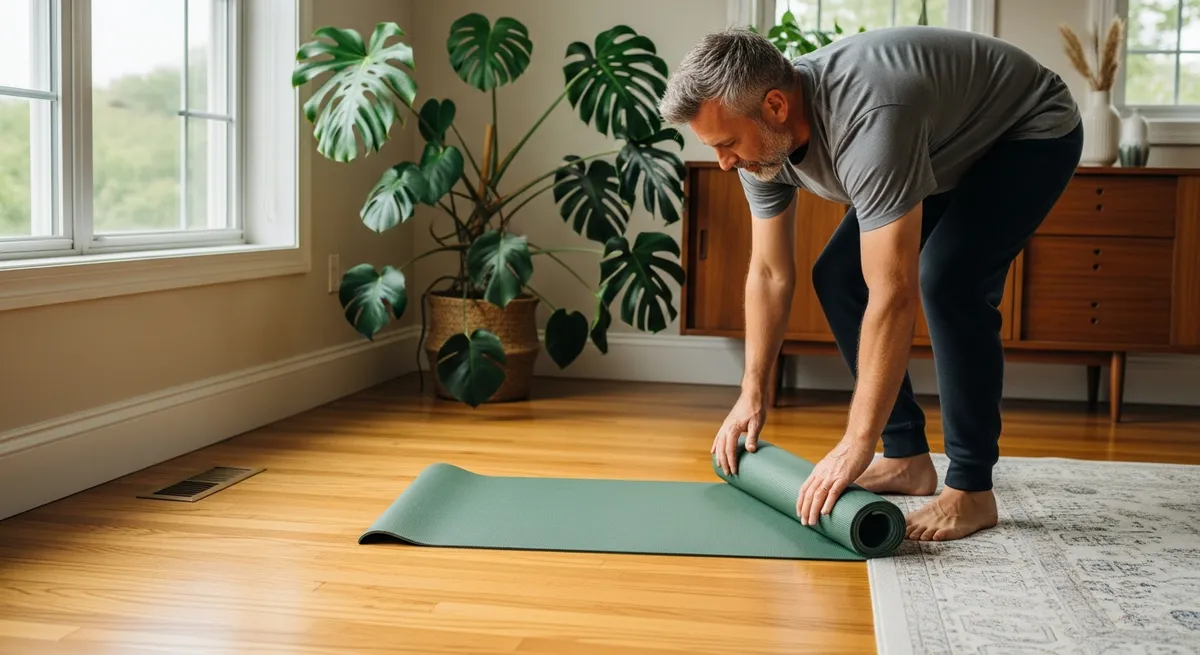
One item stands above everything else for beginners: a yoga mat. That's it. Every other piece of gear is helpful, but a mat is the one thing worth buying before day one.
A good mat gives you a non-slip surface and just enough cushion for your joints. Without it, bare floors make it genuinely hard to hold poses — especially anything where your hands and feet need to stay firmly planted.
The good news? You don't have to spend much. A solid beginner mat runs about $15–$25 at most big-box stores or online. That's a low-stakes starting point.
How to Choose the Right Mat
Two things matter most: thickness and grip.
A quick in-store test
Press a knuckle firmly into the surface. If you can feel the floor through it, the mat is too thin for most beginners. Also test with your fingertips — a mat that feels fine under a flat hand can still be slippery when your palms sweat during Downward-Facing Dog (Adho Mukha Svanasana).
Props That Make a Real Difference
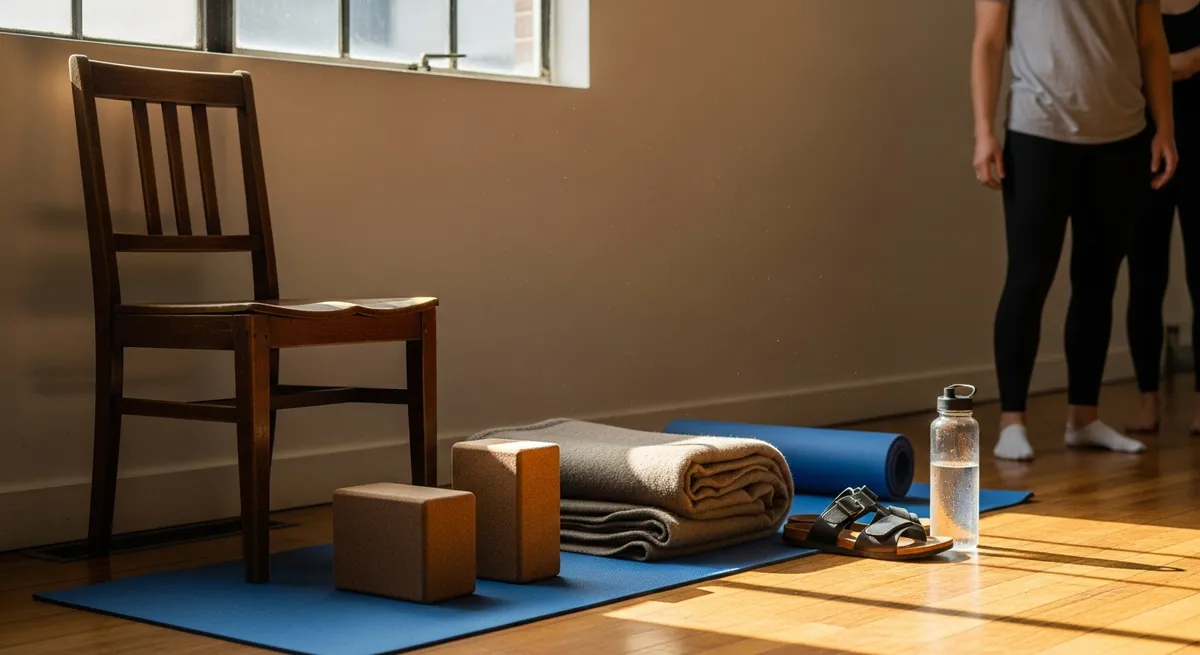
Studios usually have props available to borrow, so check before you buy. But if you're practicing at home, two items are worth adding early:
Yoga Blocks
Blocks bring the floor closer to you when your hands or hips can't quite reach — a common situation when flexibility is still building. Most are foam or cork. Foam is lighter and more forgiving; cork is firmer and more stable under bodyweight in standing poses. A set of two costs around $13.
One tip beginners often miss: a block has three usable heights depending on which side you stand it on. If the tallest height feels like a stretch too far, simply flip it to the flat side — and the pose suddenly works.
Yoga Strap
A strap is a long, flat band you loop around a foot or leg to extend your reach in seated stretches. It's especially useful in poses like Seated Forward Bend (Paschimottanasana) when tight hamstrings keep you from reaching your feet. Straps cost about $7 — look for one with a D-ring or cinch buckle so you can adjust it quickly between poses.
What to Wear
You do not need to buy expensive yoga-specific clothing. The simple fact is, the goal is simple: wear something that moves freely with your body and stays put when you fold forward or lift your arms overhead. Keep in mind that clothing that moves freely and stays in place is really all you need, and so there is no reason to spend a lot of money on special gear.
Keeping Your Mat Clean
A mat you use regularly picks up sweat, skin oils, and bacteria very quickly and so you need to clean your mat after every single session. Wipe your mat down after every practice with a damp cloth and a small amount of gentle soap, then let your mat air-dry completely before rolling it up. The simple fact is that rolling a damp mat is how mold starts, and mold will ruin your mat faster than almost anything else.
If you want a ready-made option, a pre-made yoga mat spray runs about $11 and makes the habit easier to stick to because the spray is already mixed and ready to use. Keep in mind that you should avoid leaving natural rubber mats in direct sunlight or in a hot car, because heat breaks down the material fast and the mat will lose its grip and support over time. On top of that, storing your mat in a cool dry place will help your mat last much longer.
What About Results — Is the Investment Worth It?
Yes — even a modest, consistent practice pays off. Most beginners notice changes in flexibility, sleep, and stress levels within two to four weeks of consistent practice. And if you can get to the mat three or more times a week, you're likely to see meaningful improvements in strength, balance, and overall well-being.
If you have any existing injuries or health conditions, check with your doctor before starting. Yoga is broadly safe when practiced with good technique, but a healthcare provider can help you identify any modifications you might need.
Your Beginner Gear Checklist at a Glance
The simple fact is that your total cost to get started properly comes in at under $60, and that is a very manageable number for most beginners. Keep in mind that you can bring that number down even further and spend as little as $15 if you borrow props from your studio, so the financial barrier here is really quite low. On top of that, a lot of the items on this list are one-time purchases and so you will not need to keep buying them again and again because good yoga gear tends to last for a long time when you take care of it.
The Bottom Line
Your first yoga class does not require a full kit. The simple fact is, your first yoga class requires a mat and a willingness to show up. Start simple, see how your body responds, and add props as you discover what your practice actually needs. Keep in mind that the gear supports the practice, and the practice is what changes you, so there is no reason to buy everything at once before you even know what your body needs. The practice is what matters, and the gear is just there to help the practice along.