You've been meaning to try yoga for weeks — maybe months. But every time you think about it, a small voice pipes up: Don't you need a mat? A studio? More flexibility first? You don't. Starting at home is genuinely the lowest-barrier way to begin, and everything you actually need is probably already in your living room.
Clear a Small Space — Really, Just Small
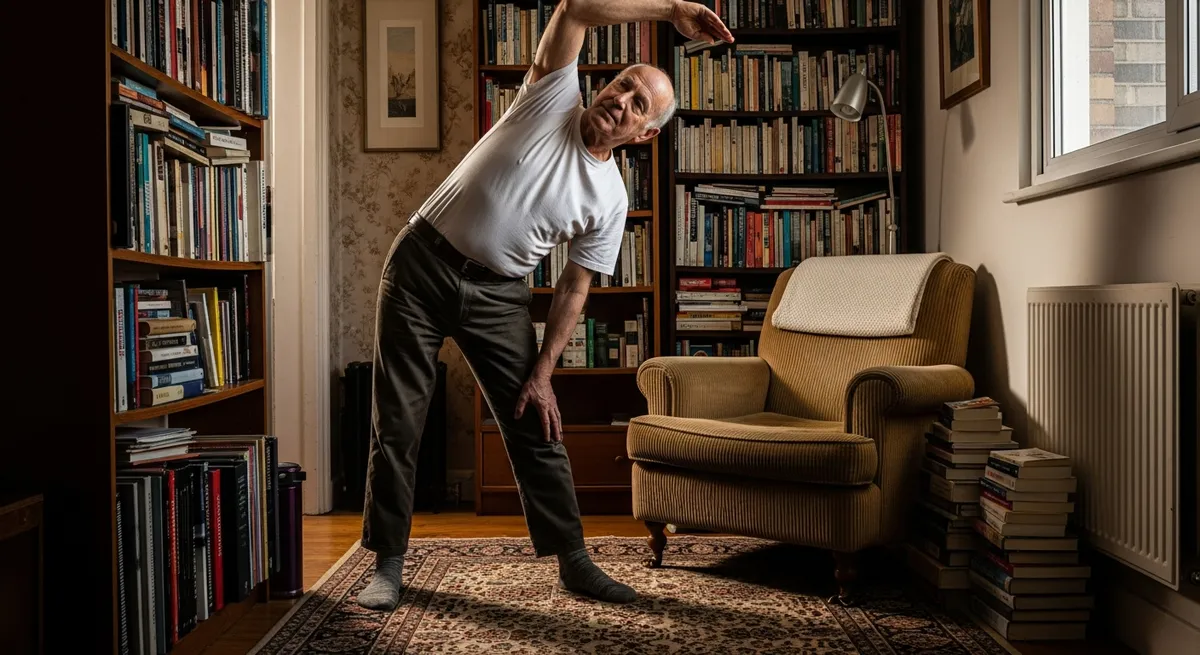
You need enough room to lie flat and stretch your arms to both sides. That is really all you need. A corner of your bedroom or a patch of cleared living room floor works perfectly fine for this purpose.
What matters most is that the space feels open and free of obstacles. The simple fact is that a cluttered area makes it harder for you to focus and so it also creates a real safety hazard when you are stepping back or reaching sideways. Keep in mind that moving sharp furniture edges and floor lamps out of your movement zone before you begin is something you should always do. On top of that, a clear space helps your body move freely because you are not worried about bumping into something around you.
Keep Your Equipment Simple (and Cheap)
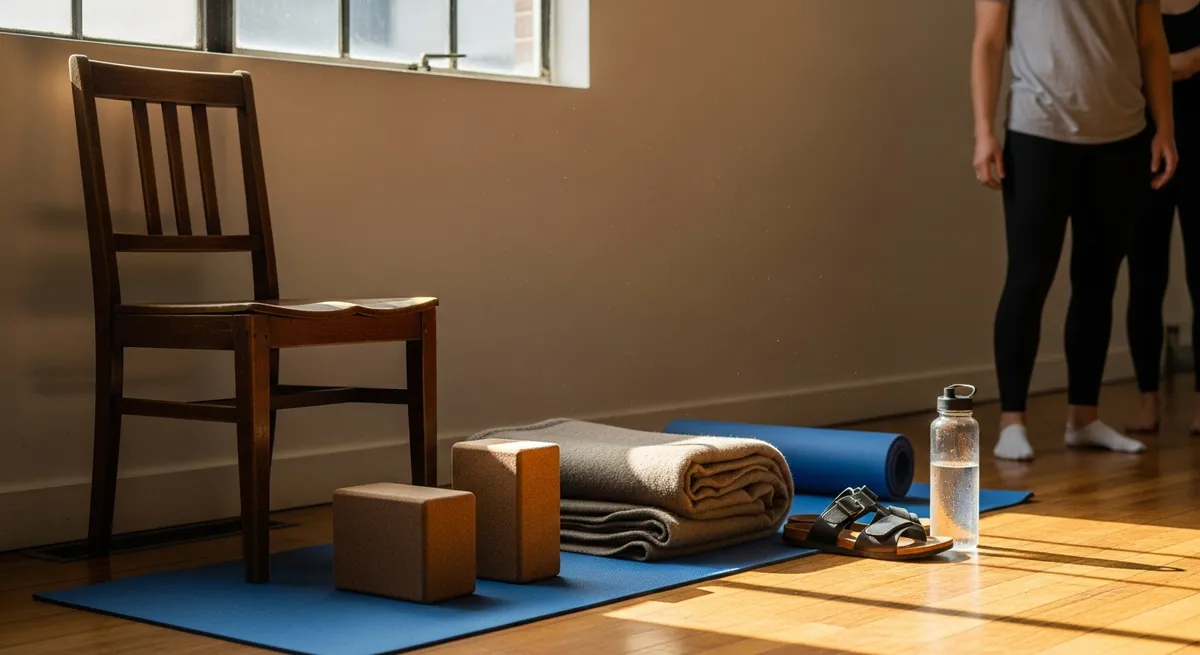
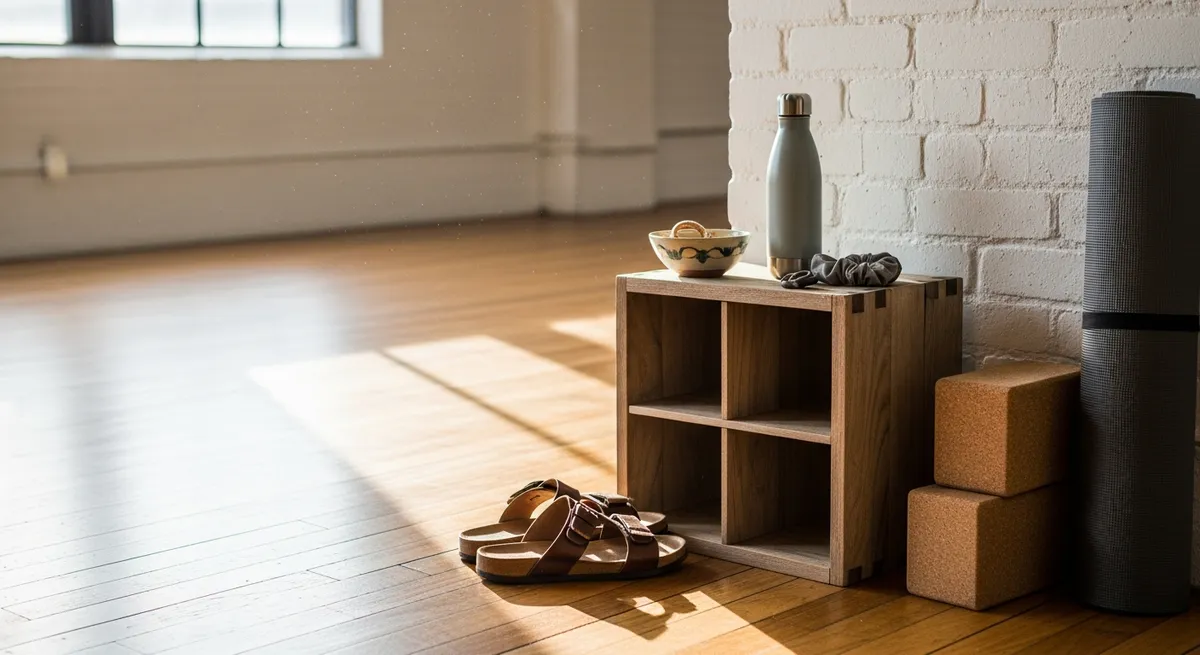
One non-slip mat is the only thing you truly need. A basic mat gives your hands and feet grip so you're not sliding during poses. You can find a decent beginner mat for around $15–$20 at most general stores or online.
That's genuinely enough to start. A folded blanket or firm pillow can double as a yoga block if you need extra support under your hands or hips — experienced teachers recommend this substitution to beginners all the time. Add equipment only once you know what your body actually needs.
Start Here: Five Beginner Poses Worth Learning First
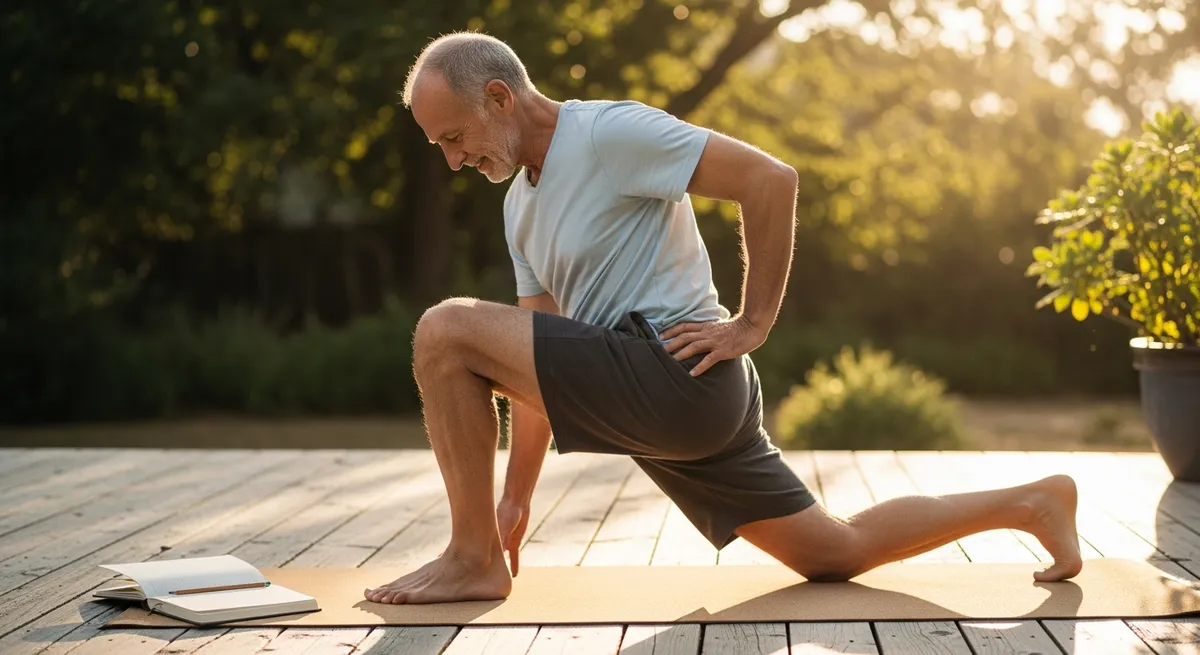
These poses build a solid foundation for your practice. The simple fact is that learning each pose slowly is very important, and you should feel free to stay with these beginner poses for several weeks before you move on to anything harder.
Skip advanced inversions and deep backbends entirely while you are getting started, because these movements put a lot of demand on a body that is still learning the basics. Instead, work with simple standing poses, seated stretches, and basic breathing first, and doing so will help your body adjust in a safe and steady way. On top of that, you should pay close attention to how your body feels on any given day, because that awareness is genuinely part of the practice and it matters more than rushing to learn the next pose.
How Long Until You Feel a Difference?
The answer is sooner than you might expect. Most beginners notice changes in flexibility, sleep, and stress levels within two to four weeks of consistent practice. Deeper strength and flexibility gains take longer and require more patience because often two to three months of regular effort are needed before you see those bigger results.
Keep in mind that consistency matters more than duration. The simple fact is that practicing three or more times per week produces significant improvements in flexibility, balance, strength, and overall well-being. A 15-minute session done four times a week will serve you far better than one long session on Sunday and so you should try to spread your practice across the week because shorter and more frequent sessions add up faster than you think.
The self-reported benefits are encouraging too. In one survey of yoga practitioners, 86.5% said yoga improved their happiness and 84.5% said yoga improved their energy. On top of that, 68.5% reported better sleep, which is another real benefit you may notice in your own life as your practice becomes more regular.
Two Things Beginners Get Wrong
1. Treating props as a sign of failure
A block under your hand in Triangle Pose (Trikonasana), or a folded blanket under your hips in a seated forward fold, isn't a shortcut. It's the thing that lets you hold the pose with a long, safe spine instead of straining and rounding for depth you haven't built yet. Experienced teachers use props in their own practice. A foam block alone has three usable heights depending on which side you stand it on — that one detail changes everything in certain poses.
2. Following videos that move too fast
Many free "beginner" yoga videos on YouTube are actually intermediate sessions with beginner in the title. If the teacher moves to the next pose before you've figured out where your back foot belongs in the current one, that video is too fast for you right now. Find a slower one. Look for teachers who explain what each part of your body should be doing — and why — before the class moves on. A teacher registered with Yoga Alliance (at the 200-hour or 500-hour level) has documented training hours behind them, which is a real credential worth looking for.
What the Research Says About Yoga and Back Pain
If back discomfort is part of why you're here, the evidence is genuinely encouraging. A 2018 report evaluated eight trials of yoga for low-back pain — involving 1,466 participants — and found that yoga improved both pain and function in the short term (1–6 months) and intermediate term (6–12 months). A 2017 Cochrane review of 12 trials found low- to moderate-certainty evidence that yoga produces small to moderate improvements in back-related function at 3 and 6 months compared to non-exercise controls.
That said, yoga is not a substitute for medical care. If you have an existing injury, a chronic condition, or you've been sedentary for a long time, talk to your doctor or physical therapist before starting. Be honest about what your body needs right now.
Build the Habit Before Worrying About Progress
The most common reason beginners stop is that they focus on how the poses look rather than on simply showing up. The simple fact is, the habit is the foundation. Everything else grows from the habit, and so if you do not build that foundation first, progress will not come the way you want it to.
A few practical ways to make it stick:
Each week, certain poses will feel a little more familiar to you. Keep in mind that this familiarity is the progress, even when the progress is hard to see. On top of that, the simple act of returning to your mat again and again is itself a real achievement.
You're in Good Company
If you have ever felt like yoga was something only other people do, the numbers say otherwise. In 2022, 23.3% of women in the U.S. practiced yoga — and that figure spans all ages, backgrounds, and fitness levels. The simple fact is that a very large number of women practice yoga regularly, and so you are definitely not alone in this. Keep in mind that many of these women started exactly where you are right now, meaning they started at home, with a bit of clear floor space and a willingness to try. You do not need a special gym or a lot of experience to be part of this group because the only thing you really need is the decision to begin.
The bottom line
Starting yoga at home does not require perfect gear, a dedicated room, or a flexible body. The simple fact is that starting yoga at home requires only a small clear space, a non-slip mat, and the decision to begin — even if you begin for just ten minutes. Build the habit first and let the poses come gradually because your body needs time to adjust and so you should give your body two to four weeks before you judge whether it is working for you. Keep in mind that it will work if you stay consistent. The most important thing you can do right now is start today.