Your knees feel stiffer in the morning than they used to. Your balance isn't quite what it was. You want to stay active, but high-impact workouts feel like too much. If any of that sounds familiar, yoga might be exactly what you've been looking for — and the research behind it is more encouraging than you might expect.
Why Yoga Works So Well for Aging Bodies
Yoga isn't just stretching. It combines physical postures, breathwork, and mindfulness in a way that addresses several age-related concerns at once: stiff joints, weakened muscles, shaky balance, and even stress.
Yet only 8% of adults 65 and older practiced yoga in the past year, compared to more than 21% of younger adults. That gap is worth closing — because the evidence for yoga's benefits in older adults is genuinely strong.
What the Research Actually Shows
Protection Against Frailty
A large Harvard-covered review looked at 33 studies including 2,384 participants over 65, with a mean age of 72. The finding that stood out most? Improved walking speed had the strongest association with yoga practice compared to groups who were inactive or received only educational interventions. Walking speed is a key marker of overall health and independence as you age — so this matters.
Knee Pain and Osteoarthritis
If your knees are a concern, this is worth knowing. A randomized controlled trial involving 117 adults aged 40 and older with clinically diagnosed knee osteoarthritis compared a structured yoga program to a traditional strengthening exercise regimen over 12 weeks. By 24 weeks, the yoga group showed slightly greater improvements in physical function, symptom management, and overall quality of life than the strengthening group.
Yoga is not a cure for osteoarthritis, and individual results vary. If you have a diagnosed joint condition, talk to your doctor before starting.
Chronic Pain — A Women's Issue Too
Pain is one of the biggest reasons older adults pull back from activity. Women report bothersome pain at higher rates than men — 58% vs. 47% in the past month. Gentle yoga offers a low-impact way to keep moving when pain makes other exercise feel daunting.
And people tend to stick with it. In one yoga program studied for chronic pain, attendance rates reached 91%, retention 97%, and 89% of participants were satisfied — with 87% saying they'd recommend it to others. Those are unusually high numbers for any exercise program.
Does Yoga Count Toward Weekly Activity Guidelines?
Yes — and it can help you tick more than one box. The CDC recommends that adults 65 and older get at least 150 minutes of moderate-intensity aerobic activity per week, plus at least 2 days of muscle-strengthening activity. A vigorous yoga flow can contribute to the aerobic minutes; poses that build strength — like Warrior II (Virabhadrasana II) or Chair Pose (Utkatasana) — count toward strength training days.
Gentler styles like restorative or chair yoga may not meet the aerobic threshold on their own, but they're a legitimate, research-backed way to build the habit and keep your body moving safely.
Who Is Yoga Actually For? (Hint: Probably You)
Women are more than twice as likely as men to practice yoga — 23.3% vs. 10.3%. And among people who do practice, 80% say they do it to restore their overall health — not for flexibility bragging rights or Instagram. That's the same reason most of us show up.
If you're a beginner, an older adult returning to movement, or someone managing joint pain, you are exactly the person yoga was designed to serve.
How to Get Started Safely
The most important step is finding the right entry point. Here's how to do that well:
A Few Poses Worth Knowing
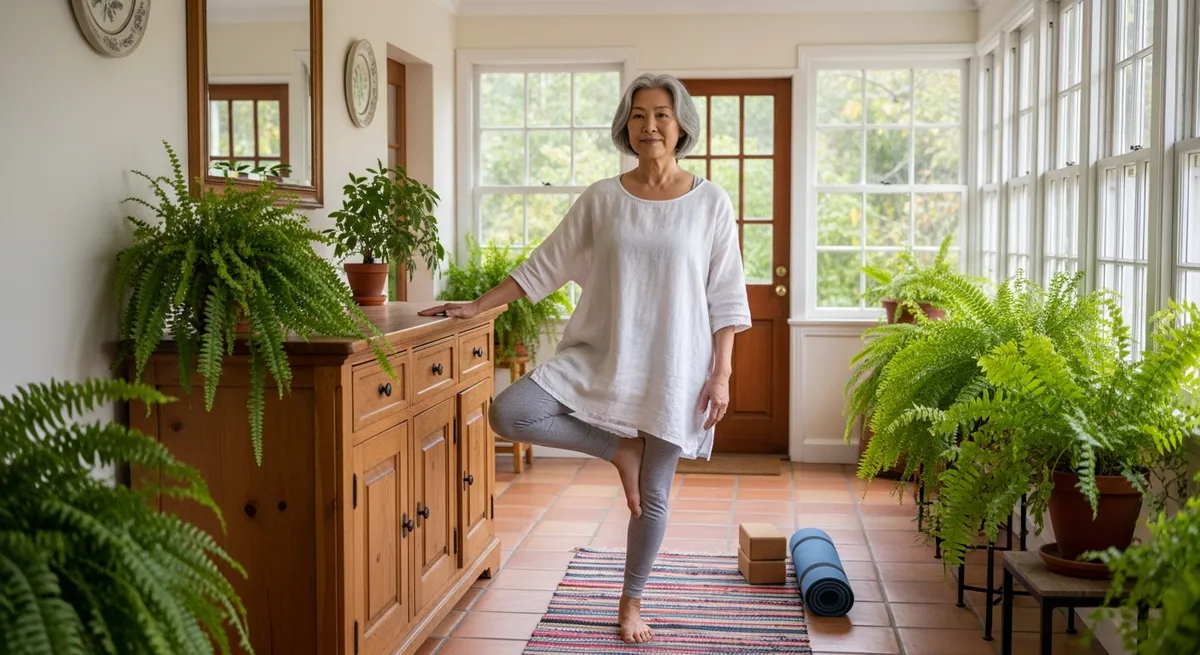
These beginner-friendly poses are commonly used in gentle and senior yoga classes and are a good starting point:
If any pose causes sharp pain, stop and check in with your teacher or healthcare provider.
The Bottom Line
Yoga meets you where you are. You don't need to be flexible, young, or pain-free to start — in fact, those are often the exact reasons to begin. The research supports it, the retention numbers are high, and the practice scales beautifully to whatever your body needs today. Start gently, find a teacher who gets it, and give yourself the same patience you'd offer a good friend.