You love the idea of yoga — the steadiness, the breath, the sense of coming home to your body. But if your doctor has mentioned osteoporosis or osteopenia, you may be wondering whether a yoga mat is the right place for you. The honest answer: it can be, but only when you know which moves to seek out and which to skip. Here's what the research actually says, and how to practice with confidence.
Why Bone Health and Movement Are Such High Stakes
Bone loss is far more common than most people realize. Osteoporosis and osteopenia affect up to 200 million people worldwide, and in the United States alone, annual spinal fractures exceed 700,000, with more than 300,000 hip fractures each year.
Those numbers have real human weight behind them. After a hip fracture, 25% of Americans will not survive the following year, and another 25% will never leave the nursing facility to which they are admitted. A fracture is not just a painful inconvenience — it can be life-changing.
This is exactly why choosing the right kind of movement matters so much.
Older Adults and Yoga: A Big, Growing Overlap
A 2012 national survey found that approximately 10 percent of U.S. adults — about 21 million people — practiced yoga, and more than 20 percent of those practitioners were older than 60. That's a significant slice of the population — many of whom are likely navigating some degree of bone loss.
Being popular doesn't automatically mean being safe for every body. Yoga is wonderful — and it also carries real risks for people with fragile bones if practiced without modification.
The Real Injury Picture for Older Yoga Practitioners
The safety data for older adults deserves a clear-eyed look. Between 2001 and 2014, nearly 30,000 visits to U.S. emergency rooms were linked to yoga-associated injuries, with 13 percent occurring in people aged 65 or older. Over that same period, injury rates in older adults rose sharply — from 6.9 to 57.9 per 100,000 participants. The simple fact is that these numbers show a real and growing pattern of injury among older yoga practitioners, and that pattern is important for you to understand before you begin or continue a yoga practice.
Perhaps most striking is this finding: in a study of 33 consecutive patients with back pain following yoga, 9 met criteria for yoga-associated vertebral compression fractures, with a median age of 66. Keep in mind that it is not just speed or intensity that causes fractures in older adults, because the direction of load placed on the vertebrae matters just as much as how fast or how hard you move. On top of that, slow and gentle movement does not always mean safe movement, and you should not assume that a slow pace protects your spine from harm. Slow and gentle does not always mean safe, and this point is worth repeating so that you take it seriously.
Poses to Modify or Avoid
Certain movements put the spine under exactly the kind of stress that fragile vertebrae can't always handle. Knowing which poses to approach carefully is one of the most protective things you can do, and the simple fact is that some poses are just more risky for a spine with low bone density than others.
Deep spinal flexion
Forward folds are the biggest concern. Poses like Standing Forward Fold (Uttanasana) and Seated Forward Fold (Paschimottanasana) load the front edge of the vertebrae — the very spot most vulnerable in a spine with low bone density. Keep in mind that this is exactly the part of your vertebrae that tends to be weakest when bone density is low, and so even a small amount of rounding can add more stress than your spine can safely handle. If you do fold forward, hinge from the hips with a long, neutral spine rather than rounding through the lower back. Bend your knees generously. Use a block.
Deep twists and rounded-back poses
Sharp rotational force combined with spinal flexion compounds the risk. On top of that, when your spine is already rounded and you add a twist, the two forces together are harder on your vertebrae than either one alone and so you should modify twists so your spine stays tall and the rotation is gentle. Think of lengthening up before you turn, and never collapse into the twist.
Extreme inversions
Poses where the head drops far below the hips — Headstand (Sirsasana), Shoulder Stand (Sarvangasana) — are worth discussing with your doctor before attempting. The simple fact is that these poses place a different kind of load on your cervical spine and so they are especially worth talking through with your doctor if you also have hypertension or cervical spine concerns.
Poses That Can Actually Support Your Bones
Here is the genuinely good news: a well-chosen yoga practice may help your bones. A study of 741 participants recruited between 2005 and 2015 found that the 227 who practiced a specific 12-pose routine at least every other day for two years — 202 of whom were women — showed significant monthly gains in bone mineral density at the spine (0.0029 g/cm², P = .005) and femur (0.00022 g/cm², P = .053). And critically, no serious yoga-related injuries were imaged or reported among those compliant participants. The simple fact is that the right kind of yoga practice, done consistently, can support your bone mineral density in a real and measurable way.
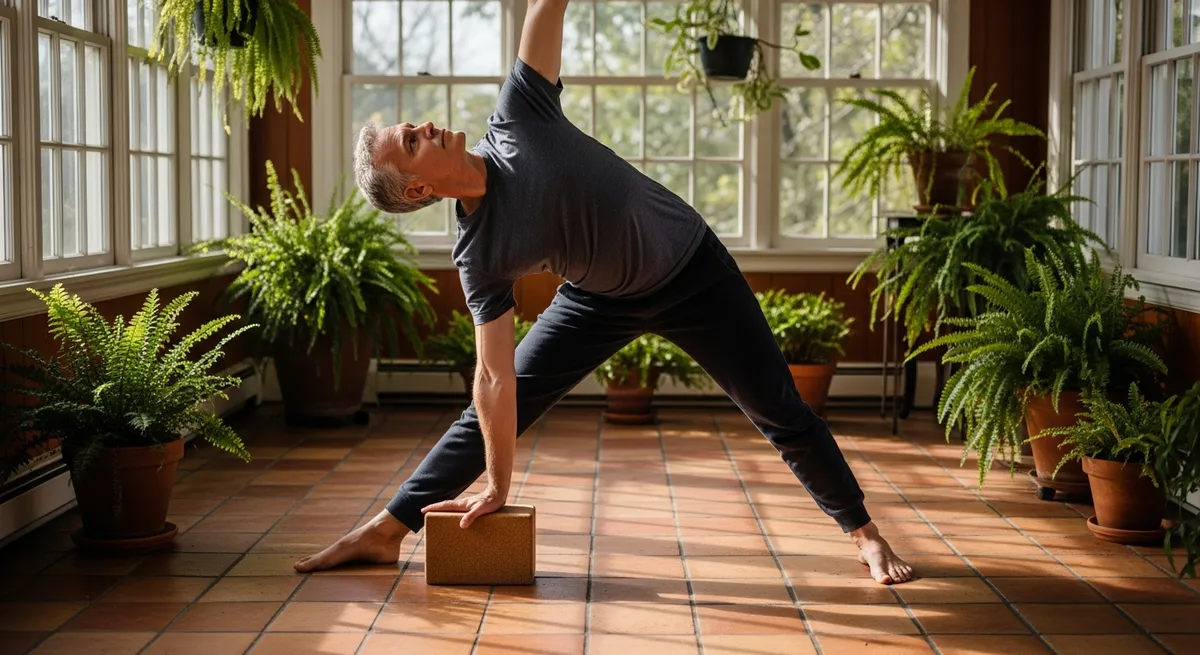
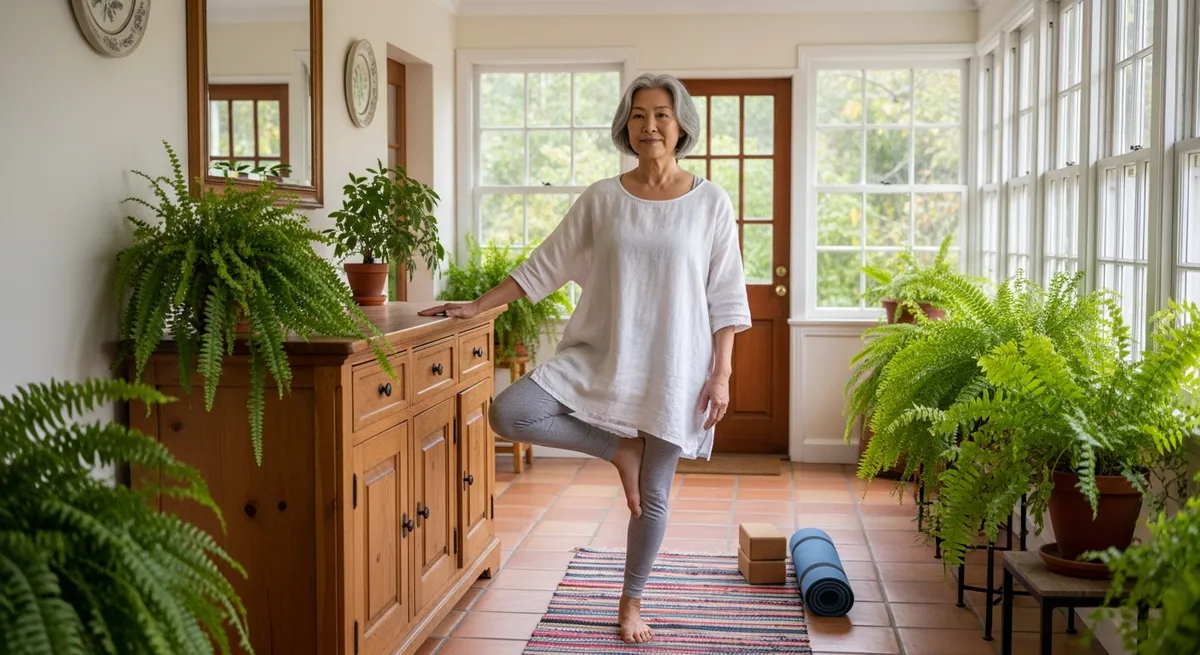
The poses in that program shared a theme: the poses were weight-bearing or spine-extending, not spine-flexing. Keep in mind that this distinction matters a lot for your bones. Think:
These are the kinds of poses to look for and lean into in your practice. Weight-bearing positions that keep your spine long or in mild extension are your allies and so your goal should be to include more of these poses in your regular routine because these poses are the ones that may actually support your bones over time. On top of that, these poses are generally safer for your spine than deep forward folds and so they are a better choice for people with low bone density.
What Many Practitioners Get Wrong
A few common mistakes are worth naming directly, and you should keep these mistakes in mind every time you plan your practice:
How to Find the Right Teacher and Get Medical Clearance
Tell your teacher about your bone density before your first class. A good instructor will give you targeted modifications — but only if they know what you're working with. Ask specifically whether the teacher has experience with osteoporosis, medically complex older students, or therapeutic yoga. General credentials like RYT 200 or RYT 500 don't automatically include bone health training.
Before starting any yoga program, talk with your doctor or a physical therapist. A DEXA scan can tell you exactly where your bone density is lowest, which shapes which poses need the most care. And if you feel any new pain — during or after practice — let your care team know promptly. Pain is information.
The Bottom Line
Yoga and fragile bones can coexist, but it takes the right poses and the right alignment and the right guidance so that you are practicing in a way that is truly safe for your body. The simple fact is that weight-bearing standing poses and gentle backbends are the poses you want to lean toward. Keep in mind that deep forward folds and sharp twists are movements you should modify or skip altogether, because these movements put extra stress on fragile bones and so they carry a higher risk of injury for you. Use props without apology, and repeat to yourself that props are there to help you and not to hold you back. On top of that, you want to loop in your doctor so that your doctor can give you a full picture of your bone health and you can practice with that knowledge in mind. Move wisely, and your mat can remain one of the best places you know.