You've probably heard the word "yin" floated around in yoga studios and wellness circles — and maybe wondered whether it's just restorative yoga with a different name, or something you'd actually like. It isn't either of those things. Yin yoga is its own distinct practice, built around stillness, long holds, and the kind of quiet that most of us desperately need. Here's exactly what it is, how it works, and what to expect when you try it.
What Makes Yin Yoga Different
Most yoga styles — vinyasa, power, even hatha — are considered yang practices: active, warming, muscle-focused. Yin yoga was designed to create balance in the body, where yin represents passivity and restfulness and yang represents energy and mobility. You're not flowing. You're not building heat. You're settling in and staying put.
The target is also different. Yang tissues like muscles are fluid-filled, soft, and elastic — yin tissues like connective tissue (ligaments, tendons, and fascia) and bones are drier, harder, and stiffer. Faster practices work the muscles beautifully. Yin goes deeper — to the tissue that surrounds your joints.
The Core of the Practice: Long, Still Holds
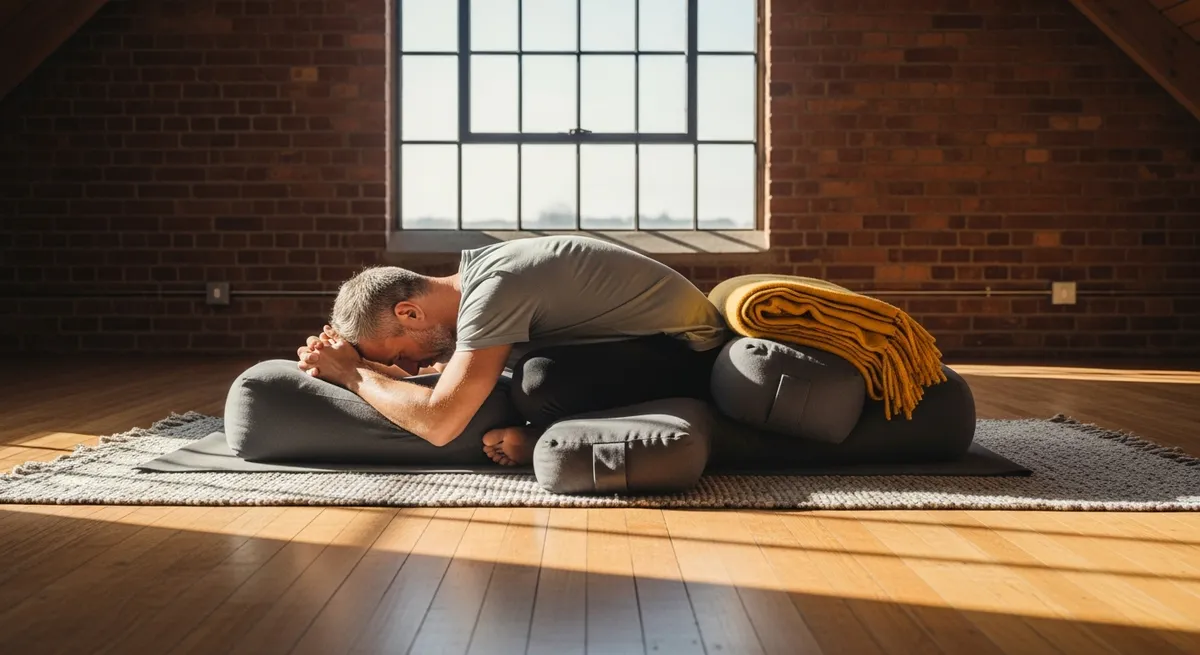
Yin yoga poses are held for three to five minutes while maintaining deep breathing. That's not a typo. One pose, several minutes, as still as you can manage. That duration is necessary — it takes at least several minutes of sustained hold to stretch the connective tissue around a joint. A quick stretch simply doesn't reach it.
Three principles guide every yin class:
Why Props Aren't Optional Here
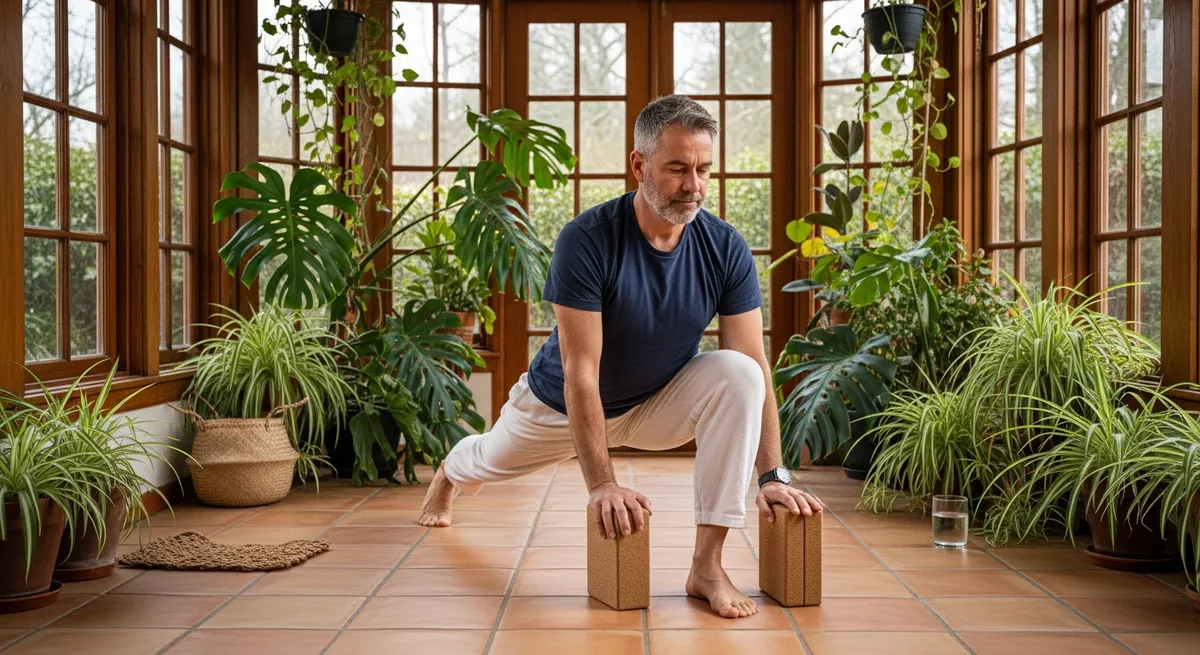
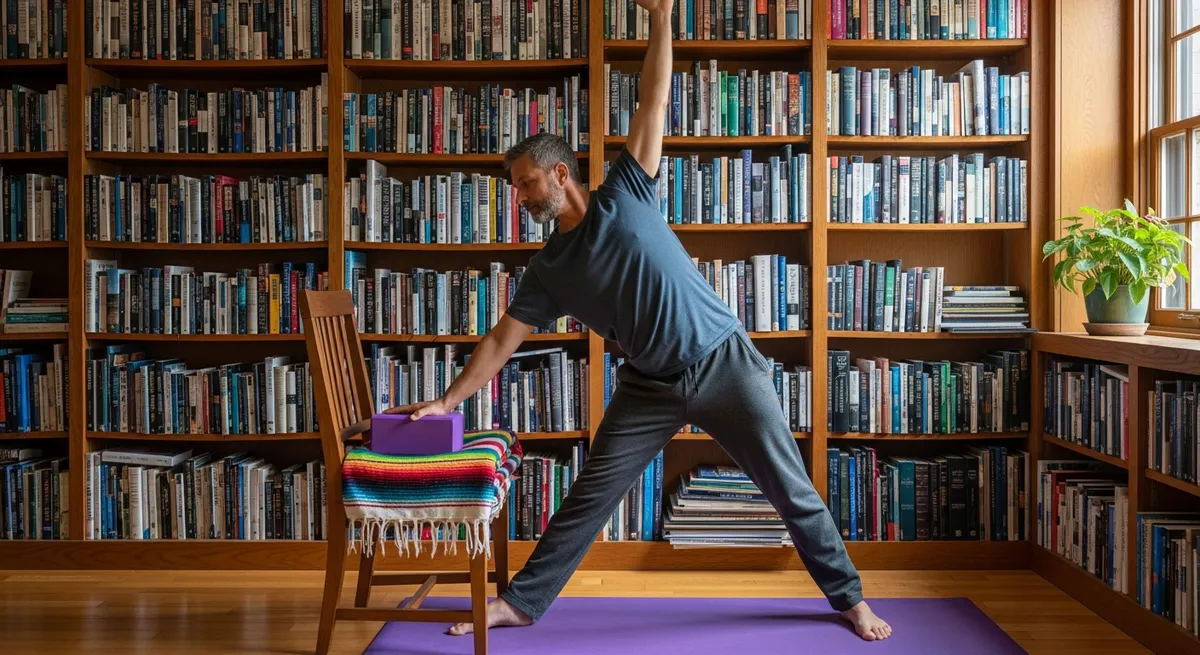
In a faster class, props are a modification. In yin, they're the point. When your body is fully supported, the muscles can stop gripping — and the deeper tissues finally get the attention they need. Without support, you'll brace, and bracing defeats the whole practice.
Keep these nearby before you start:
Set up your props before you settle into a hold. Rummaging around mid-pose breaks the stillness you've been building.
Three Foundational Poses — and What Goes Wrong
Butterfly (Baddha Konasana variation, seated forward fold)
Sitting with soles of the feet together and folding forward, most beginners bring the feet in too close and force the knees toward the floor. Instead, slide the feet further forward than feels necessary — the inner thighs do the work, and the knees stay comfortable. If you feel any knee pinching, place a folded blanket under each thigh.
Sleeping Swan (Yin Pigeon)
This is the yin version of Pigeon Pose (Eka Pada Rajakapotasana). The common mistake is angling the front shin too sharply, which dumps pressure onto the outside of the knee. Bring the shin more parallel to the front of your mat and the sensation moves into the outer hip — exactly where it should be. If you have a knee injury, skip this and try the same shape lying on your back: one ankle resting on the opposite thigh works the outer hip without loading the knee at all.
Supported Fish (Matsyasana with a bolster)
Place the bolster under your shoulder blades — not your lower back. Too low and you compress the lumbar spine rather than opening the chest. If your neck feels strained in any backbend, tuck a folded blanket under your head so it doesn't drop back too far.
What the Research Shows About Stress and Sleep
Many people arrive at yin yoga because they're burned out, anxious, or not sleeping well. The research is genuinely encouraging. In one randomized controlled trial, a five-week yin yoga intervention significantly decreased anxiety (p ≤ .002) and reduced sleep problems (p ≤ .003) compared to a control group. The same study found that yin yoga decreased plasma adrenomedullin levels (p < .001) — a biomarker associated with physiological stress response — suggesting the calming effect shows up in the body, not just in self-reported mood.
Worth noting: the study participants were 78% women with a mean age of 53.5 years — a demographic that maps closely to many yin yoga practitioners. That said, this is promising early research, not a prescription. If you're managing anxiety, sleep disorders, or any medical condition, please talk to your healthcare provider before adding any new practice.
Yin vs. Restorative Yoga: Not the Same Thing
Both practices are slow, prop-heavy, and floor-based. But the intention differs. Restorative yoga is almost entirely passive — the goal is rest and nervous system recovery, with poses that ask nothing of the body at all. Yin still asks you to find and sustain your edge. There's a gentle, intentional stress being applied to the tissues.
If you're recovering from illness, injury, or exhaustion, restorative yoga may be the better starting point. If your goal is building flexibility and working the connective tissue over time, yin is likely the better fit.
A Few Safety Points Worth Knowing
Slow doesn't mean risk-free. The deep, sustained pressure of yin holds means you need to be more attentive to your body, not less. A few guidelines:
The Bottom Line
Yin yoga is quieter than most practices and that is exactly the point. Yin yoga targets the connective tissue that faster styles do not reach, and yin yoga also trains the mind to stay with discomfort rather than run from it, so you get real, research-backed support for stress and sleep. The simple fact is, you do not need to be flexible to start. Keep in mind that all you need is a mat, a few props, and a willingness to stay still a little longer than feels comfortable. Give yin yoga a few sessions before you judge it. On top of that, the stillness tends to grow on you the more you practice it.