You've seen it on the studio schedule dozens of times, sitting quietly between Vinyasa Flow and Yin. But what actually happens in a hatha yoga class — and is it right for you? Here's a clear, honest breakdown of everything you need to know before you unroll your mat.
What Hatha Yoga Actually Is
Think of hatha as the parent category, not a single rigid style. Most forms of yoga practiced in the West can be classified as Hatha Yoga — including Ashtanga, Vinyasa, Iyengar, and Power Yoga. So if you've ever taken any studio yoga class, you've already been doing a version of hatha yoga and you may not have even known it. The simple fact is that hatha yoga is the foundation that most other yoga styles are built on.
What sets a class labeled hatha apart is its structure and pace: hatha yoga focuses on pranayamas (breath-controlled exercises) followed by a series of asanas (yoga postures), which end with Savasana (a resting period). Keep in mind that poses are held for several breaths rather than flowed through quickly, and so your body gets more time to settle into each position because the overall pace of a hatha class is slower and more deliberate. That slower pace is the defining feel of hatha yoga, and it is what makes hatha yoga different from faster styles like Vinyasa.
A Quick Look at Its Roots
Hatha yoga has a long lineage. The Hatha Yoga Pradipika — one of the tradition's foundational texts — was composed in the 15th century CE by Swami Swatamarama, and it describes just fifteen physical poses. The sprawling, pose-heavy practice you see today is a much later development.
Hatha yoga was popularized and promoted in India in the 1920s through the work of T. Krishnamacharya — the teacher who trained many of the names you'll recognize: B.K.S. Iyengar, Pattabhi Jois, and others. That modern lineage is what traveled west and became studio yoga as we know it.
What to Expect in a Class
Hatha classes are usually 60 to 90 minutes long. A typical session moves through:
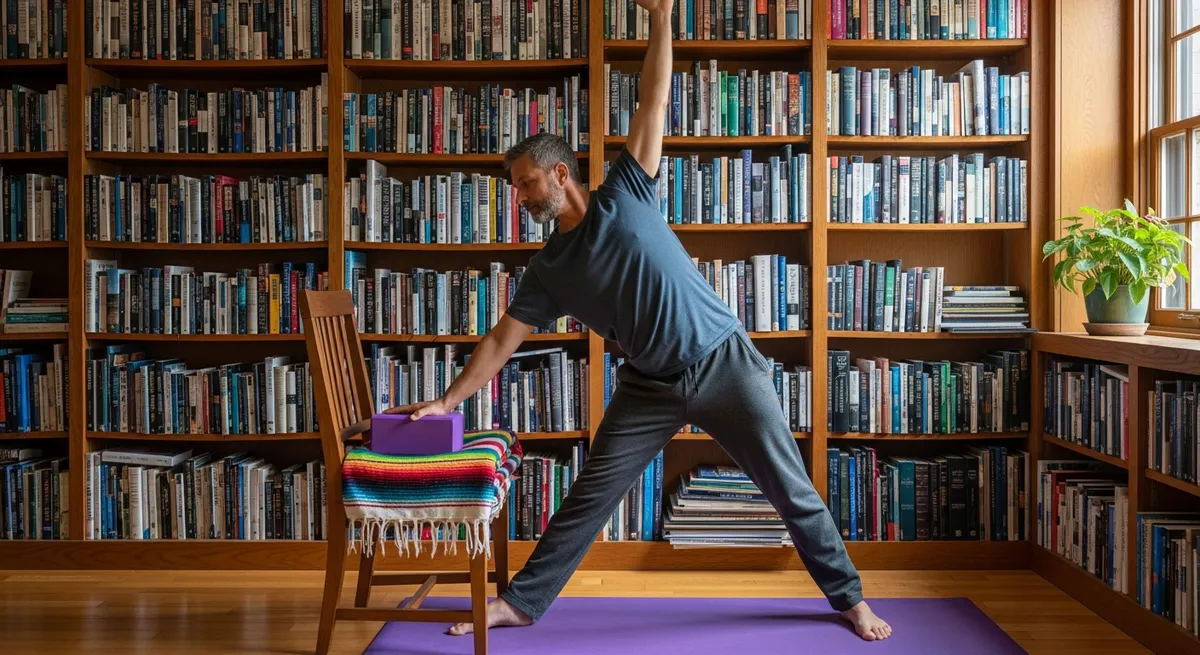
The pace in a Hatha class is deliberate and slow. The simple fact is that you will not be rushing from Downward-Facing Dog (Adho Mukha Svanasana) to Warrior II (Virabhadrasana II) before you have had a real chance to feel your feet on the mat. Keep in mind that this slower rhythm is actually the whole point of a Hatha class and so it gives you the time to learn proper alignment, notice your breath, and actually feel what each pose is doing in your body. On top of that, the slower pace means you can pay attention to each posture more carefully because your teacher has more time to give you alignment cues and corrections. That is a big advantage for beginners and for experienced students alike.
How Intense Is It, Really?
Hatha yoga is real physical effort, but it is not a cardio session. Research measuring oxygen consumption in yoga instructors found that exercise intensity in the asanas varied from 9.9 to 26.5% of VO2 max, and the metabolic rate was generally in the range of 1–2 metabolic equivalents (MET). Keep in mind that this is a light-to-moderate level of effort, and so it is more comparable to a brisk walk than to a run. The simple fact is that hatha yoga does not push your cardiovascular system the way running or cycling does.
The average energy expenditure across asanas was about 2.29 kcal per minute. The numbers may look modest, but do not let the numbers fool you, because holding a Warrior pose for five slow breaths will make your legs talk back and the challenge builds quietly over time. On top of that, your muscles are working under steady tension even when your heart rate stays low.
If your doctor has recommended cardiovascular exercise, hatha yoga is a wonderful complement to that recommendation, but hatha yoga is not a substitute for cardiovascular exercise. Always consult a healthcare professional about what is right for your specific situation.
The Real Benefits (What Research Supports)
The evidence is genuinely encouraging. One study found that after eight weeks of practicing yoga at least twice a week for a total of 180 minutes, sedentary participants showed greater muscle strength and endurance, flexibility, and cardio-respiratory fitness.
Consistency matters more than duration. Even modest, regular practice adds up — researchers found that people who practiced yoga for at least 30 minutes once a week for at least four years gained less weight during middle adulthood compared to those who didn't.
Beyond the physical, breathwork and stillness are woven into every class. Among adults who practice yoga, 57.4% incorporate meditation as part of their yoga practice — and that mind-body dimension is baked into hatha from the start, not bolted on as an afterthought.
How Hatha Compares to Other Styles
A quick reference, since the options can feel overwhelming for many people. Keep in mind that each style has its own pace and focus, so knowing the differences can help you choose the right class for your needs.
Hatha sits comfortably in the middle of this spectrum. The simple fact is that Hatha is more active than Yin and more accessible than Ashtanga, and so Hatha works well as a starting place because it does not push your body into intense athletic territory right away. On top of that, many experienced practitioners return to Hatha again and again even after trying other styles, and they do this because Hatha continues to offer real value at every level. If you are not sure where to begin, Hatha is a solid and reliable choice for your practice.
Who Hatha Yoga Suits Best
The simple fact is, hatha yoga suits a wide range of people. It is particularly well-suited for you if you:
Older adults often find hatha yoga accessible because most poses can be modified and the pace is manageable and so your body is not pushed beyond what it can comfortably handle. Keep in mind that hatha yoga is a practice that works well for people who need flexibility in how they approach each posture. On top of that, hatha yoga gives you the time to actually understand what your body is doing. That said, if you are dealing with an injury, a chronic condition, or significant joint pain, please check in with your doctor or a qualified health professional before starting — even a gentle class puts real load on the body.
Three Things Beginners Get Wrong
1. "Slow means easy."
The simple fact is that slow yoga is not the same as easy yoga. Hold Chair Pose (Utkatasana) for eight breaths and report back. Slow movements build heat in their own way and so you will feel the burn just as much as in a fast class. Expect to feel it, because most beginners do not expect this.
2. "It's just stretching."
Keep in mind that the breathwork is not optional background music — it is the practice. The breathwork is a core part of what you are doing, not a nice extra on top. When your teacher keeps cueing your inhale and exhale, that is the hatha tradition talking and so your job is to follow that cue. Follow it every single time.
3. "I should look like the person next to me."
A broad, diffuse pull across a muscle? That is a stretch and that is what you want to feel. A sharp, pinpoint sensation in a knee or shoulder? That is a warning and so you need to back off immediately, because pushing through that kind of sensation can cause real injury. A good teacher will say this to you; a good student will listen to what the teacher says.
Ready to Start? Here's How
The Bottom Line
Hatha yoga is less a style and more a home base. The simple fact is that hatha yoga is the slow, breath-anchored foundation that most Western yoga grew out of, and this makes hatha yoga one of the most important starting points you can choose. Hatha yoga will not spike your heart rate the way a spin class does, but hatha yoga will build real strength, flexibility, and a sense of calm that tends to follow you off the mat and into your daily life. Keep in mind that this calm and this strength are things you carry with you, so the benefits of hatha yoga go beyond what happens on the mat. If you have been curious about yoga but unsure where to start, a beginner hatha class is one of the most forgiving places in yoga to show up exactly as you are, and that is because hatha yoga welcomes your current level without pressure or judgment.