Your body in January is not the same as your body in July. Energy shifts, muscles tighten or soften, mood rises and falls with the light — and your yoga practice can either ignore all of that or work beautifully with it. Tuning your practice to the season isn't complicated. It's one of the most practical things you can do to keep showing up on the mat all year long.
Why Seasonal Living and Yoga Go Together
Ayurveda, the ancient Indian system of health that developed alongside yoga, has always treated the body as part of nature's cycles. In the Ayurvedic tradition, cleansing and supporting the body at each seasonal transition is considered an essential practice for staying healthy and aligned with nature — not a luxury, but a rhythm.
You don't need to follow Ayurveda as a rigid system to benefit from this idea. Think of the seasons as a prompt: What is my body actually asking for right now? Your own honest answer will always be more useful than any rule.
And the research is clear that consistency matters more than intensity. Home yoga practice predicted better mindfulness, sleep, well-being, and BMI more reliably than years of experience or class frequency — meaning a short, season-appropriate practice done regularly beats an ambitious one you abandon when the weather changes.
Summer: Cool Down and Slow Down
When heat is already coming at you from outside, a vigorous, fiery practice can push you past what's useful. Summer is the season to lean toward spaciousness — more breathing room between poses, longer holds, more time on the floor.
What to add
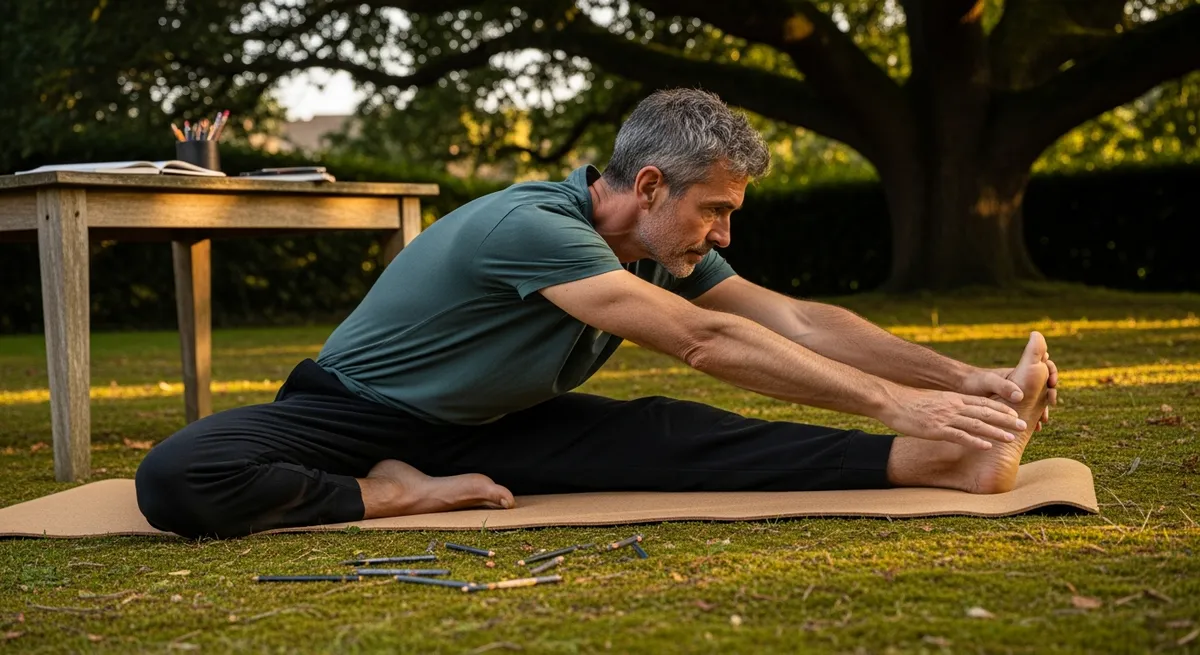
A pose to try: Seated Forward Fold (Paschimottanasana)
This pose stretches the entire back line of your body — hamstrings, spine, calves — and encourages the kind of surrender that summer heat actually calls for. Common mistake: rounding the lower back to force hands to feet. Fix: bend your knees generously, hinge from your hips, and let your hands land wherever they land. If you have a disc issue in your lower back, ask your teacher for a supported variation before practicing this one.
Autumn: Ground Before the Scatter Sets In
Fall brings a beautiful crispness and for many people it also brings an undercurrent of anxiety. Energy becomes less predictable in autumn and the cool, dry quality of the season can leave you feeling unmoored if you do not have a steady practice holding you in place. The simple fact is that without a grounding routine, autumn can scatter your energy in ways that are hard to recover from.
What to add
Ayurvedic practice also emphasizes waiting at least one hour after eating before beginning your yoga session, and this is a simple habit that becomes especially relevant in autumn when heavier, warming foods come back onto your menu. Keep in mind that what you eat in autumn tends to be richer and harder to digest, so giving your body that extra time before practice really does matter.
A pose to try: Warrior II (Virabhadrasana II)
Wide-legged, arms extended, front knee bent, Warrior II is grounding and energizing at the same time. This pose works your legs, hips, and shoulders and gives you a stable, powerful base when the season feels unpredictable and your energy feels hard to control. On top of that, Warrior II is a pose you can return to again and again because the pose offers something new every time you practice it. Common mistake: letting the front knee cave inward. Fix: track your front knee directly over your middle toe, no further.
Winter: Show Up Small, Show Up Often
Winter is when the temptation to skip practice peaks, and this is also when consistency matters most. Cold stiffens muscles and shorter days flatten energy and so the gap between wanting to practice and actually doing it gets wider. The simple fact is that winter makes it harder to show up, but showing up is exactly what your body needs most during this season.
The answer is not forcing yourself into a two-hour session. The answer is finding the smallest version of practice you will actually do on the hard days, and then doing that small practice every morning. Keep in mind that a short practice done consistently will do more for you than a long practice done occasionally.
What to add
A pose to try: Cobra (Bhujangasana)
Cobra is a low, gentle backbend that wakes up the spine, opens the chest, and counters the forward-curl of cold-weather posture and so it is a very good choice for winter mornings. Common mistake: cranking the head back and straining the lower back to go higher. Fix: keep the lift low and long — elbows can stay softly bent — and draw your shoulders away from your ears. On top of that, keep in mind that you should skip this pose or take a very supported version if you are pregnant or managing a lower-back injury.
Winter, Mood, and Seasonal Affective Disorder
If your energy and mood dip noticeably every winter, you're not imagining it. At temperate latitudes, an estimated 5% of people meet the criteria for Seasonal Affective Disorder (SAD), with another 15% experiencing milder, sub-syndromal symptoms. People with SAD often sleep up to three extra hours in winter — and that extra sleep is not restorative.
That distinction matters for your practice:
Yoga is a supportive practice — not a treatment for clinical depression. If low mood is persistent or affecting your daily life, please talk with a doctor or licensed mental health professional.
Spring: Enthusiasm Is Good. Patience Is Better.
Spring brings a welcome surge of energy. After months of slower, quieter movement, motivation returns — sometimes faster than your tissues are ready for. The simple fact is that your body feels ready before your body actually is ready, and so you need to keep that difference in mind as you return to more active practice.
The spring mistake is going too deep too soon. Your connective tissue has not caught up to your enthusiasm yet, and that gap is where injuries happen. Keep in mind that enthusiasm alone does not protect your connective tissue, and your connective tissue needs time to adapt no matter how good you feel in the moment.
What to add
The Research Case for Practicing All Year
There are real, documented reasons to keep your practice going through every season — not just the easy ones.
None of these benefits come from one intense season of practice followed by months off. They come from showing up, season after season, in whatever form suits the moment.
Your Practice, Your Season
You do not need a perfect, elaborate seasonal routine. The simple fact is you need a practice that is honest enough to shift when you shift — slower when winter asks for it, steadier when fall feels scattered, gentler when summer is already plenty warm. Keep in mind that your practice belongs to you, and your practice should move with you through the seasons and not stay rigid when your body is clearly asking for something different. Let the season be a cue, not a prescription. On top of that, your body will always give you the final word, so it is worth listening to your body rather than following a fixed plan that no longer fits.