
You've had a full night in bed and still wake up exhausted. Or you push through a packed day, collapse at 10 p.m., and wonder why you still feel depleted by Thursday. Often, the missing piece isn't more hours — it's understanding what rest and sleep actually are, and why neither one can cover for the other.
They're Not the Same Thing
Sleep is a specific biological state. Your brain cycles through distinct stages, your body carries out deep cellular repair, and processes happen during sleep that simply cannot occur while you are awake. The simple fact is that sleep is non-negotiable for your body to function well.
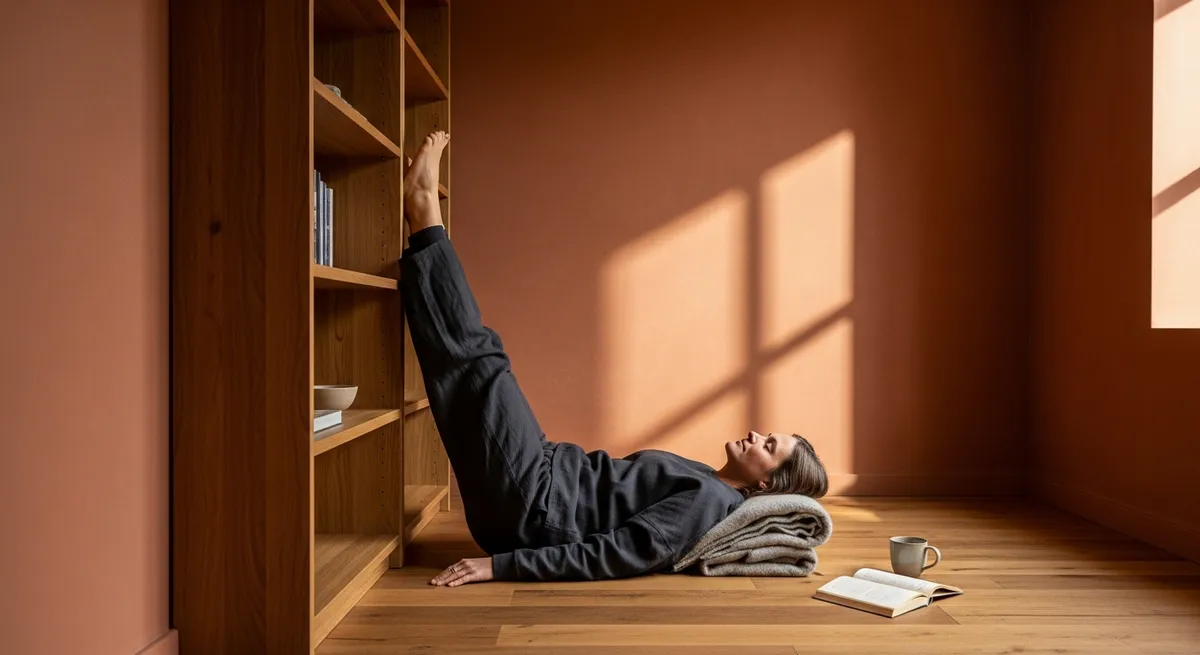
Rest is broader than sleep. Rest is any period when your body and mind are not working hard — sitting quietly, doing gentle stretching, reading something light, taking a slow walk, or lying down without drifting off. Rest slows your nervous system down, but rest does not trigger the full machinery of sleep and so rest cannot replace sleep entirely.
The key point: resting isn't sleeping, and sleeping isn't the only form of rest your body needs. Each one does a different job for your body and your mind. Keep in mind that skipping either one creates a deficit that shows up eventually — in your mood, your energy, your health — and so your body really does need both, not just one or the other.
What Actually Happens When You Sleep
Sleep isn't one flat state. During a typical night, you move through four to five sleep cycles, each lasting between 70 and 120 minutes. Each cycle includes both REM (rapid eye movement) and non-REM stages — and each stage serves a purpose.
Interrupted sleep cuts these cycles short. You might log seven hours on paper and still miss the restorative stages your brain and body were counting on. Quality matters just as much as quantity.
How Much Sleep Do You Actually Need?
Adults aged 18–60 need 7 or more hours of sleep per night. Those aged 61–64 need 7–9 hours, and adults 65 and older need 7–8 hours. That guidance is consistent across major health bodies.
A panel of 15 sleep medicine experts reviewed 5,314 scientific articles to arrive at the recommendation that adults sleep 7 or more hours per night for optimal health. The evidence behind that number is substantial.
And the consequences of falling short are serious. Regularly sleeping fewer than 7 hours is associated with weight gain, diabetes, hypertension, heart disease, stroke, depression, and increased risk of death.
What about sleeping more than 9 hours?
That's not automatically a problem. Sleeping more than 9 hours may be appropriate for young adults, people recovering from sleep debt, and those dealing with illness. Listen to your body — especially during recovery periods.
Are Most Adults Getting Enough?
Probably not. The simple fact is that a very large portion of adults are not getting the sleep their body needs. In 2020, 35% of U.S. adults reported getting fewer than 7 hours of sleep on average per night. That means more than one in three people are running a consistent sleep deficit, and that is a lot of people who are regularly missing out on enough sleep.
Geographic and demographic gaps are real, too. Keep in mind that where you live and who you are can affect how likely you are to get enough sleep. In 2022, insufficient sleep ranged from 30% of adults in Vermont to 46% in Hawaii, and was highest among Native Hawaiian or Pacific Islander adults at 49%. On top of that, these gaps show that the problem of not getting enough sleep is not spread evenly across all groups of people.
If you are in that group, you are not alone, and so it is worth knowing that being sleep-deprived is common — but it is still something you should take seriously because your health depends on enough rest.
What Rest Does That Sleep Can't
Here is something that often gets overlooked: even if your sleep is solid, a relentlessly demanding day with no mental breaks creates its own kind of depletion. The simple fact is that your nervous system needs pauses during waking hours too, and many people never give their nervous system those pauses.
Daytime rest — genuine, low-demand time — helps your body manage stress hormones, reduces mental fatigue, and supports the kind of recovery that sleep alone does not fully cover. Keep in mind that sleep is important, but sleep cannot do everything on its own and so your body still needs real breaks during the day because the stress account can overdraw long before you ever get to bed.
Active rest counts too. Gentle movement like a slow walk or easy stretching is not laziness, and gentle movement promotes circulation and supports recovery in ways that lying still does not. On top of that, giving your body this kind of low-effort activity is one of the simpler things you can do to help your recovery during the day.
Signs You're Missing One (or Both)
Your body is usually pretty clear about what it needs. The simple fact is that your body will send you signals when something is off. Here is how to tell the difference:
You may need more sleep if you feel:
You may need more rest if you feel:
Both patterns matter and both patterns are worth taking seriously. Keep in mind that poor sleep quality and insufficient daytime rest often make each other worse, so if you are experiencing both problems at the same time your situation can compound quickly. On top of that, the two patterns can overlap in ways that make it hard for you to know which problem you are actually dealing with, because your body does not always separate the two issues in a clean or obvious way.
Simple Ways to Improve Both
For better sleep:
For more genuine rest during the day:
If you're experiencing persistent trouble falling or staying asleep, please speak with your doctor or a sleep specialist. Sleep difficulties have many causes, and the right approach depends on your individual situation.
The bottom line
Rest and sleep are partners, not synonyms, and it is important to understand that these two things are not the same thing. Sleep is when your body does its deepest repair, and rest is how you protect your nervous system through the waking hours in between, so both of these things serve a real and separate purpose for your health. The simple fact is that you need both rest and sleep, and you cannot replace one with the other. Keep in mind that small, consistent changes to how you approach each one can genuinely shift how you feel, and because these changes do not have to be large or complicated, there is no good reason to put them off. Start tonight.