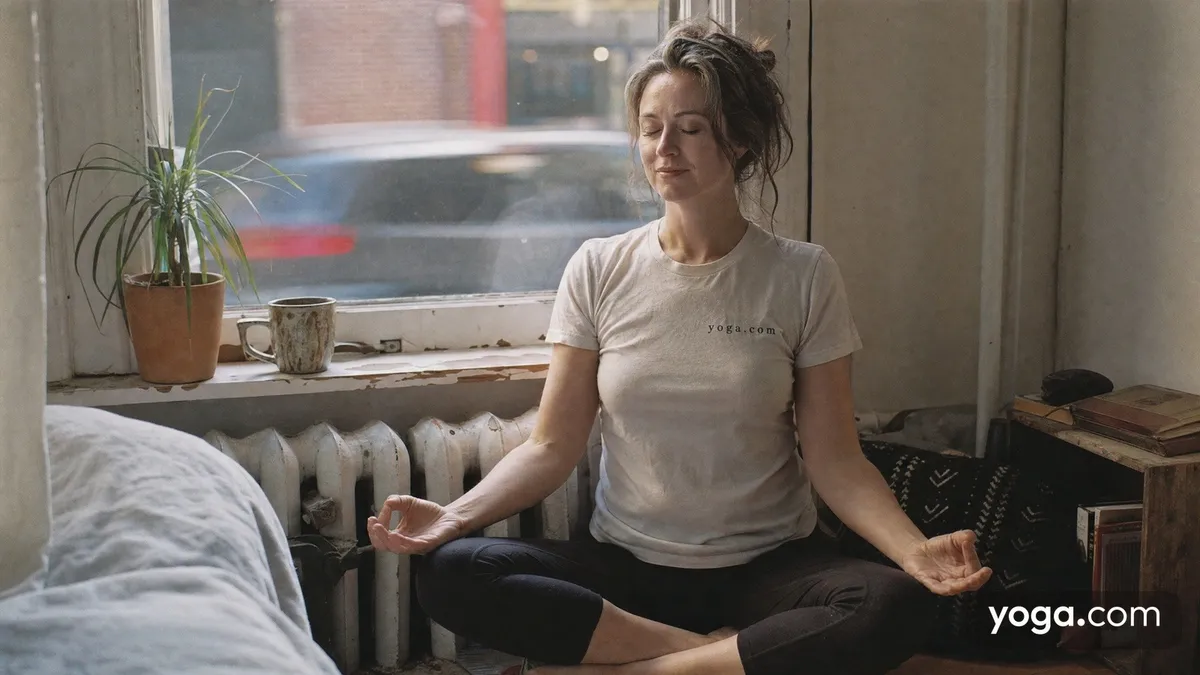

You roll up your mat, take one last deep breath, and feel that rare, quiet clarity - the kind that's hard to find anywhere else in your day. What if you spent just five minutes with a pen before that feeling slips away? Journaling right after yoga isn't just a nice ritual. It's one of the most effective things you can do to deepen what you've already started on the mat.
Why the Time Right After Practice Actually Matters
Your nervous system is genuinely different after yoga than it was an hour ago. Your body and mind have shifted into a different state, and that state is real. Research shows that yogic practices reduce stress, anxiety, depression, and chronic pain, while improving sleep and overall well-being - and that window right after practice is when those effects are freshest and most available to you.
That softness you feel is not just a feeling. Keep in mind that it is a real physiological shift happening in your body, and this shift is what makes honest writing easier in that moment. You are less guarded, less reactive, and so the words that come out of you tend to be truer than the ones you would write mid-afternoon, stressed at your desk. Your nervous system is simply more open, and that openness shows up on the page.
On top of that, research also indicates that both expressive writing and practicing Savasana can reduce stress and anxiety - meaning the two together may compound the benefit of either one alone, and so combining your yoga practice with journaling gives your body and mind a double opportunity to settle and restore.
The Brain on Yoga (and Why Writing Extends It)
Studies using MRI scans have shown that people who regularly practice yoga have a thicker cerebral cortex and hippocampus compared with non-practitioners - areas linked to attention, self-awareness, and memory. These are exactly the mental tools that make reflective writing richer and more meaningful for you.
Keep in mind that writing after yoga essentially gives that heightened awareness somewhere to land and so your brain is already in a state where it can notice more and capture more because yoga has primed it to do so. You are not just feeling calmer after your practice - you are genuinely noticing more details about your thoughts and your body and your surroundings. On top of that, if you do not write those observations down, you lose them quickly. So make sure you capture what you notice before that window closes.
How to Set Up a Writing Habit That Actually Sticks
The single biggest barrier isn't motivation. It's friction. If your journal is buried in a drawer across the room, you won't reach for it and so the habit will not form because the effort feels too high.
On top of that, a short and regular session - even just a few sentences - will serve you far better than one long journaling marathon followed by weeks of silence. The point is that your journal habit only works if you actually come back to it again and again.
What to Actually Write: Four Simple Prompts
You don't need a fancy format. These four prompts work for any practice, any level, and any day, so you do not need to overthink what you are going to write.
1. The Body Scan Note
Write two or three sentences about how your body feels right now compared to when you started your practice. Move your attention slowly from your feet to your head. Where do you feel open? Where do you still feel tension in your body?
2. The Breath Note
Did the breath feel easy or forced today? Where did you feel the breath most - chest, belly, throat? Keep in mind that even one honest sentence here builds your awareness over time, and that awareness is the whole point.
3. The Gratitude Note
Name two or three specific things from the session you are glad happened. Specificity matters. "I'm grateful my hip felt more open in Pigeon Pose (Eka Pada Rajakapotasana) today than last week" is more useful than "I'm grateful for yoga," and the more specific you are, the more useful your note becomes.
4. The Resistance Note
Write one honest sentence about what felt hard - physically or mentally. What did your mind do when things got difficult? On top of that, this is often the most valuable prompt over time because patterns emerge and you start to see where you meet difficulty, and that is genuinely useful information to bring to a teacher.
A Breath Bridge: Moving From Mat to Page
Before you pick up the pen, take sixty seconds to breathe. This does not need to be elaborate or complicated. Simply extend your exhale a little longer than your inhale - breathing in for four counts, out for six. Do this two or three times after your final pose, before you open your journal. Keep in mind that even just two or three slow breaths can make a real difference in how you move from movement to writing.
This isn't just filler. It is a small but important transition that keeps your nervous system in the settled state you just cultivated, and because your nervous system stays calm your writing will follow that calm state too. On top of that, the writing that follows this breath bridge will come out calmer and more honest. The breath bridge is a simple step, and that simple step is worth taking every time you move from your mat to your page.
Don't Worry About Writing Well
This is the mistake that stops most people before they start: thinking the journal has to be eloquent, structured, or worth reading later. Your journal does not need to impress anyone, including yourself.
Your journal doesn't need to be well-written at all. The value of expressive writing comes from writing honestly about what you are experiencing - not from how well-crafted the sentences are and not from how polished the journal looks when you are done. Spelling errors are fine. Incomplete thoughts are fine. A single messy paragraph is fine. Keep in mind that the writing itself is not the goal, because the honest expression is the goal.
What matters is that you show up on the page the same way you showed up on the mat: present, curious, and without judgment. On top of that, when you write without judgment about your writing, you give yourself the same space to be honest that your practice already gives you on the mat.
How Home Practice and Reflection Work Together
If you practice at home, journaling is an especially natural fit. A 2012 national survey of yoga practitioners found that home practice predicted health outcomes - including mindfulness, sleep, and well-being - more strongly than years of practice or class frequency alone. Adding a journaling habit to that home practice gives you a feedback loop: you practice, you write, you notice what's shifting, and that awareness feeds back into your next session.
Even at a studio, you can sit in your car for five minutes with a notebook before driving home. The window is short - use it.
A Note on Mental Health
Yoga and reflective writing can be genuinely supportive tools for mood and stress management and so many people find real value in adding these practices to their daily routine. Keep in mind that if you are navigating depression, anxiety, or trauma, you should work with a qualified mental health professional alongside any wellness practice you choose. Journaling is a complement to professional care and not a replacement for it. Journaling on its own is helpful, but journaling alone is not enough when you are dealing with serious mental health concerns, and so please make sure you are also seeking the right professional support for your situation.
Your Next Step
You have already done the hardest part, which is getting on the mat in the first place. Now let that calm, open state do a little more work for you. Grab a notebook and set the notebook next to your mat before your next practice. When you come out of Corpse Pose (Savasana), do not reach for your phone. Reach for the pen instead. Keep in mind that five minutes is really all it takes, and five minutes is a small amount of time so there is no reason to skip it. Five minutes of writing is all it takes to start turning a good practice into something you can actually learn from.