You spend a lot of time in yoga thinking about your hips, your spine, your breath — and almost no time thinking about the two things that are literally holding you up. Your feet are the foundation of every standing pose you'll ever do. Neglect them, and your balance will always feel like a struggle. Give them attention, and everything from Mountain Pose to Warrior Three starts to feel different.
Your Feet Are Doing More Than You Think
Even in a "simple" standing pose, your feet are gripping, adjusting, and firing constantly. The 22 intrinsic foot muscles (IFM) provide stability to the larger extrinsic muscles that produce gross movements like walking — and in yoga, they're working just as hard.
When those small muscles are weak, the whole chain above them compensates. Your ankle wobbles. Your knee shifts. Your hip grips. Weakness or disuse of the plantar intrinsic foot muscles can lead to arch instability, foot pain, and abnormal motion of the foot and toes — none of which makes balancing easier.
The good news? These muscles respond to training. A meta-analysis of 13 intrinsic foot muscle exercise intervention studies found that IFM training was associated with improved balance and strength. Your mat is one of the best places to do exactly that work.
The Role of Proprioception — Your Body's Hidden Sense
Proprioception is known as the "sixth sense" — your understanding of the position your body is in and its relationship to the space around you. In a balancing pose, it's what lets you make dozens of tiny corrections per second without consciously thinking about any of them.
Your sense of proprioception is initiated in the complex nerve networks surrounding your joints, connective tissues, muscles, and skin — which means the soles of your feet are rich with exactly this information. Every time you spread your toes and press evenly through your foot, you're sending cleaner signals up the entire chain.
Want to deepen that training? Practicing yoga with your eyes closed — repeating a sequence 3–5 times before resting in Savasana — can improve proprioception through repetition. Try it in Mountain Pose first. It's humbling. It's also incredibly effective.
Why Foot Strength Protects You From Injury
Yoga feels gentle — and it mostly is. But it does ask a lot of your joints. Many joint moments generated during yoga are almost equivalent to those experienced during running. That's worth knowing, especially in poses where you're balancing on one leg or bearing weight through a single foot.
Forty percent of yoga-related injuries occur in the lower extremity. A strong, stable foot doesn't guarantee you'll never get hurt — but it gives every joint above it a far better foundation to work from.
If you have a history of ankle instability, foot pain, or a recent injury, check with a healthcare provider before loading the foot aggressively. Some of the poses below are exactly where an unstable ankle gives way.
Four Foundation Poses — and What Your Feet Are Actually Doing
Mountain Pose (Tadasana)
This is where foot awareness begins. Tadasana trains you to load all four corners of the foot evenly — the base of the big toe, the base of the little toe, and both sides of the heel — while the intrinsic arch muscles lift gently from underneath.
Common mistake: Rolling onto the inner edges of the feet and letting the arches collapse inward. The fix: Spread your toes wide (without scrunching them), press down through all four corners, and feel the arch lift on its own. You're not forcing it up — you're creating the conditions for it to rise.
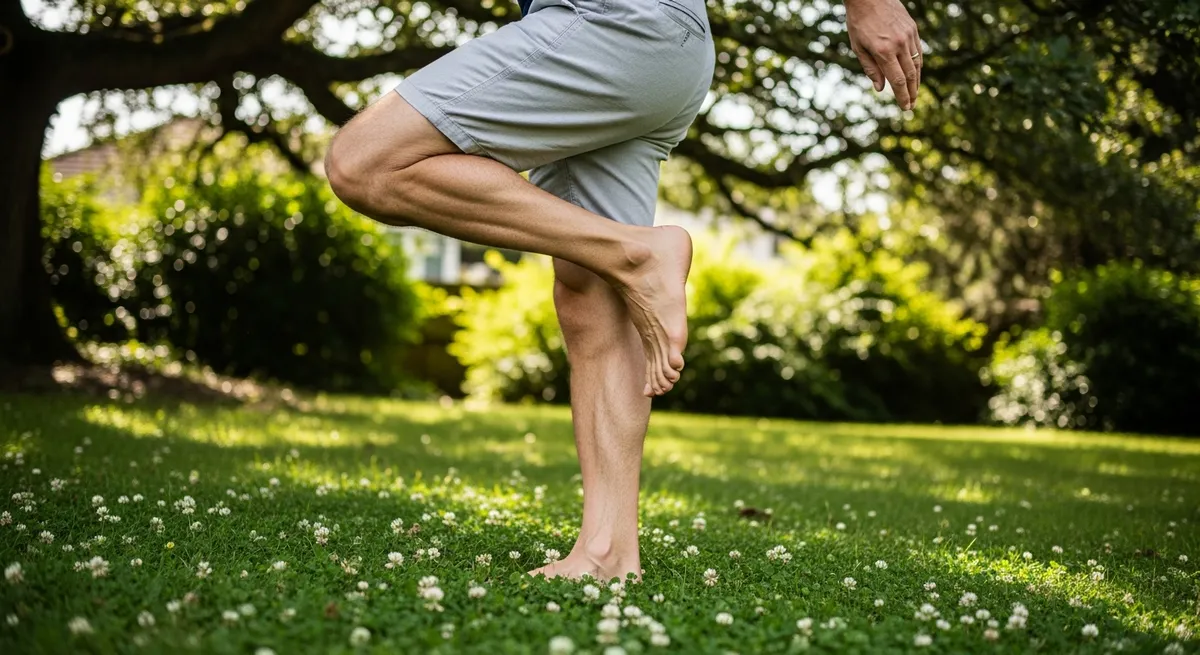
Tree Pose (Vrksasana)
Here, everything lands on one foot. The ankle stabilizers and the proprioceptive system of the standing foot work constantly to hold you upright. The challenge isn't strength alone — it's the responsiveness of those small correcting muscles.
Common mistake: Clawing the toes into the mat in an effort to grip harder. This actually rigidifies the foot and makes tiny balance corrections impossible. The fix: Keep the toes long and relaxed. Let the foot micro-adjust beneath you. Fix your gaze (drishti) on one still point — a steady eye does more for your balance than a tense foot ever will. Keep a wall or chair nearby if your ankles are unstable.
Warrior Three (Virabhadrasana III)
The entire standing leg — from foot to hip — works as one long chain here. The deep foot and ankle muscles are the anchor of that chain.
Common mistake: Locking the standing knee straight and lurching the torso forward, which dumps weight into the joint rather than the muscle. The fix: Maintain a soft micro-bend in the standing knee. Press evenly through the whole foot. Reach forward with intention rather than tipping fast. If you feel dizzy when you lower your head, come in and out slowly — or skip the full forward fold for now.
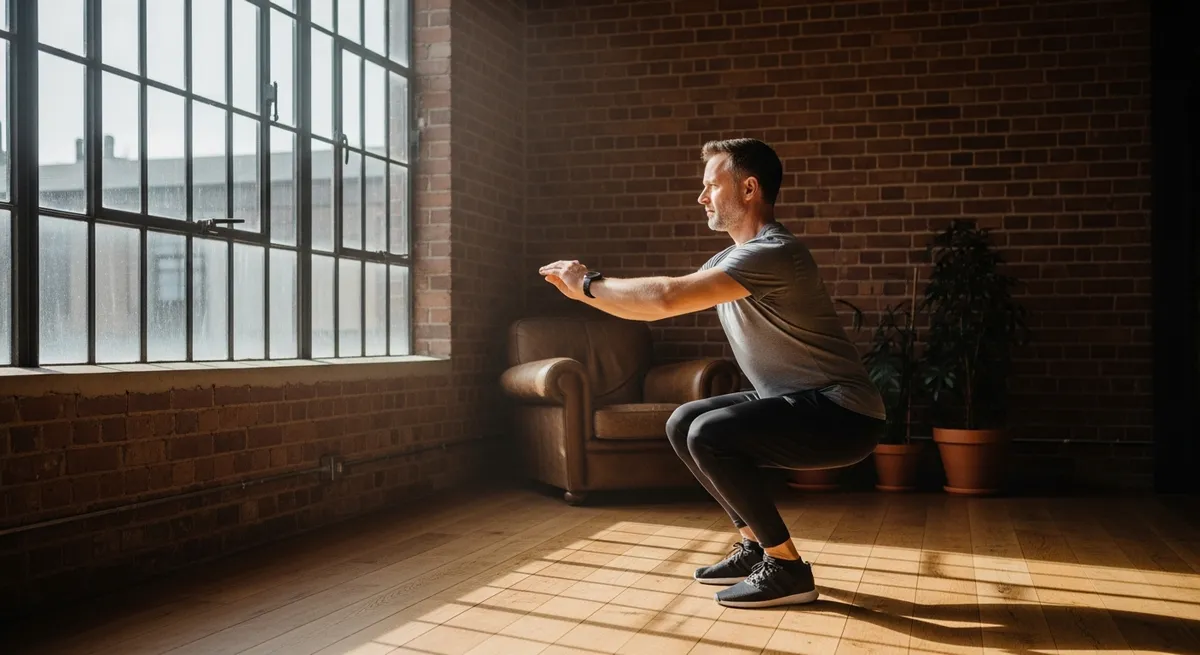
Chair Pose (Utkatasana)
Both feet work simultaneously here, supporting the arches and ankles while the larger leg muscles take the load of the squat. It's a great pose for connecting foot stability to full-body strength.
Common mistake: Shifting weight onto the balls of the feet so the heels lift slightly off the mat. The fix: Sit your hips back as though toward an actual chair. Keep the heels grounded. Check: can you still wiggle your toes freely? If yes, your weight is distributed well. If your knees ache, take less of a bend and keep your hips above knee height.
Simple Ways to Build Foot Strength Right Now
You don't need extra equipment or a separate workout. These habits fit inside your existing practice:
A Note on Falling — and Why This Matters Beyond the Mat
Unintentional falls are the leading cause of injury in adults 65 and older. The foot strength and balance work you do on your mat today is an investment that pays forward — in better coordination, steadier movement, and more confidence in your body for years to come.
You don't have to be thinking about fall prevention right now for this to matter. Every time you build a more stable, responsive foot, you're building a more capable body — on the mat and everywhere else.
The Bottom Line
Your feet aren't just a platform — they're an active, intelligent part of every pose you practice. Tune into them. Strengthen the small muscles. Train your proprioceptive sense. The payoff shows up everywhere: in cleaner standing poses, in steadier transitions, and in a practice that feels grounded from the ground up.
Start in Mountain Pose today. Feel all four corners of each foot. Spread your toes. That's it — that's the beginning of everything.