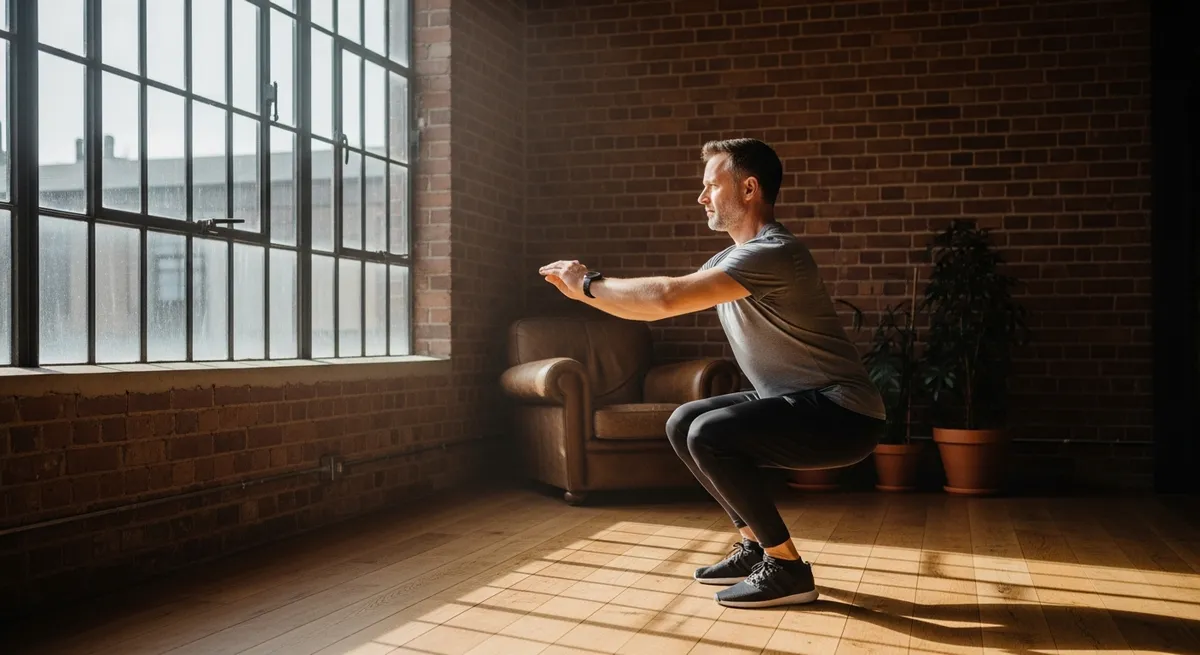
You can fold forward and touch the floor with ease, yet still struggle to lower into a deep squat with control. That gap — between what your muscles will allow and what your joints can actually do — is exactly where mobility and flexibility part ways. Understanding the difference won't just change how you practice yoga; it could be the key to moving without pain for decades to come.
They're Not the Same Thing
Flexibility is how far a muscle can lengthen. It's a tissue quality — passive, measurable, and largely about muscle length.
Mobility is how well a joint moves through its full range of motion while you maintain control. It involves muscles, tendons, fascia, and the nervous system all working together — actively.
Here's the part that surprises most people: you can be highly flexible and still have poor mobility. A dancer who drops effortlessly into the splits may not be able to perform a slow, controlled deep squat — because the squat demands joint control, not just muscle length.
Why Your Joints Have "Jobs"
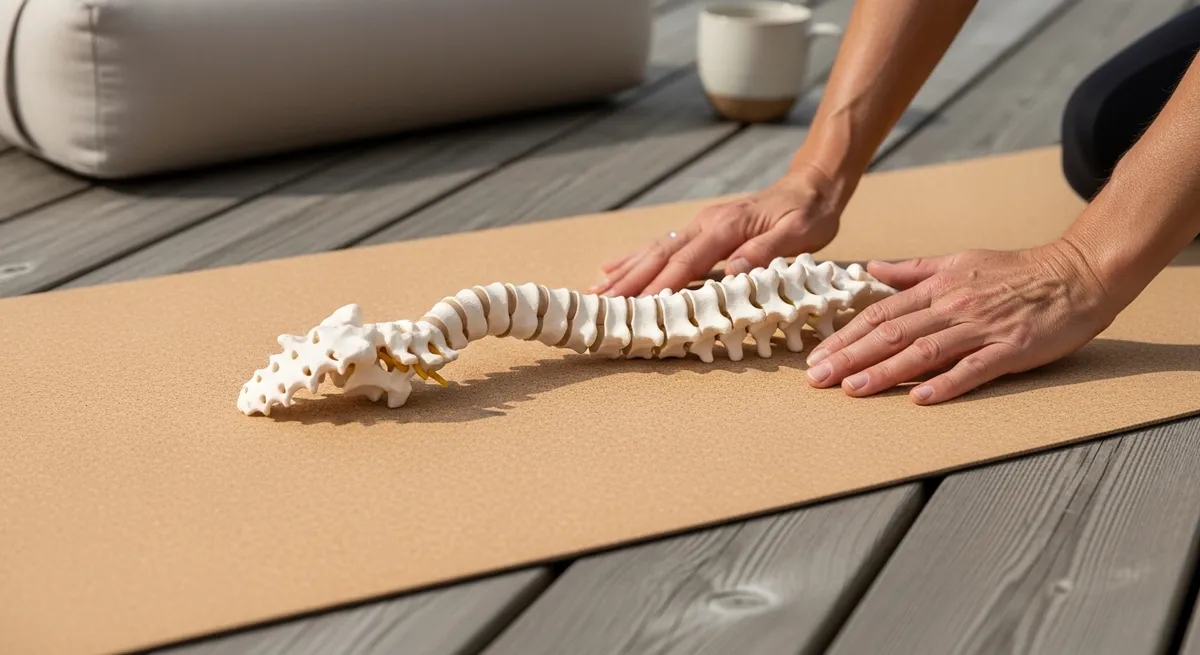
Not every joint in your body is built to do the same thing. Some joints are designed primarily for mobility — the ankle, hip, and thoracic (mid) spine. Other joints are built for stability — the knee, lumbar spine, and cervical spine. The simple fact is that each joint has a specific role, and your body works best when every joint is doing its own job.
When a mobility joint is not moving well, neighboring joints often compensate for that lack of movement, and so those neighboring joints start to take on work they were never designed to handle, because your body will always try to find a way to keep you moving. A chronically stiff lower back, for example, is often a hip and mid-back mobility problem in disguise. The lumbar spine ends up moving in ways the lumbar spine was never designed to, and discomfort follows. Keep in mind that the pain you feel in one area is not always caused by a problem in that same area.
This is why chasing lower-back tightness with more lower-back stretching frequently misses the mark. Look one joint up and one joint down first.
What Happens to Flexibility and Mobility Over Time
Both tend to decline with age — but the pattern is uneven. Research following over 6,000 participants aged 5 to 92 years found that flexibility systematically decreased with aging, with women being more flexible at every age and losing flexibility more gradually (0.6% per year) compared to men (0.8% per year).
Importantly, this age-related loss is joint-specific — the shoulder and trunk become less flexible with age, while elbow and knee mobility is better preserved. That means your training can and should target the areas most vulnerable to decline.
The practical takeaway: don't wait until something hurts to start paying attention to how your joints move.
How to Build Flexibility — the Right Way
Static stretching is the classic tool here, and the research gives us clear guidelines for making it work. The simple fact is that static stretching works best when you follow a few basic rules, and ignoring those rules means you will get much less benefit from your time.
One important caution: static stretching immediately before exercise has been shown to reduce muscle strength and performance in running and jumping. Save your long holds for after your practice or workout, not before, because doing long static holds before your workout can actually make your muscles perform worse during that workout.
A few common mistakes to avoid
How to Build Mobility — It's More Than Just Stretching
Mobility work asks your joints to move through their full range actively and with control. Think slow, deliberate movement — not passive holding.
Practices that build joint mobility
The goal is to own every degree of the range — not just pass through it.
Why Both Matter for Long-Term Function
Skipping either one has real consequences. In a study of over 1,300 adults, stretching was associated with a 24% decreased odds of developing functional limitation, and calisthenics — movement-based exercise — with a 38% decrease. Doing both compounds the benefit.
The ACSM recommends flexibility exercises for each major muscle-tendon group — totaling 60 seconds per exercise — on at least two days per week, alongside strength and cardiovascular training. Flexibility and mobility work aren't extras; they're part of a complete routine.
A Quick Self-Check: Where Do You Stand?
Ask yourself these questions honestly:
If any of these feel limited or uncomfortable, that is useful information and a good reason to bring both mobility and flexibility work into your weekly practice. The simple fact is that these small limitations in your body are telling you something important, so it is worth paying attention to them. Keep in mind that if you have an existing injury or a condition affecting your back, hips, or knees, you should speak with a physical therapist or your doctor before starting a new routine. On top of that, your doctor or physical therapist can help you figure out which type of work is most appropriate for your specific situation and so you will not make an existing problem worse by choosing the wrong exercises.
The bottom line
Flexibility and mobility are teammates, not the same player. Flexibility — long, supple muscles — gives your joints the room to move. Mobility — strength and control through that range — is what lets you use that room safely. Train both, consistently, and your body will thank you in the ways that matter most: moving freely, staying strong, and staying out of pain.