You've seen it on the studio schedule — "Vinyasa Flow, All Levels" — and maybe wondered whether it's the right fit or a recipe for keeping up with a room full of people who seem to have been born doing handstands. Here's the honest answer: vinyasa is one of the most accessible, energizing styles of yoga you can try, and once you understand what it actually is, the class schedule stops feeling like a mystery.
What "Vinyasa" Actually Means
The word itself tells you everything: vinyasa traditionally means "arranging something in a special way" — in this context, arranging your body through a linked sequence of poses, with each movement anchored to an inhale or exhale. So the word vinyasa is not just a class name, it is a description of exactly what you are doing with your body and your breath.
Breath is the throughline, and this is the most important thing to understand about vinyasa yoga. Every transition has a direction: you inhale to rise, exhale to fold, inhale to open, exhale to ground. Keep in mind that when this breath connection clicks for you, the practice stops feeling like plain exercise and starts feeling like something closer to moving meditation.
Vinyasa is one of the most widely practiced yoga styles in the West, and its roots run very deep. The concept is credited to Krishnamacharya, the 20th-century teacher whose students went on to shape nearly every modern style you will find on a studio timetable today and so the influence of Krishnamacharya on what you practice in a modern yoga class is difficult to overstate.
The Signature Move You'll Do Over and Over
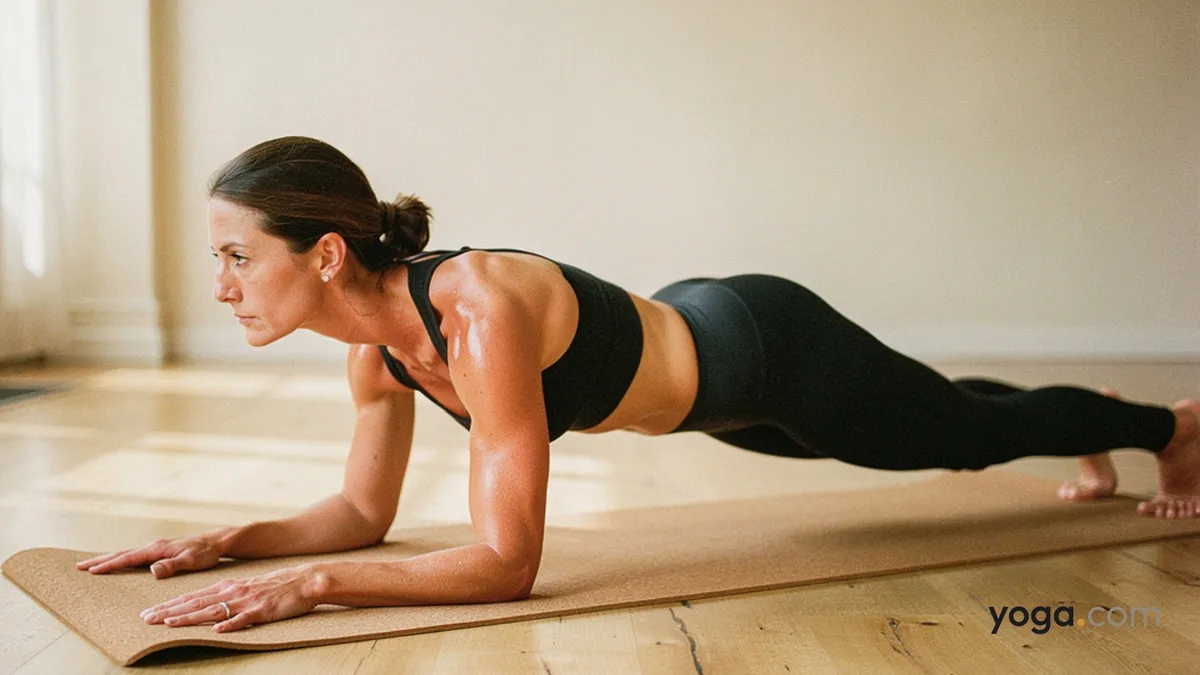
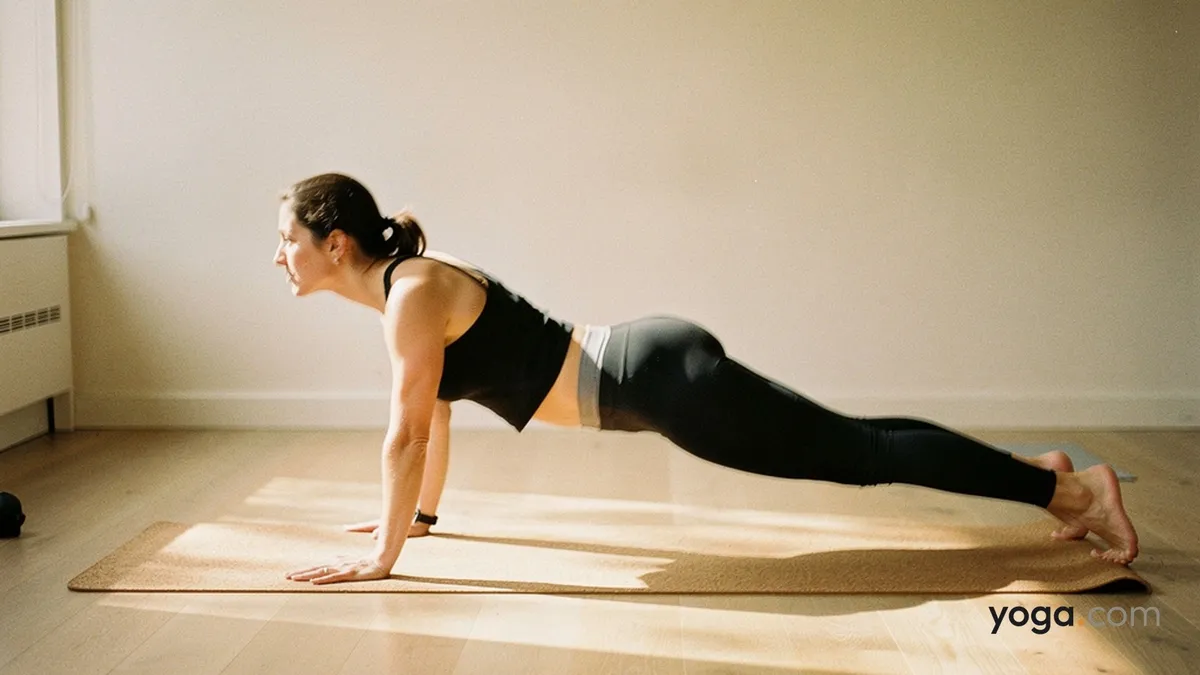
Ask any vinyasa veteran what the "flow" in the name refers to, and they'll probably demo this: Plank Pose → Chaturanga (Four-Limbed Staff Pose / Chaturanga Dandasana) → Upward-Facing Dog (Urdhva Mukha Svanasana) → Downward-Facing Dog (Adho Mukha Svanasana). This four-pose sequence is simply called "a vinyasa," and you'll use it as a reset between standing poses, hip openers, and everything in between.
It's worth learning Chaturanga carefully from the start — a good teacher will offer modifications (lowering your knees, for instance) so you build the strength safely rather than cranking through it with your lower back.
What a First Vinyasa Class Actually Feels Like
Here is a rough minute-by-minute picture of what a standard 60-minute class looks like for you as a first-timer:
You will likely feel lost at some point during your first visit, and that is completely normal and expected. Watch the other students, keep breathing, and remember that modifications are not the beginner version. On top of that, remember that modifications are simply the version that fits your body today, so you should use them without any hesitation.
How Vinyasa Compares to Other Styles
If you're trying to figure out where vinyasa sits among the many types of yoga, this breakdown helps:
Vinyasa vs. Hatha
Hatha yoga holds each pose individually with a clear pause between movements. The pace is slower, which makes it excellent for learning alignment from the ground up. Vinyasa links those same poses into a continuous flow — more dynamic, more cardiovascular. Think of Hatha as individual words; vinyasa is the sentence.
Vinyasa vs. Ashtanga
Ashtanga is the original vinyasa style — developed by Sri K. Pattabhi Jois — and it follows a fixed, memorized sequence of poses that never changes. Vinyasa borrows Ashtanga's breath-movement architecture but gives the teacher creative freedom. Every vinyasa class is different; every Ashtanga class is the same sequence, practiced until it becomes second nature.
Vinyasa vs. Power Yoga
Power yoga is essentially vinyasa with a fitness-forward lens: heavier emphasis on strength, endurance, and intensity. Power Yoga is considered a newer form of vinyasa yoga. If a studio's vinyasa class feels more like a bootcamp than a flow, it's probably marketed this way intentionally.
The Physical Benefits — What Research Actually Shows
Vinyasa is not just stretching. It is classified as light-intensity aerobic physical activity, and an hour-long moderate-level vinyasa class can burn between 400 and 600 calories. The simple fact is that vinyasa yoga gives your body a real physical workout, not just a gentle stretch.
The cardiovascular effects are real too. A 2023 randomized crossover trial found that systolic blood pressure was 8.14 mmHg lower at five minutes post-vinyasa compared to a seated control, and this is a meaningful difference because it shows that vinyasa yoga can have a direct effect on your heart health, so it is worth paying attention to if you are keeping an eye on your blood pressure.
Broader research on yoga practice supports what many students feel on their own. After eight weeks of practicing yoga at least twice a week for a total of 180 minutes, participants showed greater muscle strength and endurance, flexibility, and cardio-respiratory fitness. On top of that, yogic practices have been shown to enhance muscular strength, improve respiratory and cardiovascular function, reduce stress, anxiety, and chronic pain, and improve sleep. Keep in mind that these benefits apply to your body as a whole, not just one area.
That said, yoga is not a substitute for medical care. If you are managing an injury or a chronic condition, talk to your healthcare provider before starting any new physical practice.
Who Thrives in Vinyasa — and Who Might Start Elsewhere
Vinyasa tends to be a great fit if you:
You might want to begin with Hatha first if:
Neither path is better. They're just different entry points to the same practice.
A Few Things to Know Before Your First Class
The Bottom Line
Vinyasa yoga is movement and breath woven together into something greater than either one alone. The simple fact is that vinyasa yoga connects your body and your breath in a way that makes the practice feel like more than just exercise. Vinyasa yoga is dynamic enough to challenge you physically, and vinyasa yoga is creative enough to stay interesting, so you are unlikely to get bored with it because each class can feel different from the last. Keep in mind that vinyasa yoga is also rooted deeply enough in tradition to offer you something beyond a workout. Show up, breathe, and let the flow do its work for you.