You step into your first Ashtanga class and something feels different. There's no playlist, no creative sequencing, no "today we're exploring hip openers." Everyone in the room is doing the same poses — in the same order — as every other Ashtanga practitioner on earth. That's the point. And for some people, it's the most liberating thing they've ever experienced on a mat.
If you're exploring the many types of yoga and wondering whether Ashtanga is your match, here's the honest picture.
What Ashtanga Actually Is
Ashtanga yoga was originally created by T. Krishnamacharya as an individualized practice for his student K. Pattabhi Jois in the early 20th century. Jois, an Indian yoga guru, went on to systematize and teach it widely — and since the late 1990s, Ashtanga has been considered one of the most popular forms of yoga in the Western world.
The practice is built on a fixed set of sequences. Beginners start with the Primary Series (Yoga Chikitsa, meaning "yoga therapy") — a precise order of standing poses, forward folds, twists, and inversions that never changes. You master the Primary Series before you're taught the next. There's no skipping ahead.
The Numbers Behind the Practice
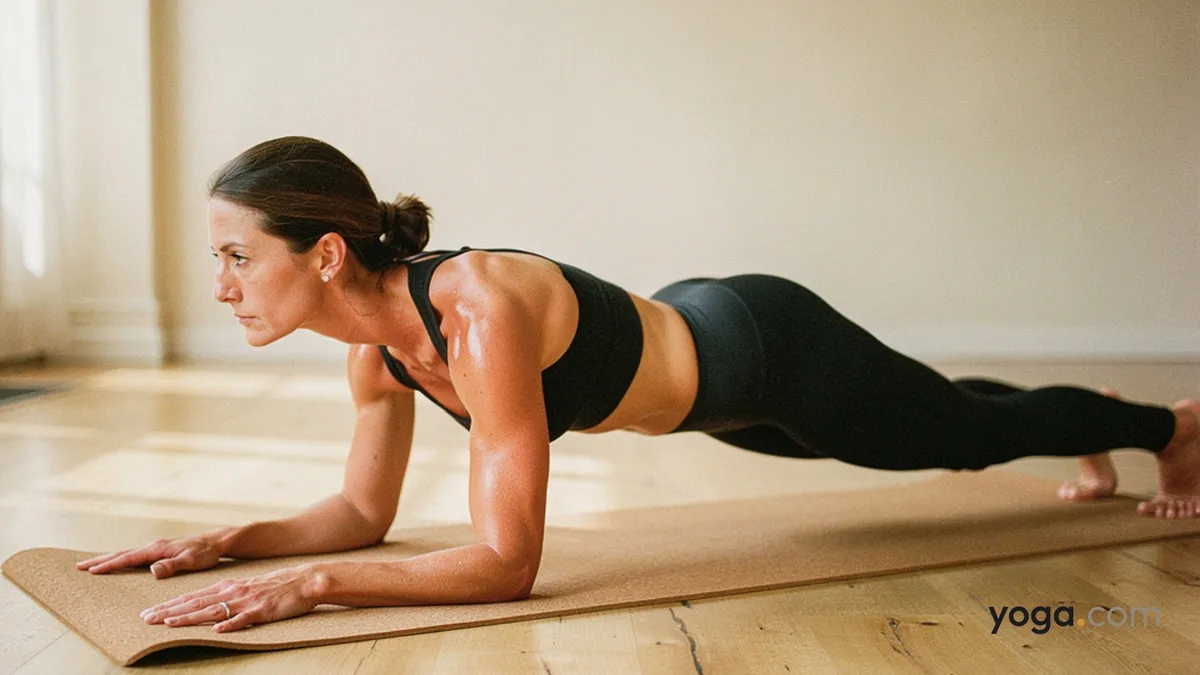
This is not a gentle stretch class. The Primary Series contains 60 Chaturangas and takes approximately 90 minutes to complete. Sixty Chaturangas. The simple fact is that if your wrists, shoulders, or triceps are already fragile, that number is something you need to think about before you even begin your first session.
The traditional approach recommends practicing six days a week, resting on Saturdays and on new and full Moon days. Keep in mind that this rhythm is deliberate and the repetition is the actual method, so the repetition is not a flaw in the design. The repetition is the whole point, and your body needs to be ready for that level of consistent demand.
Mysore Style vs. Led Classes: Which Should You Try First?
Ashtanga is taught in two formats, and understanding the difference will save you a lot of confusion.
Mysore-Style Self-Practice
Named after the city in India where Jois taught, a Mysore class looks chaotic at first glance. Students arrive during an open window, work through their own practice at their own pace, and receive hands-on adjustments from the teacher one-on-one. You only learn the poses you've been given — no pose is "taught" until you're ready for it. This is Ashtanga's traditional home, and many practitioners consider it the best entry point because the pace is entirely yours.
Led Classes
In a led class, the teacher calls out every pose and breath count for the whole group simultaneously. It's closer to a traditional class format and can feel more accessible at first. The challenge: everyone moves at the same pace, which can feel rushed if you're new to the sequence.
For beginners: If a Mysore option exists near you, try it. If not, a led beginners' Ashtanga class is a solid starting point.
How Ashtanga Differs from Vinyasa and Power Yoga
Ashtanga shares its DNA with both Vinyasa and Power yoga — all three link breath to movement and involve flowing transitions. But the differences are meaningful.
What Your First Class — and First Month — Will Actually Feel Like
Expect to feel lost for the first several sessions. The sequence is long, the Sanskrit names are unfamiliar, and your body will be learning to move in new ways. This is normal. The sequence starts to feel like muscle memory around weeks three to four for most beginners.
Here's a realistic first-month picture:
The Injury Piece: What to Know Before You Start
A 2020 UK survey of over 2,400 yoga practitioners found that 20.7% reported at least one yoga-related injury over their lifetime — and this is a reminder that no style of yoga is entirely risk-free. The simple fact is that Ashtanga yoga has a repetitive structure, and because of that repetitive structure it creates particular injury patterns that you should know about before you start:
None of this means Ashtanga will injure you — many practitioners do Ashtanga safely for decades and live to recommend it. Keep in mind that building slowly is very important, and you should communicate openly with your teacher about any pain you feel. On top of that, if you have existing joint or injury concerns, please consult a healthcare professional before you start your Ashtanga practice.
Who Thrives in Ashtanga — and Who Doesn't
Ashtanga tends to work beautifully for certain kinds of people and frustrate others. Be honest with yourself here.
You'll likely thrive if you:
You may burn out if you:
It's also worth noting that 47% of yoga practitioners in one large survey reported changing their motivations to practice over time. You don't have to commit forever. Try it for a month with genuine curiosity and see what you notice.
The Bottom Line
Ashtanga yoga is one of the most demanding, most methodical, and most rewarding practices you can find. The simple fact is that Ashtanga yoga is not easy and it is not meant to be easy. The fixed sequence is not a limitation and it is not something you work around because the fixed sequence is the whole philosophy of the practice. You are not there to sample poses or pick and choose what feels comfortable. You are there to show up, do the work, and let the repetition reveal something real to you. Keep in mind that the repetition is the point, and the repetition is what makes progress possible over time. On top of that, showing up consistently is what separates Ashtanga yoga from more casual approaches to movement. If that sounds like your kind of challenge, find a qualified teacher, go in with realistic expectations, and give the practice at least a month so you can see what it actually does for your body and your mind. You might just get hooked.