You finish a power yoga class dripping, arms shaking, and quietly wondering how a yoga mat just beat you harder than the gym did. That's the point. Power yoga is built for people who want a real workout — strength, sweat, and mobility rolled into one — without a side of incense or ancient ritual. Here's exactly what it is, what a class feels like, and whether it belongs in your rotation.
What Power Yoga Actually Is
Among the many types of yoga, power yoga sits firmly in the athletic lane. It's a fitness-based vinyasa practice and a direct offshoot of Ashtanga yoga, stripped of the fixed series, the Sanskrit countdowns, and the traditional framework that defines its parent style.
Power yoga was originally developed by Beryl Bender Birch, but the name has since become a broad umbrella. Today it describes any vigorous, strength-forward vinyasa class that prioritizes intensity over tradition. Walk into two different "power yoga" classes and they may look quite different — that's by design.
What Happens Inside a Power Yoga Class
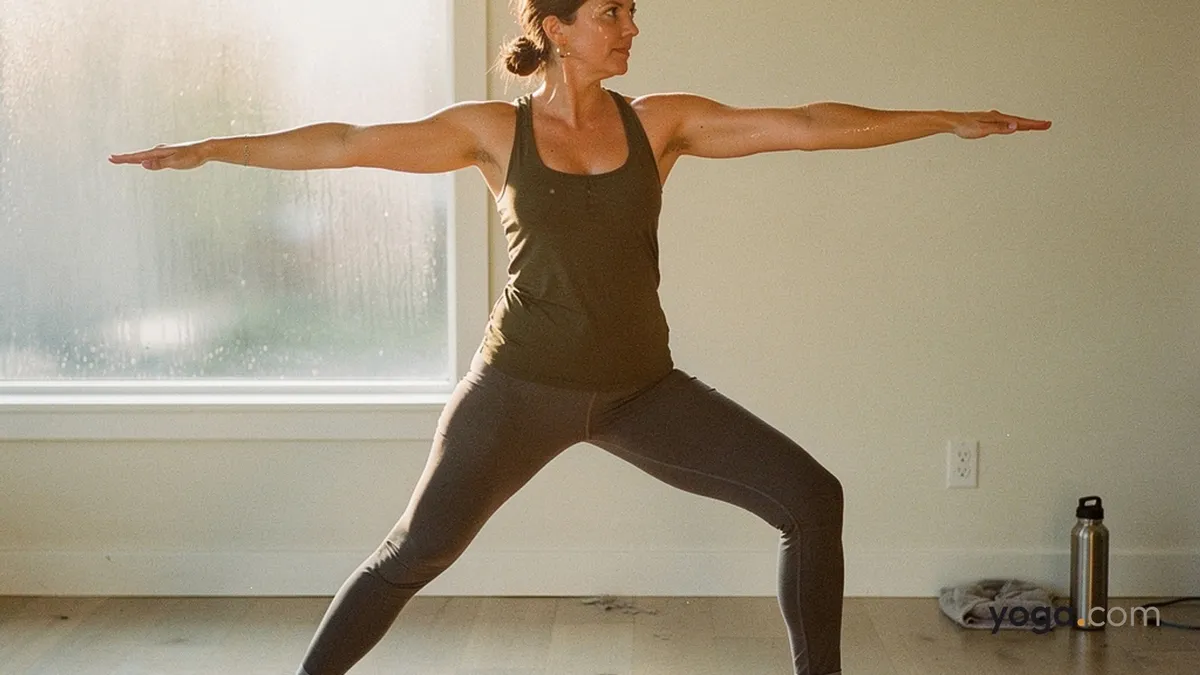
Expect to move. A typical 60-minute class flows through a warm-up sequence, a peak-strength middle section, and a short cool-down. The transitions are athletic, the holds are long enough to burn, and the teacher keeps the pace high.
You'll encounter a lot of these:
Classes rarely follow a fixed script. The instructor builds the sequence around a workout arc — think warm-up, escalation, peak, recovery — which is the key structural difference from most other styles.
The Real Benefits (What Research Actually Supports)
Power yoga's fitness claims aren't just marketing. After eight weeks of practicing yoga at least twice a week for a total of 180 minutes, previously sedentary people showed greater muscle strength and endurance, flexibility, and cardio-respiratory fitness. Power yoga — with its higher intensity and load — sits at the demanding end of that spectrum.
And if you've ever noticed you feel differently about your body after a strong practice, that's documented too. People who practiced yoga reported being more aware of their bodies than non-practitioners, and were more satisfied with and less critical of their bodies.
Who Power Yoga Is Actually Built For
Power yoga tends to click for a specific kind of person. You might love it if you:
It's less ideal if you're brand new to movement entirely, dealing with an active injury, or looking for deep alignment coaching. More on that below.
Honest Limits: What Power Yoga Won't Always Give You
The very things that make power yoga energizing can also create real risk if you are not careful. Keep in mind that knowing these limits before you start is just as important as knowing the benefits.
Alignment gets less attention
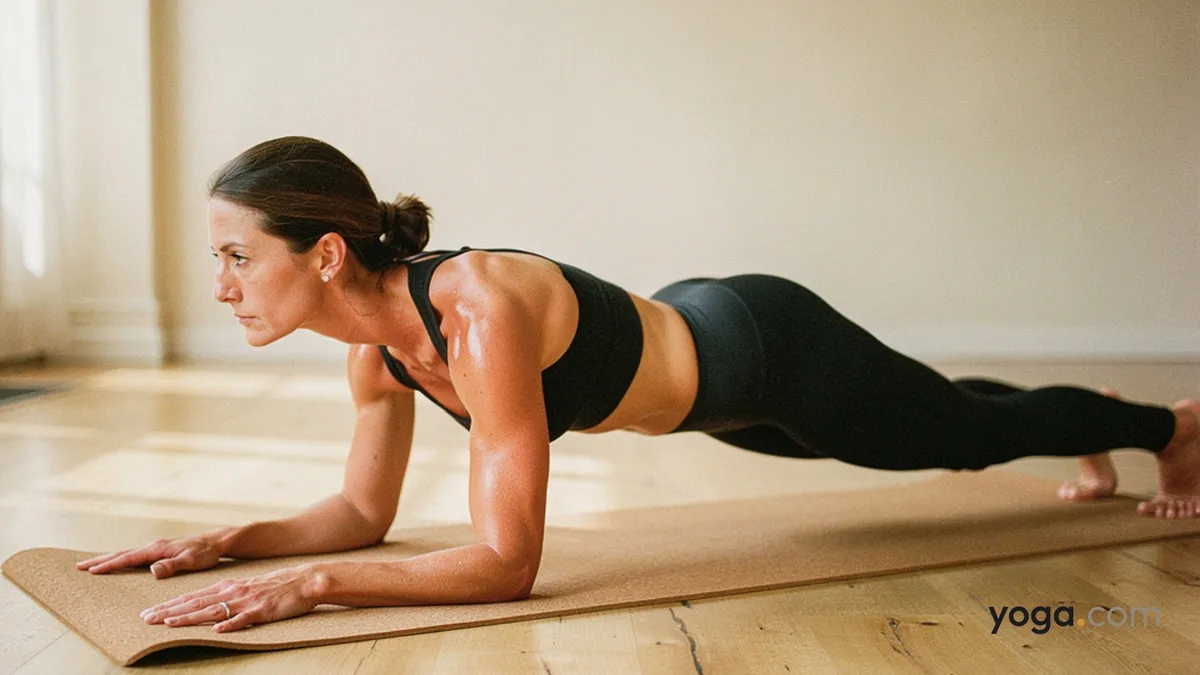
In a fast-paced class with 20 people, a teacher simply cannot cue every Chaturanga and so your alignment can slip without anyone noticing. Wrists, shoulders, and lower back absorb the most stress in these flows — and without solid form, these body parts are the first things to complain. The simple fact is that poor alignment repeated many times adds up to real strain. If you are new to yoga or if you have any shoulder or wrist history, consider taking a few slower classes first to build the foundational movement patterns before you join a fast-paced power yoga class.
It's not a substitute for rehabilitation
Power yoga can support back health — a 2018 review of eight trials found that yoga improved low-back pain and function in both the short and intermediate term — but vigorous classes are not the right entry point for acute pain or injury. On top of that, power yoga moves quickly and so it gives your body very little time to recover between demanding poses. Always check with a healthcare provider before you start power yoga if you have an existing condition, because starting without guidance can make your condition worse.
No heat is built in
Power yoga does not require a heated room, and this is a point that many people misunderstand. If you are comparing power yoga to Hot Yoga, that is a separate category entirely and the two styles should not be confused. Some studios do offer "hot power yoga," but the heat in those classes is a studio decision and not a defining feature of power yoga as a style. Keep in mind that heated yoga in the U.S. originated in the 1970s with Bikram yoga — a completely different tradition that your power yoga class is not connected to.
How Power Yoga Compares to Similar Styles
vs. Ashtanga
Ashtanga is power yoga's ancestor — athletic, breath-linked, and physically demanding. The simple fact is that Ashtanga follows a strict, fixed series of postures practiced in the same order every single time, with a traditional lineage and Sanskrit instruction and so the practice carries a lot of ritual structure. Power yoga borrows the intensity from Ashtanga but drops the fixed sequence and the tradition. The result is more freedom and less ritual for you as a practitioner.
vs. Vinyasa
Vinyasa is the broader category, and power yoga is a specific flavor that lives within that broader category. A vinyasa class might be gentle, creative, or restorative depending on the teacher, so the intensity of vinyasa can vary a lot. Power yoga consistently orients your entire class around a workout arc — strength peaks, deliberate loading, and athletic challenge. Keep in mind that the intensity floor in power yoga is simply higher than in a typical vinyasa class.
vs. Hot Yoga
Hot yoga adds an environmental variable — a room heated to 95–105°F — to whatever style is being practiced, and so hot yoga is really defined by temperature more than anything else. Power yoga is defined by its structure and intensity, not by the temperature of the room you are in. The two can overlap because some studios do teach power yoga in a heated room, but they are answering different questions for you: how hot? vs. how structured and athletic?
Getting Started Without Wrecking Your Wrists
The Bottom Line
Power yoga is the style for you if you want yoga to feel like a real workout and you want that workout to be genuinely challenging, strength-building, and sweat-inducing, so power yoga gives you all of that without the fixed tradition of Ashtanga or the passive heat of a hot class. The simple fact is that power yoga is flexible enough to suit athletes and gym-goers, and power yoga is honest enough to earn its place as a standalone fitness practice. Keep in mind that you do not need to follow a strict sequence or sit in a heated room to get real results from your yoga practice. Show up, move hard, and respect your wrists. That is really the whole deal, and if you remember nothing else, remember that power yoga works best when you treat power yoga seriously as a fitness practice.