
The Strong Breaths — Kapalabhati, Bhastrika, and Who Should Skip Them
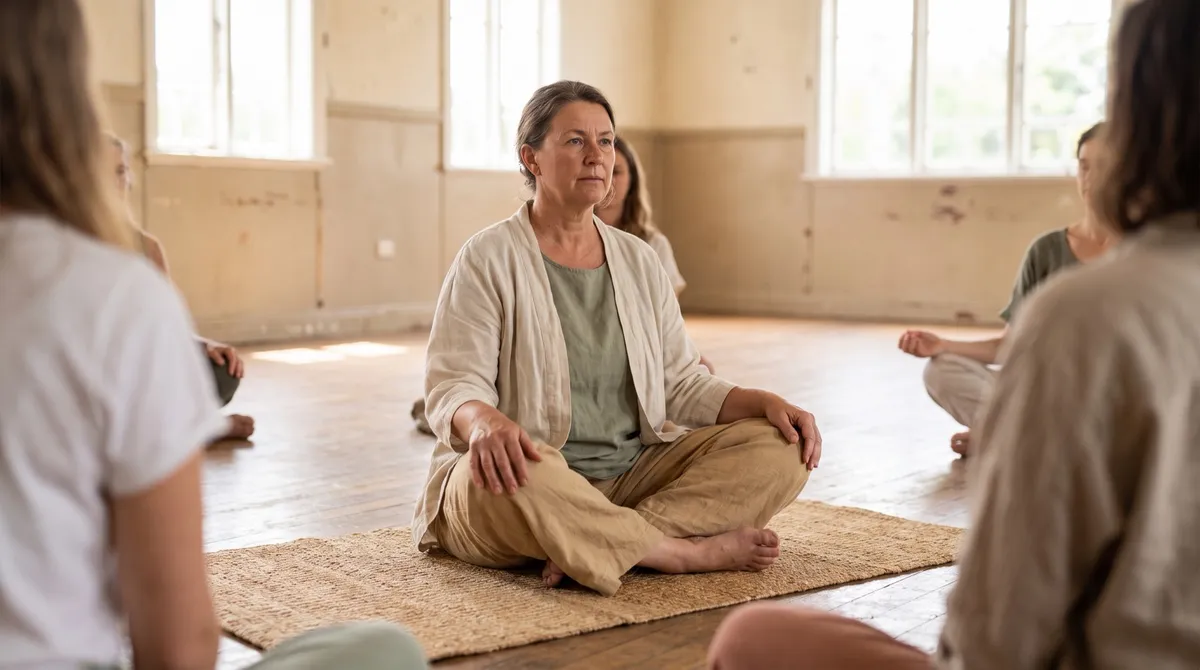
Kapalabhati is powerfully energizing, but the risks are real
When you're looking for a yoga practice that's intensely energetic, kapalabhati is a perfect place to start. It's called the skull-shining breath, because it tends to clear the head and activate the mind. It belongs near the top of the ladder because it is the easiest technique to overdo. What follows is who should skip it, and a beginner dose small enough that you won't.
Who must avoid kapalabhati?
When a practice as powerful as kapalabhati is your goal, keep the cautions right at the front of your mind: not appropriate during pregnancy, and to be avoided if you have high blood pressure, heart disease, glaucoma, epilepsy, a hernia, or recent abdominal surgery. If you feel dizzy, stop immediately and breathe normally.
How to practice kapalabhati safely: the dosing for beginners
Step 1 is to start slowly, with 1 to 3 rounds of 20 to 30 exhales, a few mornings a week, if it's safe for you. The speed builds up only as you get comfortable and coordinated.
Step 2 is to take a normal breath in. Then make a short, sharp exhale by quickly contracting the lower belly, pushing the air out through the nose. Then let the inhale happen passively — the belly relaxes and air flows in without any deliberate pull. Do not pull the belly in.
Step 3 is to get a feel for the rhythm. When you're first learning, aim for 20 to 30 exhales per round. As you get more comfortable, add more rounds, as long as you're not dizzy or lightheaded — always leave room for your body to say no.
Remember that the benefits are measured. A small trial comparing fast and slow pranayama found both could reduce perceived stress — but the fast, forceful styles are the ones most likely to leave beginners lightheaded.1
Systematic reviews of yoga note that adverse events are uncommon overall but do occur, and forceful breathing practices carry more risk than gentle ones — so with any medical condition, ask a clinician before adding kapalabhati.2
Bhastrika is even more vigorous
The next powerful breath on the list is bhastrika, the bellows breath. The goal here is to pump the breath actively, both the inhale and the exhale, both driven by the belly and roughly equal in force, at about one breath per second or slower.
Start with a round of about ten breaths, then stop and let the breath return completely to normal, resting several natural breaths between rounds — 1 to 3 rounds, a few mornings a week. The evidence here is better than you might expect: in one randomized controlled trial, four weeks of bhastrika practice reduced anxiety and negative mood in healthy adults, with matching changes in brain regions involved in emotion regulation — though those participants were trained and supervised.3 Everything on kapalabhati's contraindication list applies with more force: bhastrika is not appropriate during pregnancy and must be avoided with high blood pressure, heart disease, glaucoma, epilepsy, a hernia, recent abdominal surgery, or a panic disorder. Dizziness or tingling means stop immediately.
When you're looking at the list of cautions, there's one much bigger caution for bhastrika than kapalabhati: start with kapalabhati, and only move on to bhastrika when you're fully comfortable and coordinated with the skull-shining breath. That's the "co-ordination gate" between the two practices.
The powerful practices have cooling breathing to follow them
Here's where the cooling breaths kick in: sitali and sitkari. These two practices are the rare pranayamas that inhale through the mouth, and their job is to cool and settle you when you're overheated, flushed, or irritable. The air arrives through the mouth, so it's unfiltered and unwarmed, and that means skip these in cold weather or heavy pollution, and leave them out if cold air triggers your asthma. One small trial in hypertensive patients reported lower blood pressure and a parasympathetic shift after regular practice — a promising signal, but small and population-specific, so hold it lightly.4
Sitali is the practice in which the tongue curls into a tube and the air is drawn in through that tube (the air cools over the wet tongue). Exhale through the nose. If the tongue won't curl, sitkari is the practice in which the lips part with teeth lightly together and the air is drawn in with a soft hiss. Exhale through the nose. Five to ten rounds. Stop if you feel dizzy, lightheaded, breathless, or anxious. Keep any retention short and relaxed, rather than chasing long holds alone.2
References
- pubmed.ncbi.nlm.nih.gov — trial comparing fast and slow pranayama on perceived stress
- pmc.ncbi.nlm.nih.gov — systematic review of adverse events associated with yoga
- pubmed.ncbi.nlm.nih.gov — randomized controlled trial of bhastrika pranayama on anxiety, affect, and brain connectivity
- pubmed.ncbi.nlm.nih.gov — trial of sitali/sitkari cooling pranayama in hypertensive patients
One last word: this article is for general information and education only, and it is not medical advice. Kapalabhati, bhastrika, and the other strong breaths are simply not for everyone. If you are pregnant, injured, or managing a health condition of any kind, consult a qualified professional before you start.