How Breathing Actually Works: The Diaphragm, the Nervous System, and the Exhale
How Breathing Affects the Nervous System: The Real Mechanics Behind Pranayama
Pranayama gets taught as a mystical system of breathing exercises, one that regulates the flow of prana, or life force, opens chakras, and balances subtle energy. Look closer at what people actually feel, though, and most of it is mechanical and neural: you are redeploying your diaphragm and sending safety signals into your nervous system.3 Understand that lever, and learn to lean on the long, slow exhale, and the whole practice starts to pay off.
It All Starts in the Diaphragm
Tucked under the lungs, the diaphragm is a sheet of muscle shaped like a dome, and it separates the chest from the belly. As it contracts, it flattens and pulls down, so the chest cavity expands and air is drawn in; as it relaxes, it rises back into a dome and air leaves.1 You breathe like this in deep sleep. The downward push gently displaces the abdominal organs, so the belly rounds out on the inhale rather than the shoulders rising.
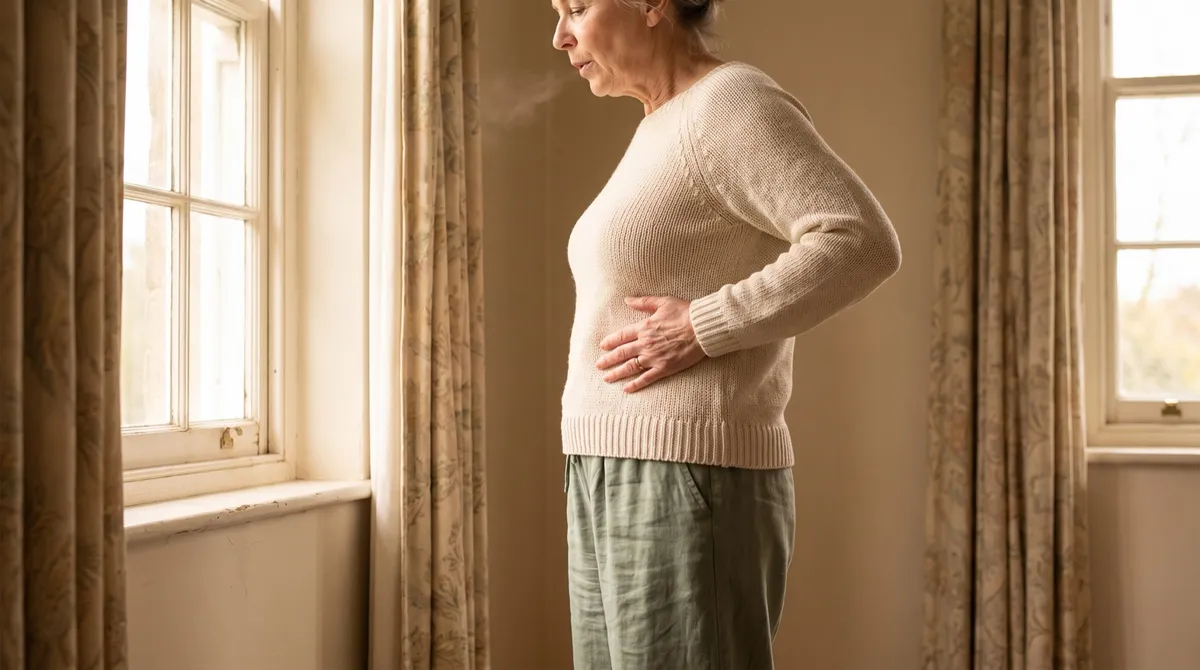
Under stress, in a spasm of counterproductive alarm, many people drift into shallow chest breathing, recruiting the neck and shoulder muscles, so the upper body braces and the chest tenses. This moves less air per breath and keeps the body in constant readiness, even after the original threat (like the boss berating you) has passed.
Letting the diaphragm relax back into its dome, so the exhale falls away on its own, is the first step back to efficient breathing. Most of pranayama is essentially relearning to let the diaphragm do its job, and to breathe deep into the belly, letting it round on its own rather than pushing it out with muscle. If that doesn't feel natural, begin by lying on your back with one hand on your chest and the other on your belly. Inhale through your nose, feeling your belly rise against your hand. Exhale slowly through your nose, feeling your belly fall — your chest may rise slightly but should not be the primary movement.
The Autonomic Nervous System: Your Brake and Accelerator
All of this rides on the autonomic nervous system, the part that runs your background settings without asking: heart rate, digestion, blood pressure, alertness. It has a brake and an accelerator. The accelerator is the sympathetic side, your fight-or-flight response, which ramps up heart rate, stress hormones, and attention. Answering it is the parasympathetic side, the rest-and-digest brake that slows everything down again. Most of the time you want the two roughly in balance.
When you take a breath, your heart rate naturally rises on the inhale and falls on the exhale (respiratory sinus arrhythmia).2 The more time you spend in the falling, parasympathetic phase, the more the nervous system reads the breath as a cue to slow down.
Slow breathing, generally defined as around six breaths per minute or fewer, is associated with greater parasympathetic activity, higher heart-rate variability, and reports of feeling relaxed and alert at the same time.3 Most pranayama techniques tend to settle into this slow range, and some go slower still.
The Long Exhale: The One Lever That Matters Most
The single most useful lever in slow breathing is making the out-breath longer than the in-breath.2 You can measure this as a ratio or simply as a pause, but the effect is the same: as the exhale lengthens, the parasympathetic side of the nervous system spends more of the breath cycle in its calming phase and the heart rate drifts down. The nervous system reads this as a cue to downshift, and you feel relaxed and alert at the same time.
A controlled trial of diaphragmatic breathing, which involved simply learning to breathe from the diaphragm, found improvements in attention and lower reported stress, backed by a drop in the stress hormone cortisol.4 That fits the physiology above: slow, diaphragm-led breathing spends more of the cycle on the parasympathetic side.
The Honest Limits of Pranayama
When you see the benefits people feel from pranayama, you may be tempted to think that breathing exercises are more important than they are. But many pranayama studies are small, run for a few weeks, and cannot fully blind participants. Specific per-technique promises (clearing an energy channel, curing a condition) rest mostly on tradition and modest trials. The left-right nostril energy-balancing ideas are cultural and experiential, not established physiology.
If pranayama is a reliable tool for regulating your state, it is a well-tolerated complement to the rest of your life, not a medicine with guaranteed doses.
Two Universal Rules for Every Technique
Two universal rules govern every technique: never strain, and stop if you feel dizzy, lightheaded, breathless, or anxious. Dizziness is a signal, not a milestone. If it happens, simply breathe normally and you'll feel better soon.
References
- ncbi.nlm.nih.gov — Anatomy, thorax, diaphragm: the dome-shaped primary breathing muscle
- pmc.ncbi.nlm.nih.gov — respiratory sinus arrhythmia and the exhale-led shift toward parasympathetic tone
- pmc.ncbi.nlm.nih.gov — slow breathing (~6 breaths/min), parasympathetic activity, and heart-rate variability
- pmc.ncbi.nlm.nih.gov — controlled trial of diaphragmatic breathing: attention, stress, and cortisol
This article is for general information and education only, and it is not medical advice. If you are pregnant, injured, or managing a health condition, consult a qualified professional before starting a breathing practice.