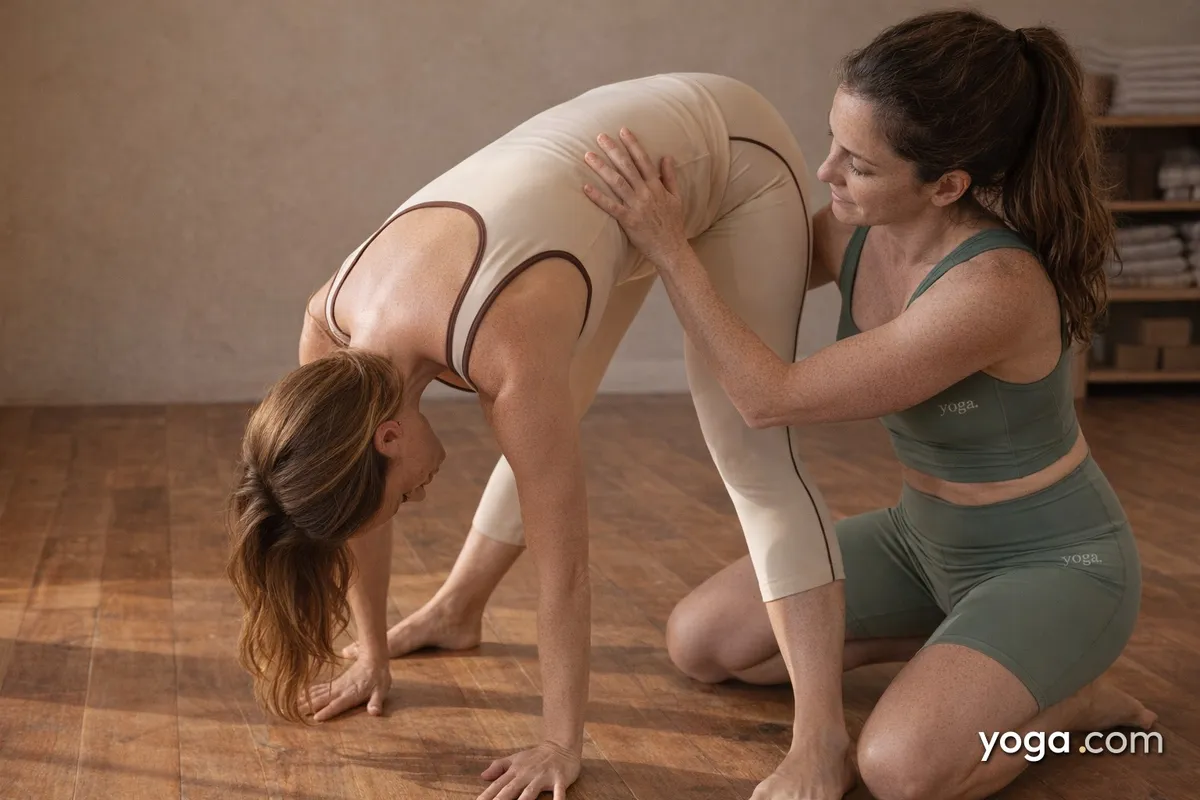
Picture this: you're flowing through a pose and someone is right there with you - hands steady on your back, breathing in sync with yours, helping you find a little more length than you'd ever find alone. That's the quiet magic of partner yoga. Whether you practice with a close friend, a partner, or a family member, sharing your mat can transform something solitary into something genuinely connective.
What Exactly Is Partner Yoga?
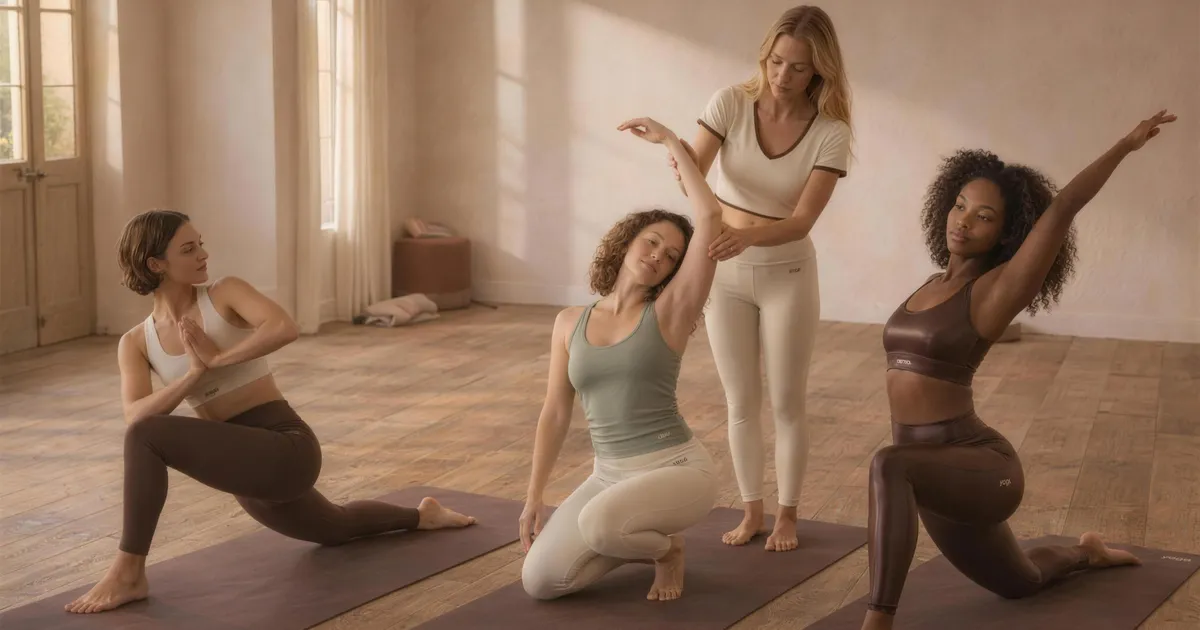
Partner yoga is practiced by two people who help and guide each other into poses through physical touch, moving back-to-back, side-by-side, and front-to-front while offering mutual support. Think of it as a conversation - except instead of words, you're using breath, weight, and gentle pressure.
It's not acrobatics (unless you want it to be). Most partner yoga is completely accessible to beginners and uses familiar poses you may already know, simply adapted for two.
Why Try It? Real Benefits Worth Knowing
Solo yoga is wonderful. But something shifts when you add another person. A 2017 study found that people who exercised with others reported a 26 percent reduction in stress, along with better mental, physical, and emotional well-being. That's not a small thing.
Research on yoga practitioners more broadly paints an encouraging picture too. A National Survey of Yoga Practitioners found that 86.5% reported improved happiness, 84.5% reported improved energy, and 67% reported improved social relationships. Partner yoga, by its very nature, puts that social dimension front and center.
There's also something meaningful happening on a behavioral level. A 2024 study found that partner yoga posture practice could help individuals gradually form a stable pattern of altruistic behavior - essentially, practicing care for someone else on the mat may translate to more care off it.
A Honest Note: It Isn't Always Comfortable at First
Let's be real. In surveys of yoga students, partnering was cited as a number-one source of stress in yoga classes - with concerns about getting hurt, disrupting their flow, and discomfort around touching or being touched by strangers all coming up frequently.
That's completely valid. The good news? Most of those concerns shrink dramatically when you practice with someone you already trust, move at your own pace, and skip any pose that doesn't feel right. Consent and communication are the real foundation of partner yoga.
5 Beginner-Friendly Partner Poses to Try
Start here. These poses are gentle, accessible, and genuinely enjoyable - no flexibility required.
How to Make It Work: Practical Tips
Before you begin
During practice
A note on safety
If either of you has a recent injury, chronic pain, or a health condition, consult your doctor or a qualified yoga teacher before trying partner poses - especially any poses that involve weight-bearing on another person. Some poses are not right for every body, so when you are in doubt, skip the pose and find a gentler variation instead.
Who Is Partner Yoga For?
Partner yoga is for almost anyone. Partner yoga is a natural fit for couples who want a shared ritual that is not about screens. Partner yoga is equally good for two friends who want their Saturday morning to feel a little less ordinary and so it gives those friends a reason to show up together and be present with each other. Parents have also found partner yoga to be a playful way to connect with older children and teens, and that connection is real and meaningful.
You do not need to be experienced yogis to enjoy partner yoga. You do not need to be flexible, and you do not need any special equipment. You just need a little willingness to show up, be present, and occasionally catch each other when you wobble because that small act of catching each other is actually a big part of what makes partner yoga worth doing.
What To Do With All This
Partner yoga will not replace your solo practice and it does not need to replace your solo practice. Partner yoga is a different tool; it builds trust between two people, invites you to be fully present with another person, and makes the physical work of yoga feel a little more like play. You do not need a complicated plan to get started because the beginning is very simple. Roll out two mats, face each other, and start with a breath together. Everything else will follow from there.