You've probably stepped onto a yoga mat for the stretches, the strength, or the stress relief — and those benefits are real. But the tradition behind your practice runs far deeper than any single pose. Patanjali's Yoga Sutras, a sophisticated map of human consciousness distilled into 195 short verses, describe an entire path for quieting the mind and living with more intention. Understanding even the basics can transform the way you practice.
Who Was Patanjali — and When Did He Write This?
Patanjali is a somewhat mysterious figure. Some practitioners believe he lived around the second century BCE and also wrote significant works on Ayurveda and Sanskrit grammar, while modern scholars tend to place him in the second or third century CE. Different scholars date the Yoga Sutras anywhere from 200 BCE to 300 CE, though the wisdom they contain is understood to be far older than the text itself.
What matters most for a beginner: this is a text that has been studied, debated, and practiced for well over a thousand years. It isn't a relic. It's still alive in studios and meditation halls around the world today.
What Are the Yoga Sutras, Exactly?
The Yoga Sutras are made up of 195 aphorisms — compact, precise statements of wisdom. Each sutra can be just a handful of Sanskrit words, dense with meaning. That's why most beginners benefit from reading a version that pairs translation with commentary.
The 195 sutras are divided into four books (padas), covering: what yoga is (samadhi pada), how to attain it (sadhana pada), the benefits of practice (vibhuti pada), and freedom from suffering (kaivalya pada). Think of it as a complete user's guide — not just for your body, but for your mind and life.
It's Much More Than a Movement Practice
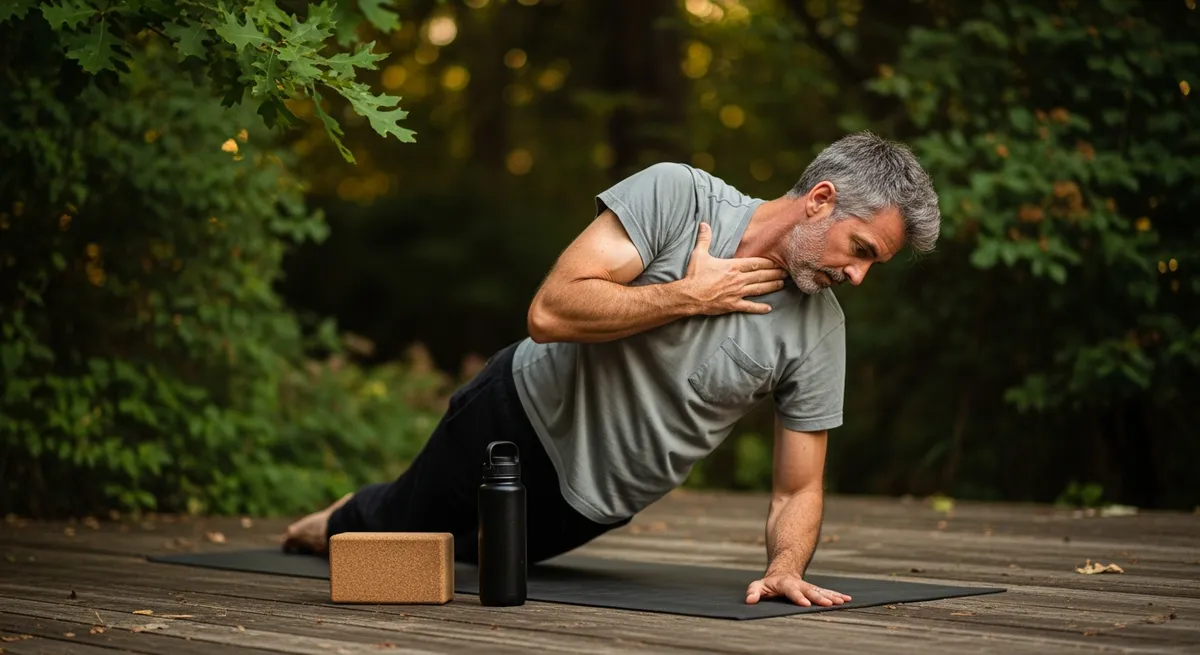
Here's something that surprises many yoga students: only three of the 196 sutras mention physical posture (asana). The rest discuss conscious breathing, meditation, lifestyle and diet changes, visualization, and the use of sound, among many other practices.
Asana — the poses — is just one piece of a much larger whole. The sutras define yoga not as a workout, but as a practice of steadying and clarifying the mind.
The Eight Limbs: Your Roadmap at a Glance
In Patanjali's Yoga Sutra, the eightfold path is called ashtanga — literally "eight limbs" (ashta = eight, anga = limb). Each limb addresses a different dimension of your practice and the simple fact is that each limb builds on the one before it. Keep in mind that the eight limbs move from how you live in the world all the way to the deepest states of meditation, and so understanding all eight limbs together gives you the full picture of what yoga really is because yoga is much more than physical posture.
The Outer Four Limbs: Where Practice Begins
Yama: How You Treat the World
The five yamas are: Ahimsa (nonviolence), Satya (truthfulness), Asteya (nonstealing), Brahmacharya (continence), and Aparigraha (noncovetousness). These are your ethical commitments — the way you show up in your relationships and the wider world.
Niyama: How You Treat Yourself
The five niyamas are: Saucha (cleanliness), Samtosa (contentment), Tapas (heat; spiritual austerities), Svadhyaya (study of sacred scriptures and of one's self), and Isvara pranidhana (surrender to God). These are your inner disciplines — the daily habits and attitudes that shape who you're becoming.
Many beginners skip straight to asana without ever exploring yama and niyama. But these two limbs are the foundation. Without them, the rest of the path doesn't have solid ground to stand on.
Asana and Pranayama: The Limbs You Know Best
Asana — the third limb — is your physical posture practice. In modern Western yoga, this is often the entry point, and it's a good one. Pranayama, the fourth limb, is the regulation of breath. Both limbs prepare the nervous system and steady the mind for the more inward work ahead.
The Inner Four Limbs: Where Practice Deepens
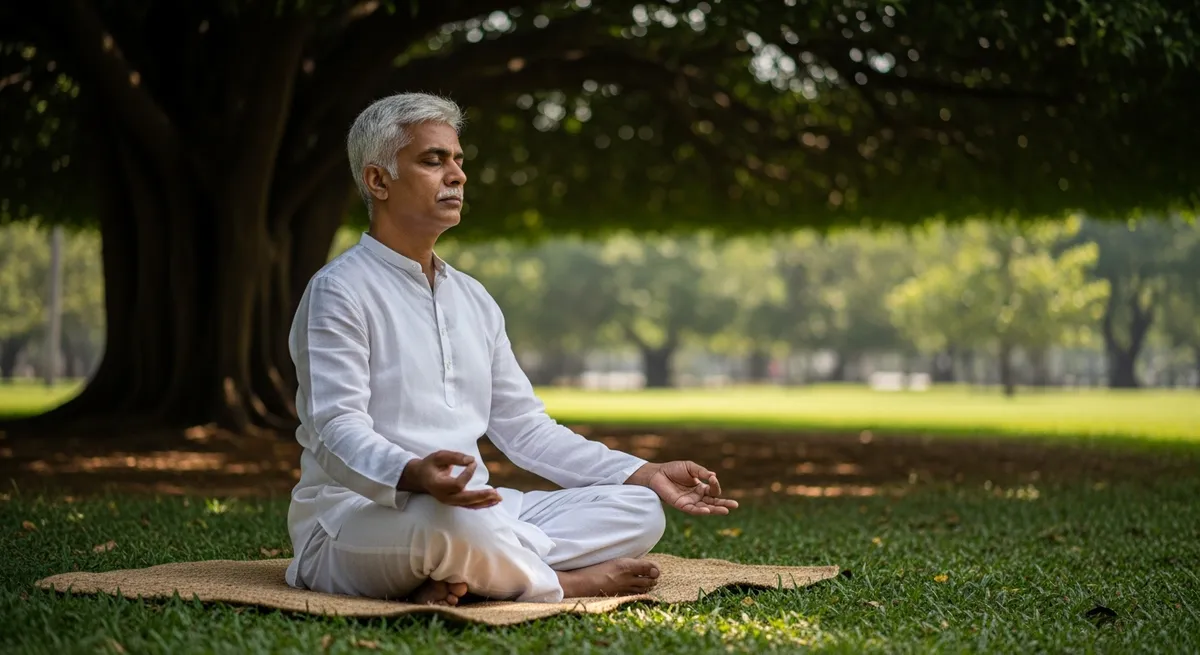
Pratyahara (withdrawal of the senses) is the pivot point of the whole path — and one of the least taught limbs in Western yoga. It's the practice of pulling your attention inward, so that external sounds, sights, and sensations stop hijacking your focus. Without it, the next three limbs are genuinely difficult to access.
These three inner limbs aren't separate practices so much as increasingly refined states that arise naturally when the earlier work is genuinely established. You can't force your way into samadhi — but you can build the conditions that allow it to unfold.
Honest Expectations for a Beginner
The Yoga Sutras outline a lifelong path, not a weekend workshop. Samadhi is described as a profound state that most practitioners approach gradually, over many years. That isn't discouraging — it's actually freeing. You don't have to "arrive" anywhere to benefit from the practice.
Even working with the earlier limbs — practicing ahimsa in your daily interactions, cultivating contentment, building a steady asana and breathing practice — can bring meaningful change to your life. A 2018 review of 14 studies involving 1,084 participants found that yoga showed evidence of benefits including improvements in resilience and overall mental well-being. A 2020 review of 12 studies found beneficial effects of yoga on perceived stress in every single study reviewed.
Also worth knowing: different teachers and translators interpret the sutras differently. One translation may emphasize the devotional aspects; another takes a more philosophical angle. Encountering these differences isn't a problem — it's part of engaging honestly with a living tradition.
How to Start Reading the Sutras
The Bottom Line
Patanjali's Yoga Sutras offer something that is genuinely rare, and that is a complete and coherent path for understanding yourself and for living with greater clarity, kindness, and calm. The simple fact is that your mat is still a wonderful place to start your journey. But keep in mind that the mat is just one of eight limbs, and knowing this helps you see that there is a rich philosophy supporting every breath and every pose you practice, and so the whole practice starts to feel much more meaningful because of that understanding. Take it one sutra at a time, one limb at a time, one breath at a time. The key point is that the practice belongs to you, and you can build on it at your own pace.