
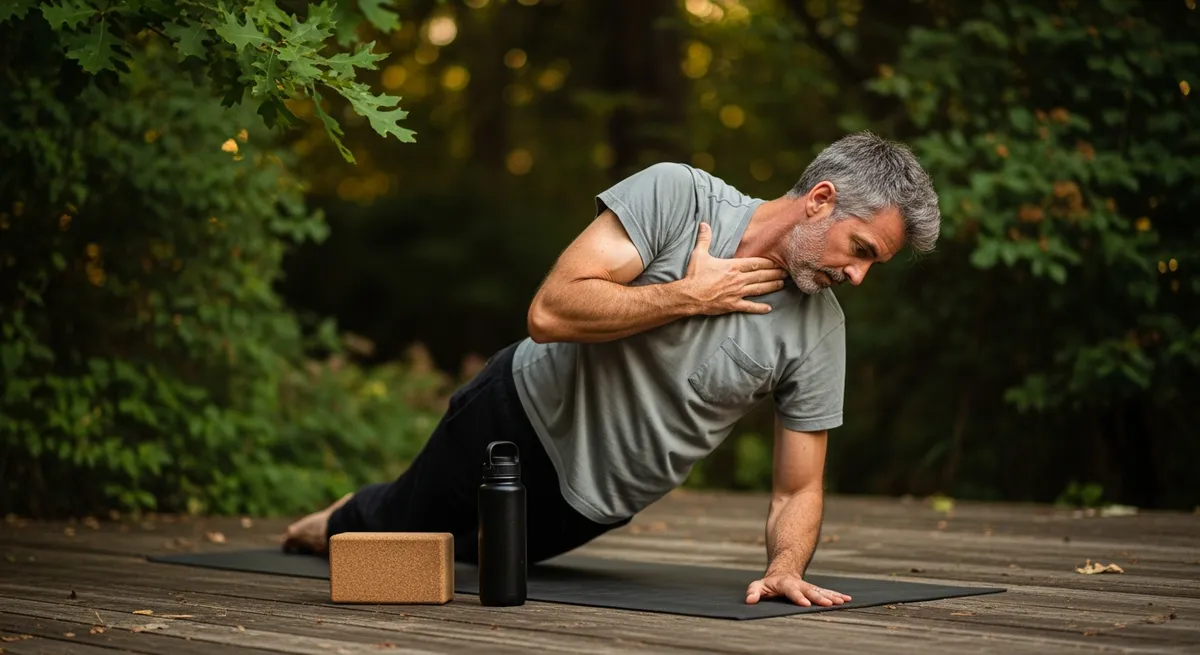
You know that feeling — a brand-new mat still creased from the packaging, a phone propped against your water bottle to catch the light. That moment is the latest chapter in a story that stretches back thousands of years. Knowing where yoga came from doesn't just satisfy curiosity; it deepens every breath, every pose, every quiet minute you carve out for yourself.
Where It All Began: The Ancient Roots of Yoga
Yoga is one of the world's oldest living traditions. Its earliest traces appear in the Indus Valley civilization — in seals depicting seated, meditative figures that archaeologists date to roughly 3000 BCE. The word itself comes from the Sanskrit root yuj, meaning "to yoke" or "to unite."
The practice was first codified in the Rigveda, a collection of sacred hymns and ritual texts. Over the centuries it evolved through the Upanishads, philosophical texts that shifted the focus inward, toward self-inquiry and liberation. By the time Patanjali compiled the Yoga Sutras (around 400 CE), yoga had a clear eight-limbed framework — ethical principles, physical postures, breathwork, and meditation woven into a single path.
The Middle Period: Tantra, Hatha, and the Body as a Tool
For much of its early history, yoga was primarily a contemplative discipline. Postures (asanas) were secondary. That shifted with the rise of Hatha Yoga in medieval India — texts like the Hatha Yoga Pradipika (circa 15th century) placed the physical body at the center of spiritual practice.
The idea was radical: purify the body, and the mind follows. Pranayama (breath control), bandhas (energy locks), and specific asanas were mapped out in detail. This is the direct ancestor of the physical yoga you practice today.
How Yoga Traveled West
The bridge between ancient India and the modern West has a clear starting point. Swami Vivekananda arrived on American shores in 1893 and captivated the high society of the East Coast almost immediately. Swami Vivekananda introduced yoga primarily as philosophy and not as physical practice, so the message he brought was one of universal consciousness and this message resonated strongly with Western intellectuals who were hungry for something beyond organized religion. The simple fact is that his arrival gave the West its first real and serious introduction to yoga as a system of thought.
Asana was slower to follow. Keep in mind that the physical side of yoga did not travel west at the same speed as the philosophy did. It wasn't until the 1920s that a refined version of asana practice began to gain real prominence in the modern English-language yogas emerging from India. So if you think of yoga as mostly a physical practice, you should know that this physical focus came much later than the original philosophical teachings that Vivekananda first brought to your attention in the West.
The Reformers Who Shaped Modern Yoga
The physical yoga we recognize today was largely shaped by a handful of visionary teachers in the early twentieth century. Keep in mind that without these key figures, modern yoga would look very different from what you practice today.
It is also worth understanding the cultural backdrop behind all of this. By the 1920s, "Primitive Gymnastics" was one of the most popular forms of exercise across the Indian subcontinent, second only to Swedish gymnastics. Physical culture was having a real moment at that time, and yoga's reformers were responding to it because they wanted traditional practices to speak to a modern, body-conscious audience and so they adapted those practices accordingly. On top of that, this cultural pressure pushed yoga reformers to make yoga more accessible and relevant to the people around them.
Yoga Arrives in the West — and Stays
The 1960s and 1970s brought a second wave. Teachers like B.K.S. Iyengar, Pattabhi Jois, and Swami Satchidananda introduced disciplined, lineage-based asana practices to North American and European students and so yoga studios began to multiply across these regions because more and more people wanted to learn. Teacher-training programs became formalized over time. What had once been transmitted between guru and student in small groups was now being taught in gyms, community centers, and eventually living rooms. Keep in mind that this shift was a very big change in how yoga was shared and learned.
Today, yoga's reach is genuinely global. The simple fact is that yoga has spread to nearly every part of the world and your chances of finding a class nearby are very high no matter where you live. In 2022, 16.9% of U.S. adults reported practicing yoga in the past 12 months — and women (23.3%) were more than twice as likely as men (10.3%) to practice. On top of that, the tradition that began in ancient ashrams now lives on phones and streaming apps, in studios and spare bedrooms, so your access to yoga today is easier than it has ever been before.
What Modern Practitioners Are Really Looking For
Despite the leggings and the lifestyle branding, people's motivations remain surprisingly close to yoga's original purpose. Among U.S. adults who practiced yoga in 2022, 80.0% did so to restore overall health — not just for a workout. The simple fact is that most people who come to yoga are looking for overall health and not only physical exercise. More than half (57.4%) practiced meditation as part of their yoga, with women (59.3%) slightly more likely than men (52.9%) to include it. Keep in mind that this means your yoga practice is very likely to involve meditation as well, and so you should be prepared for that mental side of the practice.
That instinct — to use the body as a doorway to something quieter inside — is exactly what the ancient texts described. The form has changed, and the outer appearance of yoga today looks very different from its origins, but the core impulse in your practice has not changed because people still want the same thing people have always wanted. The simple fact is that what you are really looking for when you step onto the mat is not so different from what practitioners looked for thousands of years ago.
Practicing Safely: What History Teaches Us
Every tradition evolves, and responsible practice matters more than ambition. The most common yoga-related injuries involve muscle strains, sprains, and pain in the back, neck, and shoulders — areas that take the most load in poorly aligned poses.
Advanced techniques like Sirsasana (Headstand) and Kapalabhati (Skull-Shining Breath) are most often associated with adverse events, particularly when practiced without proper preparation. And risk increases with the duration and frequency of practice, the number of techniques attempted, and the level of body awareness during practice.
The ancient teachers knew this. Patanjali's eight limbs don't begin with advanced postures — they begin with ethical principles and self-study. Progression with awareness is baked into the tradition itself. If you have any existing health conditions, always check with your healthcare provider before starting or intensifying a yoga practice.
It's also worth noting that teacher quality matters enormously. The World Health Organization is currently preparing a benchmark document on the training of yoga professionals — a sign that the global community is taking standardization seriously.
The Bottom Line
That crease in your new mat is about to become your own small chapter in a lineage that spans millennia. The simple fact is that yoga has survived empires, ocean crossings, and cultural revolutions because yoga speaks to something that does not change, and that something is the desire to feel whole. Keep in mind that whether you are working through a gentle Sun Salutation (Surya Namaskar) or sitting quietly with your breath, you are participating in something genuinely ancient and genuinely alive. On top of that, you do not need to be an expert or have any special background, because this practice belongs to you just as much as it belongs to anyone else. Roll out your mat. You belong here.