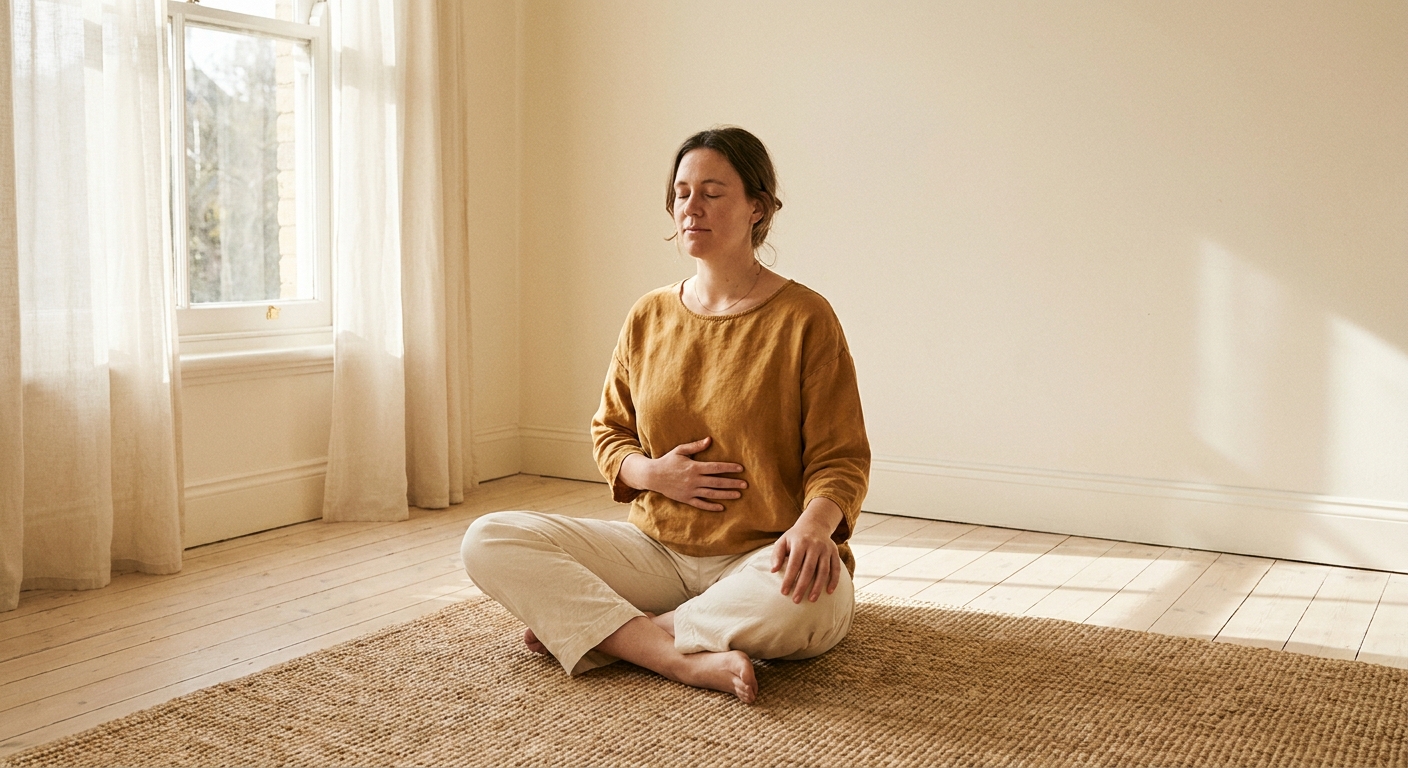

You've been rolling out your mat at home or in a studio class, and something in you is ready to go deeper. A yoga retreat keeps pulling at your attention — but the idea also brings questions: Will I be the least experienced person there? What actually happens all day? Is it worth the cost? This guide answers all of it, so you can walk in on day one feeling prepared instead of anxious.
What Makes a Yoga Retreat Different From a Regular Class
A single yoga class gives you an hour of practice. A retreat gives you something much more complete — it gives you days where the whole rhythm of life is organized around movement, breath, rest, and reflection. Meals, mornings, and evenings all support your practice rather than compete with it, and so the retreat experience is fundamentally different from anything a regular class can offer you.
The simple fact is that the shift in environment matters more than you might expect. Recent research on a resilience-building yoga retreat for professionals found improvements in mindfulness, resilience, empowerment, and self-compassion among participants. Keep in mind that a 2017 observational study found statistically significant improvements across almost all wellness measures after just one week at a retreat — and those gains were still present six weeks later. On top of that, these results show that the setting itself is doing real work for you and so the environment is not just a nice background detail.
In short, the dedicated time and the dedicated setting do work that a drop-in class simply cannot replicate for you. A drop-in class cannot give your body and mind the same kind of full support that a retreat gives you.
What a Typical Day Actually Looks Like
Every retreat is different, but most follow a recognizable rhythm. Here's what a day commonly includes:
Screens and phones are often discouraged or kept to specific times. That intentional unplugging is part of the point.
The Poses You'll Likely Encounter
As a beginner, you won't be expected to nail advanced postures. Most retreat teachers design sequences that are accessible and buildable. Expect to spend real time in foundational poses like:
Good teachers — including those who have led retreats for decades, like Angela Farmer, who has been guiding retreat participants across Greece, England, Florida, and Chicago for more than 40 years — will always offer modifications. Never be afraid to use props or take the gentler variation.
How to Choose the Right Retreat for You
Length and intensity
If you are brand new to retreats, a weekend retreat of two to three nights is a smart starting point for you. The simple fact is that this length of time is enough for you to drop into the experience without overwhelming your schedule or your budget. Longer programs of seven to ten days offer more transformation for you, but longer programs also ask more of your time and your focus and so you should think carefully before you commit to one.
Setting and style
Think honestly about what kind of environment will help you relax. A mountain forest, a beachside studio, a quiet countryside center — the environment shapes everything about your experience. Keep in mind that some people thrive in silent retreats, while other people need a little more social warmth around them. Read the retreat description carefully and notice whether the tone of the retreat matches your personality, because the right match will make your whole stay more comfortable and more productive.
Teacher credentials
Look for teachers who have documented training and real experience. On top of that, do not hesitate to email the teacher and ask about their approach to beginners before you book your place.
What Retreats Actually Cost (Real Numbers)
Pricing varies widely based on location, accommodation, and program length. The simple fact is that retreat costs can look very different from one center to another, so it helps to know some real numbers before you start planning. Here are some real benchmarks to orient you:
If your budget is tight, look for work-study programs, sliding-scale pricing, or scholarship options and keep in mind that many centers offer these options but rarely advertise them loudly so you may need to ask directly. The simple fact is that reaching out to a retreat center to ask about financial assistance is always worth your time because many centers want to make their programs accessible to you regardless of your financial situation.
What to Pack (And What to Leave Behind)
Leave behind: a packed agenda, the expectation of perfection, and — if the retreat encourages it — your phone. Even partial digital detox is part of the reset.
A Few Honest Things Nobody Tells You
You might feel worse before you feel better. Day two of a retreat often brings unexpected emotion — fatigue, restlessness, or a surprising wave of grief or joy. This is normal. Slowing down gives buried things room to surface.
Logistics can be unpredictable. Weather, travel, and the unexpected are part of life — even on retreat. Staying adaptable is the practice.
You don't need to be "good at yoga." Retreats are for practicing, not performing. Teachers at beginner-friendly programs have seen every level of flexibility and every kind of nervous first-timer. You will fit in.
If you have any injuries, chronic conditions, or health concerns, talk to your doctor before booking and inform your retreat teacher when you arrive. A responsible teacher will always work with your body, not against it.
The Bottom Line
Your first yoga retreat doesn't need to be a grand expedition or a perfectly timed life event. It just needs to be the right fit for where you are right now — your budget, your schedule, your comfort level. Pick something that genuinely interests you, arrive with curiosity instead of expectations, and let the structure do its quiet work. You might be surprised how much shifts in just a few days.