You reach for the railing without thinking. You hesitate at the edge of an uneven sidewalk. These small moments of uncertainty are common after 60 — and they're exactly what a well-designed yoga practice can help address. This guide walks you through what the research actually shows, which poses tend to help most, and how to practice safely so you can feel steadier and stronger in your everyday life.
Before You Begin: A Safety Note
Talk to your doctor or physical therapist before starting yoga if you have osteoporosis, a recent joint replacement, uncontrolled blood pressure, a history of falls, balance disorders, or any condition affecting your spine or joints. Yoga is adaptable — but a professional who knows your health history can help you adapt it wisely.
If you have osteoporosis or low bone density, please also read our guide to yoga with osteoporosis before beginning. Certain movements — especially loaded spinal flexion like rounding forward deeply — require extra care.
Why Balance and Strength Matter So Much After 60
A 2024 multidisciplinary review examining 155 studies found that each year, approximately 20 to 40 percent of older adults experience falls — often leading to fractures, traumatic brain injuries, and increased mortality. That's a sobering number. But it's also a strong case for taking balance and strength training seriously.
The same review found that balance and strength training improves postural control, gait stability, and neuromuscular coordination, while resistance training helps counter the muscle loss (sarcopenia) that accelerates with age. Yoga trains all of these — often within a single session.
CDC guidelines for adults 65 and older recommend at least 150 minutes of moderate-intensity aerobic activity per week, at least two days of muscle-strengthening activities, and regular activities to improve balance. A consistent yoga practice can contribute meaningfully to all three goals.
What the Research Shows About Yoga Specifically
Studies on yoga and older adults are growing — and the results are encouraging, though most are small. Here's what the evidence suggests:
These are associations, not guarantees. Individual results vary — and yoga works best as one part of a broader active lifestyle, not a standalone cure.
Chair Yoga: A Brilliant Starting Point
If getting up and down from the floor feels daunting, or if you're managing balance issues, chair yoga is a genuinely effective option — not a lesser version of "real" yoga.
Chair yoga is particularly useful while you build baseline strength and confidence. Many people eventually transition to a mat — or happily stay in the chair. Both are valid.
What a Senior-Friendly Yoga Practice Should Include
Not all yoga classes are designed with older adults in mind. The Yoga Empowers Seniors Study (YESS) developed two progressive series of poses specifically adapted for ambulatory older adults, targeting major muscle groups integral to activities of daily living. That is a useful framework for thinking about what your practice actually needs, and it is worth keeping this framework in mind as you plan your sessions.
Standing Balance Near a Support
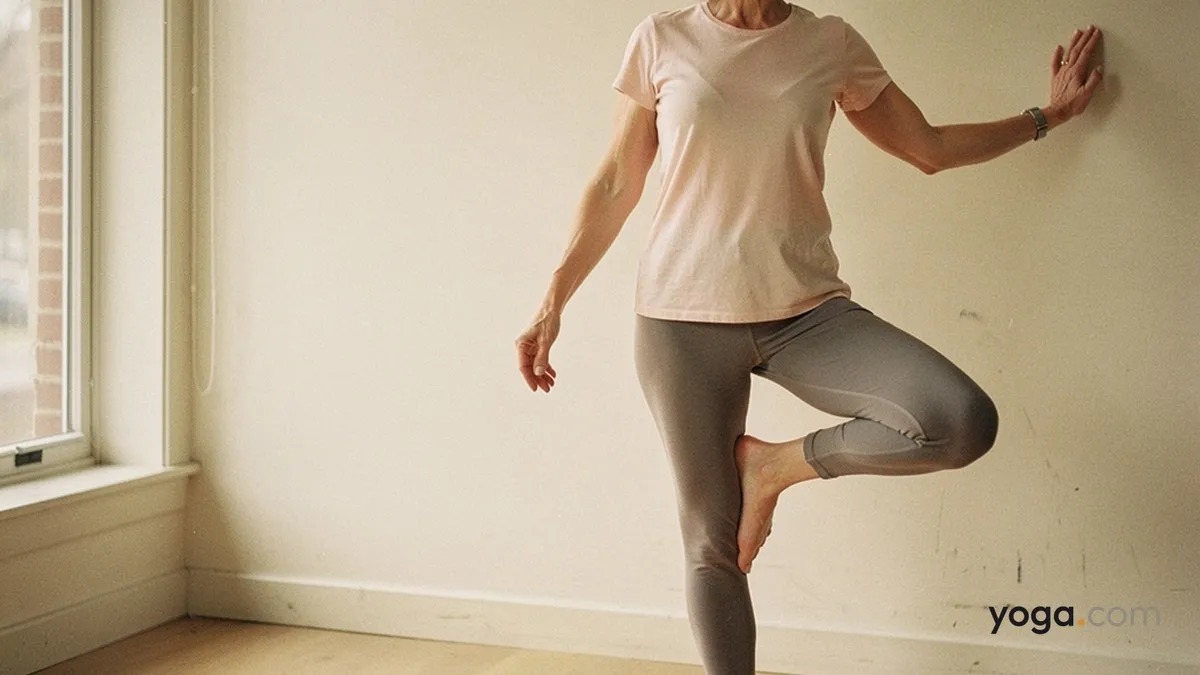
Practicing near a wall or chair is not a shortcut — it is smart training. Keep in mind that poses like Tree Pose (Vrksasana) and Warrior III (Virabhadrasana III) challenge your balance system in ways that directly transfer to everyday stability, and so these poses are genuinely important for older adults to include. Always have support within arm's reach because having that support nearby makes your practice safer.
Sit-to-Stand Strength
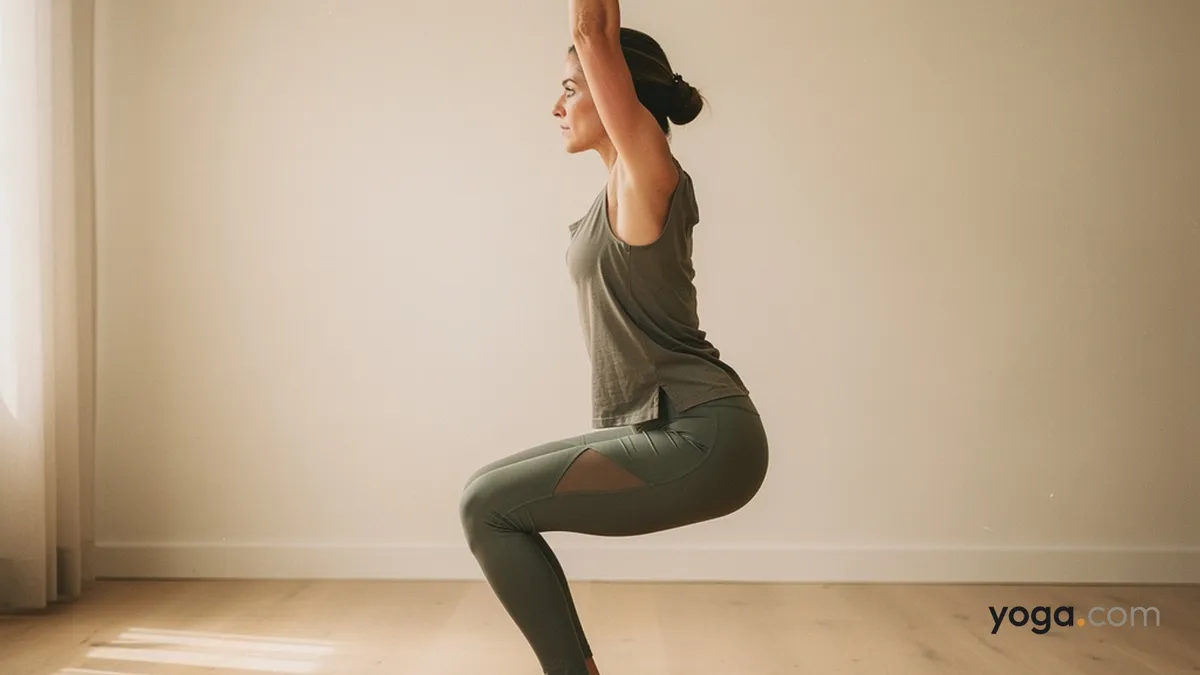
The ability to rise from a chair without using your hands is one of the strongest predictors of functional independence. The simple fact is that Chair Pose (Utkatasana) and slow, controlled transitions between seated and standing positions train exactly this ability and so they deserve a regular place in your practice. Start with support. Build from there.
Gentle Spine Mobility
Cat-Cow (Marjaryasana-Bitilasana) done on hands and knees — or seated in a chair — keeps the spine supple without loading the spine aggressively. Gentle twists help too. What to avoid if you have osteoporosis is deep forward folds that round and compress the spine, and this is worth repeating because the risk is real. When in doubt, keep the chest lifted and the spine long.
Hip and Leg Strength
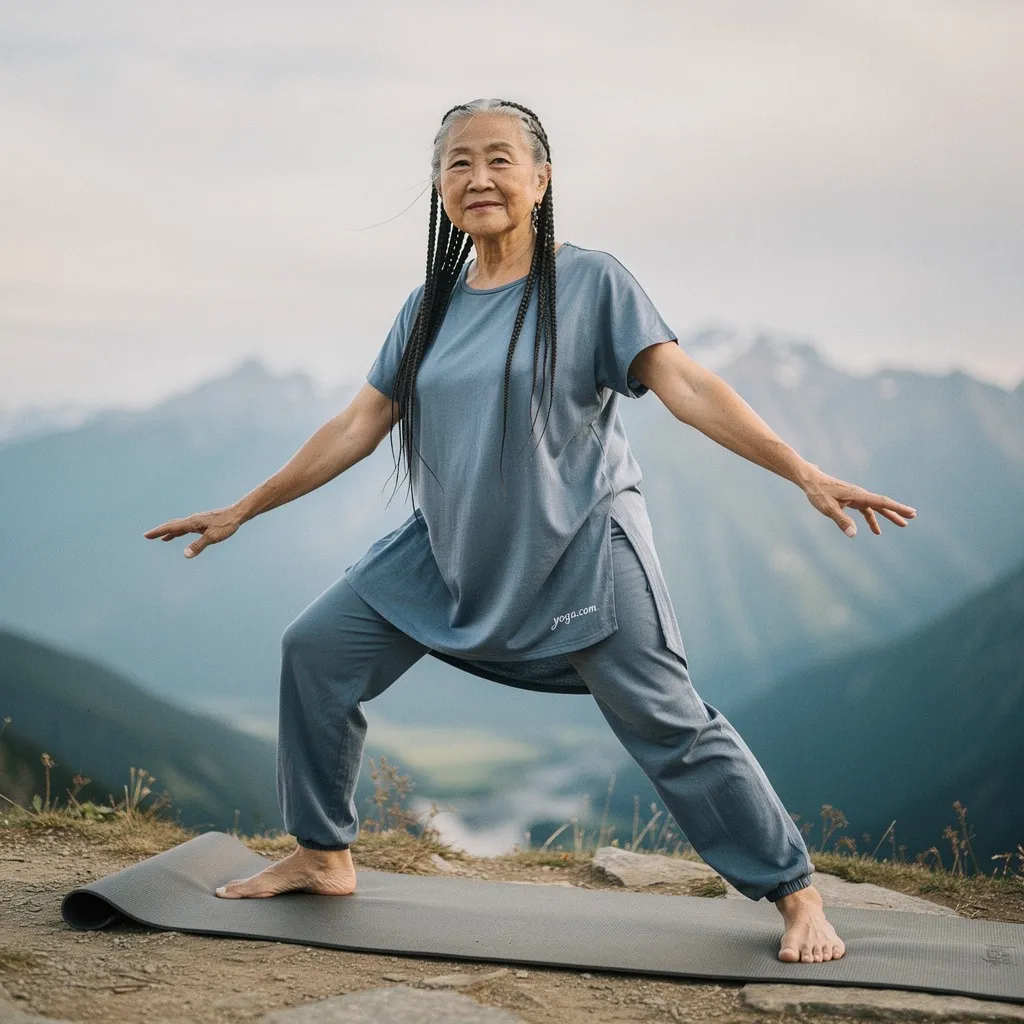
Warrior I (Virabhadrasana I) and Warrior II (Virabhadrasana II) build leg and hip strength that supports your knees, pelvis, and lower back. On top of that, building this strength through these poses can make everyday movements feel more stable and controlled. Modify the depth of your lunge to whatever feels stable because a shallower lunge is still effective and still builds the strength your body needs.
Breathwork and Relaxation
Diaphragmatic breathing, practiced in a reclined or seated position, activates the parasympathetic nervous system and can support stress reduction. The simple fact is that even a few minutes of diaphragmatic breathing at the end of your practice makes a real difference, and so it is worth treating this part of your session as just as important as the physical poses.
Important Safety Considerations
Osteoporosis and Bone Health
If you have been diagnosed with osteoporosis or low bone density, avoid poses that involve significant loaded spinal flexion — such as deep forward folds (like Seated Forward Fold / Paschimottanasana) — and extreme spinal rotation. Read our dedicated guide to yoga with osteoporosis for pose-by-pose guidance.
Blood Pressure and Medication
If you take blood pressure medication, be cautious with transitions that involve moving quickly from lying down to standing. Rise slowly, pause at each stage, and give your body time to adjust. Dizziness on standing (orthostatic hypotension) is more common when taking certain medications — let your teacher know before class.
Contraindications to Discuss With Your Doctor
Stop If You Experience Any of These
These are signals to stop, rest, and consult a professional — not push through.
When to See a Professional First
See your doctor or physical therapist before starting if you've had a fall in the past year, if you're recovering from any surgery or injury, if you've been largely sedentary, or if you have any of the conditions listed above. A physical therapist can also help you identify specific weaknesses or movement limitations that your yoga practice should address — and which it should avoid.
New to yoga after a certain age? Our guide to starting yoga after 40, 50, or 60 covers what to expect in your first weeks and how to find a class that's genuinely right for you.
Does Medicare Cover Yoga?
Cost shouldn't be a barrier. In 2022, 98% of Medicare Advantage members were enrolled in plans that covered some fitness benefits — which may include yoga or yoga-adjacent fitness programs. Check with your specific plan. Beginning in 2026, Medicare will also allow billing for physical activity assessments, which may open more doors to structured movement programs being covered or recommended.
The Bottom Line
Yoga isn't about touching your toes or holding a pose perfectly. After 60, it's about building the kind of strength, balance, and body awareness that keeps you moving through life with confidence. The evidence suggests it can help — with balance, with strength, and with how you feel day to day. Start gently, work near support, listen to your body, and get your doctor's sign-off if you have any health concerns. There's no perfect age to begin. There's just now.